


Swelling in the neck, accompanied by hand tremors, heart palpitations, and insomnia, may signal more than just temporary discomfort—it could indicate hyperthyroidism.
While conventional medicine typically relies on medications or surgery, traditional Chinese medicine (TCM) offers a gentle, noninvasive alternative: ear acupressure. This centuries-old technique may help soothe symptoms, regulate hormones, and restore balance naturally.
Understanding Hyperthyroidism
Hyperthyroidism occurs when the thyroid gland produces too much thyroid hormone, speeding up the body’s metabolism and causing symptoms such as a racing heart, hand tremors, and sleep difficulties. In the United States, about one in every 100 people aged 12 or older is affected, with women and older adults facing a higher risk.
Iodine is an essential micronutrient for the synthesis of thyroid hormones. In the past, thyroid enlargement was commonly attributed to iodine deficiency, and people were often advised to increase their intake of iodine-rich foods such as kelp and seaweed. However, with today’s diverse diets and the widespread use of iodized salt, iodine deficiency has become increasingly rare.
Many modern cases of thyroid enlargement are associated with hyperthyroidism. In such situations, additional iodine intake may overstimulate thyroid hormone production, potentially worsening the condition.
The TCM Perspective
TCM approaches thyroid health holistically. Rather than viewing the thyroid as an isolated malfunctioning gland, TCM considers it part of a broader energy network governed by meridians—channels through which life energy, or “qi,” flows. In this framework, hyperthyroidism represents a disharmony between yin and yang, often involving excess internal heat, disturbed “shen” (the mind/spirit), and dysfunction in the heart and liver meridians.
According to TCM principles, overstimulation of the thyroid may be due to internal heat, emotional stress, or stagnation of qi. By activating specific acupoints—especially those on the ear that reflect the whole body—practitioners aim to regulate the flow of qi, calm the nervous system, and restore internal harmony.
A 2018 review also indicated that acupuncture could be effective in treating thyroid-related conditions, including both hyperthyroidism and hypothyroidism.
Ear Acupressure Therapy
In an episode of “She Health,” a program from The Epoch Times’ sister outlet, NTD, Wu Tung-Yi, director of Tai Xin Chinese Medicine Clinic in Taiwan, stated that consistent stimulation of specific acupoints on the ear can ease symptoms of hyperthyroidism.
In TCM, the ear is viewed as a microcosm of the entire body. Each section of the ear corresponds to a different organ system. Stimulating these points may activate neural pathways and energy channels that influence hormone production, calm the heart, and ease insomnia—symptoms commonly seen in hyperthyroidism.
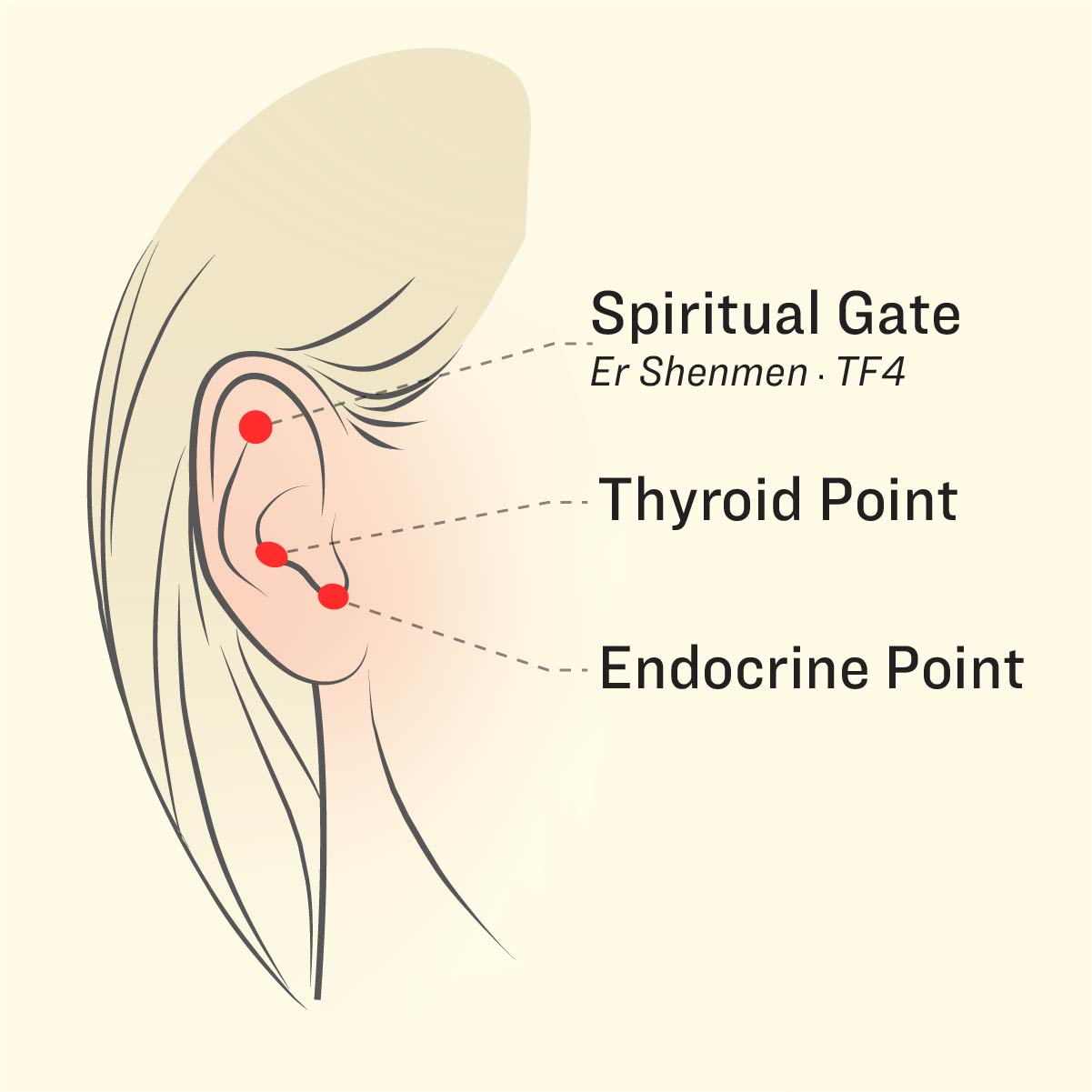
Wu recommends massaging the following ear acupoints:
- ‘Er Shenmen’ Acupoint (Ear Spirit Gate): Located in the triangular fossa at the upper part of the ear; stimulating this point is believed to calm the mind, alleviate palpitations, and relieve discomfort associated with hyperthyroidism.
- Thyroid Point: Located along the upper edge of the antihelix; stimulating this point may help improve thyroid function.
- Endocrine Point: Located on the lower side of the antihelix; stimulating this point may help regulate the endocrine system and support hormonal balance.
Instructions:
Use your fingertips or a blunt-tipped tool to apply pressure to the targeted acupoints for 5 to 10 minutes at a time. Alternatively, ear seeds can be placed on the corresponding points to provide continuous stimulation as part of a daily wellness routine.
Regularly massaging the ears can help stimulate the parasympathetic nervous system, which calms the nerves, slows the heart rate, and eases insomnia symptoms often associated with hyperthyroidism.
The Mind-Body Connection–Parasympathetic Support
Beyond meridian theory, ear stimulation may activate the vagus nerve, which plays a vital role in the parasympathetic nervous system. This “rest-and-digest” system counters the high-alert state induced by excessive thyroid hormone.
By calming the nervous system, ear acupressure can ease palpitations, lower heart rate, improve sleep, and reduce anxiety—offering both physiological and emotional relief.
Symptoms of Hyperthyroidism
Common symptoms of hyperthyroidism include hand tremors, heart palpitations, and difficulty sleeping—and in some cases, the condition may even lead to heart-related complications, Wu said.
Other possible symptoms include reduced appetite, weight loss, and thinning hair.
Women may experience menstrual irregularities, while men may notice a decline in sexual function.
A 2024 cross-sectional study found that adults aged 60 to 80 with hyperthyroidism had nearly three times the risk of developing osteoarthritis compared to those without the condition. Given the elevated risk, it is important for older adults with hyperthyroidism to monitor their joint health.
The Danger of Untreated Hyperthyroidism
If left untreated, hyperthyroidism can lead to a serious complication known as a thyroid storm—a life-threatening condition caused by the sudden and excessive release of thyroid hormones. It is often triggered by infection, surgery, or significant physical or emotional stress.
A thyroid storm can seriously compromise heart function. It may cause a rapid heart rate, elevated blood pressure, and atrial fibrillation. In severe cases, it can progress to heart failure.
The condition may also affect the digestive system, leading to symptoms such as nausea, vomiting, and diarrhea.
When Is Thyroid Removal Necessary?
Thyroid enlargement does not necessarily indicate cancer or require immediate surgery. In fact, many cases involve benign conditions such as calcified nodules or cysts, which usually only require regular monitoring, Wu noted.
Surgical intervention is generally considered when a nodule grows large enough to cause cosmetic concerns or when malignancy is confirmed.
Wu said that thyroid removal should be avoided unless absolutely necessary. Once the thyroid is removed, the body can no longer produce thyroid hormones naturally, making life-long hormone replacement therapy essential. Without this ongoing treatment, symptoms of hypothyroidism—including fatigue, cold intolerance, and dizziness—are likely to develop.
“Balance is the key,” Wu said. “Instead of rushing to remove the gland, we should ask: How can we restore harmony to the body’s internal environment?”