

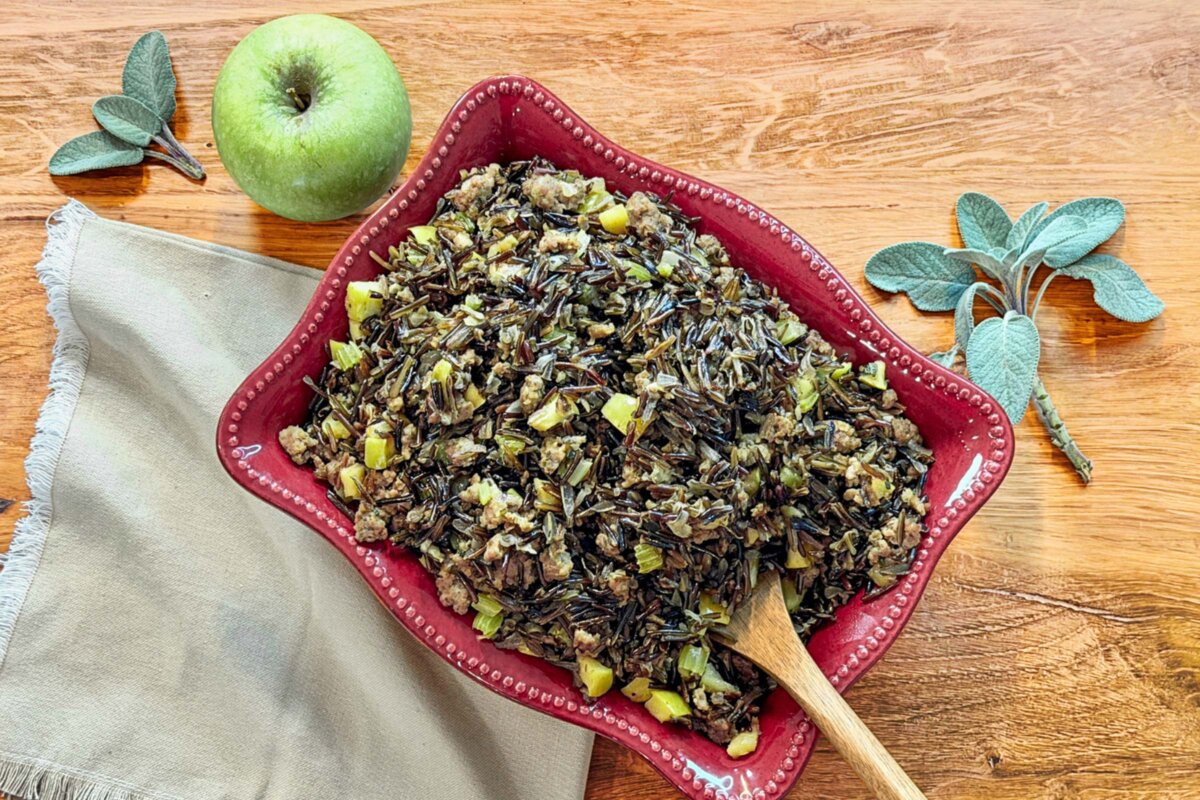
The aroma of onion, celery, and sage sizzling in a skillet is enough to make any kitchen smell like Thanksgiving. Add sausage, nutty wild rice, and tart Granny Smith apples, and you have a satisfying dressing with savory richness, a pleasantly chewy texture, and little bursts of tartness in every bite.
Using wild rice in Thanksgiving dressing brings a food native to this continent to a holiday table built around gratitude and harvest.
Wild Rice: A Native American Food With a Long History
Despite its name, wild rice isn’t rice at all. It’s the seed of an aquatic grass that grows naturally in shallow lakes and waterways, particularly around the Great Lakes. Known as “manoomin” to the Anishinaabe peoples, wild rice has been harvested and valued as a staple food by these Native American communities for generations.
Traditionally, harvesters traveled by canoe through natural wild rice beds in lakes and rivers, gently knocking ripe grains into the canoe while letting some fall into the water to reseed the plants. This method is still practiced today. However, commercially cultivated wild rice grows in flooded fields known as paddies and is harvested mechanically.
Wild rice is naturally gluten-free, making it an alternative for anyone avoiding wheat or gluten. Uncooked, it keeps up to five years in an airtight container, and because it freezes well, it’s great for batch cooking. In dressing, the grains retain their texture rather than absorbing liquid like bread, so the dressing has a satisfying bite without becoming mushy.
Compared to refined white bread cubes commonly used in dressing, wild rice provides more fiber and protein. It also provides magnesium to support muscle and nerve function, and zinc to support your immune system. The apples add even more fiber to the stuffing, helping support digestion and feeding your beneficial gut microbes.
How to Tell When Wild Rice Is Done
Wild rice should be tender and pleasantly chewy, not hard or crunchy in the center. As it cooks, some grains split open, revealing their pale interiors. However, you don’t need to wait until every grain is split. Taste a few grains before draining rather than just relying on the clock alone.
Cooking time varies with the rice and how it was processed. Some quick-cooking varieties are ready in 20 to 25 minutes, while others take about an hour, so check the package directions. If you bought yours from a bulk bin as I did, you may not have those instructions, so start tasting at 20 minutes.
Choosing the Right Sausage for Wild Rice Dressing
Many commercial breakfast sausages contain added sugars, MSG, and preservatives you may prefer to avoid. Check the ingredient list and choose a sausage with seasonings and ingredients that suit your preferences. If you have trouble finding one that meets your standards, as I often do, making your own lets you control both the ingredients and the flavor.
Wild Rice Dressing
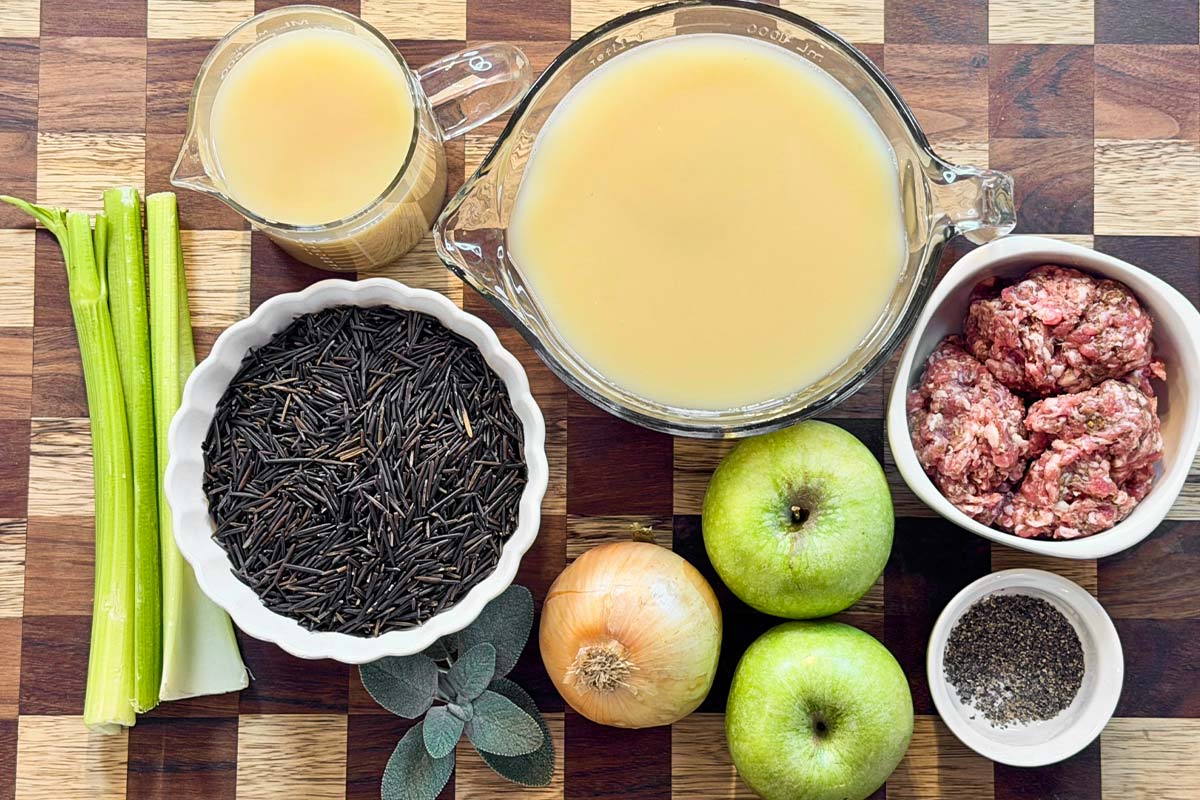 (Terri Ward/The Epoch Times)
Total Time: 1 hour, 5 minutes
Ingredients
-
6 cups chicken bone broth
-
2 cups wild rice (not a blend)
-
3/4 pound bulk breakfast sausage
-
2 tablespoons butter or ghee
-
1 medium onion, chopped
-
3 ribs celery, chopped
-
2 small Granny Smith apples, cut into 1/4-inch dice (about 3 cups)
-
1/2 teaspoon ground black pepper, or to taste
-
1 tablespoon minced fresh or rubbed sage
-
1/4 teaspoon sea salt, or to taste
Instructions
Step 1: In a saucepan, over medium-high heat, bring the broth to a boil.
Step 2: Rinse and drain the wild rice. Add it to the broth and reduce the heat to maintain a gentle boil. Cook for 20 to 60 minutes, until the rice is tender but still has some bite. Varieties vary in cooking time, so watch for the grains to start splitting open a little and most of the liquid to get absorbed.
Step 3: While the rice cooks, brown the sausage in a medium skillet over medium heat for 8 to 10 minutes, breaking it into small pieces. Transfer it to a bowl, and drain any fat from the skillet.
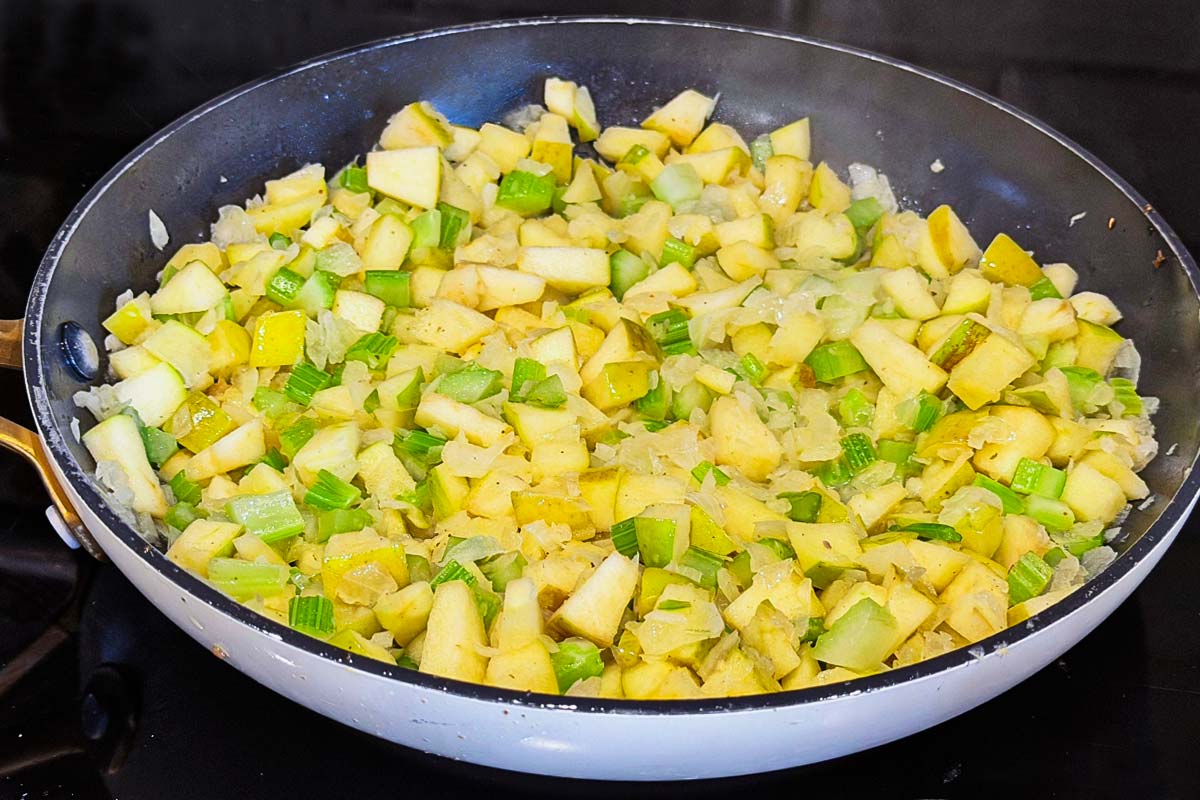
Step 4: Melt 2 tablespoons of butter or ghee in the skillet. Add the onion, celery, apples, and black pepper; cook for about 7 minutes. Add the sage and stir. If you can’t smell it, add a little more. Cook another 3 to 4 minutes, until the apples and celery are soft.
 (Terri Ward/The Epoch Times)
Frequently Asked Questions
Q: Can I make wild rice dressing ahead of time?
A: Sure. You can cook the wild rice ahead, which is the majority of the recipe time, and refrigerate it up to four days or freeze it up to six months. You can also prepare the entire dressing in advance; refrigerate it for up to four days, then reheat before serving. Add reserved broth as needed to keep the dressing moist. Keep in mind that the four-day refrigeration window includes storage both before and after serving.
Q: Can I use a wild rice blend instead of pure wild rice?
A: You can, but the flavor, texture, and cooking time will differ. Wild rice blends often contain brown or white rice, which may become soft before the wild rice is fully cooked. Follow the package directions and adjust the broth accordingly.
Q: Can I make this dressing without sausage?
A: Yes. Omit the sausage and sauté the vegetables in olive or avocado oil. For additional savory flavor, try adding sautéed mushrooms. Use vegetable broth instead of chicken broth for a vegetarian version.
Q: Can I add pecans or cranberries to wild rice dressing?
A: Yes, you can add either or both. For a pop of color and tartness, stir in 1 cup unsweetened dried cranberries when combining the wild rice, vegetables, and sausage. For extra crunch, stir in 1 1/2 cups toasted pecan halves just before serving.

