

When I was little, I didn’t like sweet potatoes. I remember sitting beside my Grandpa at the Thanksgiving table when he offered me some. I declined, but Grandpa wasn’t taking no for an answer.
“Oh no! You have to try them,” he said.
He proceeded to mash them with my fork and smother them in butter until I agreed to take a bite. Of course, almost anything tastes good smothered in butter!
Years later, I began buying fresh sweet potatoes for myself and discovered that I liked their flavor and texture better than the darker orange ones in a can that I’d grown up eating.
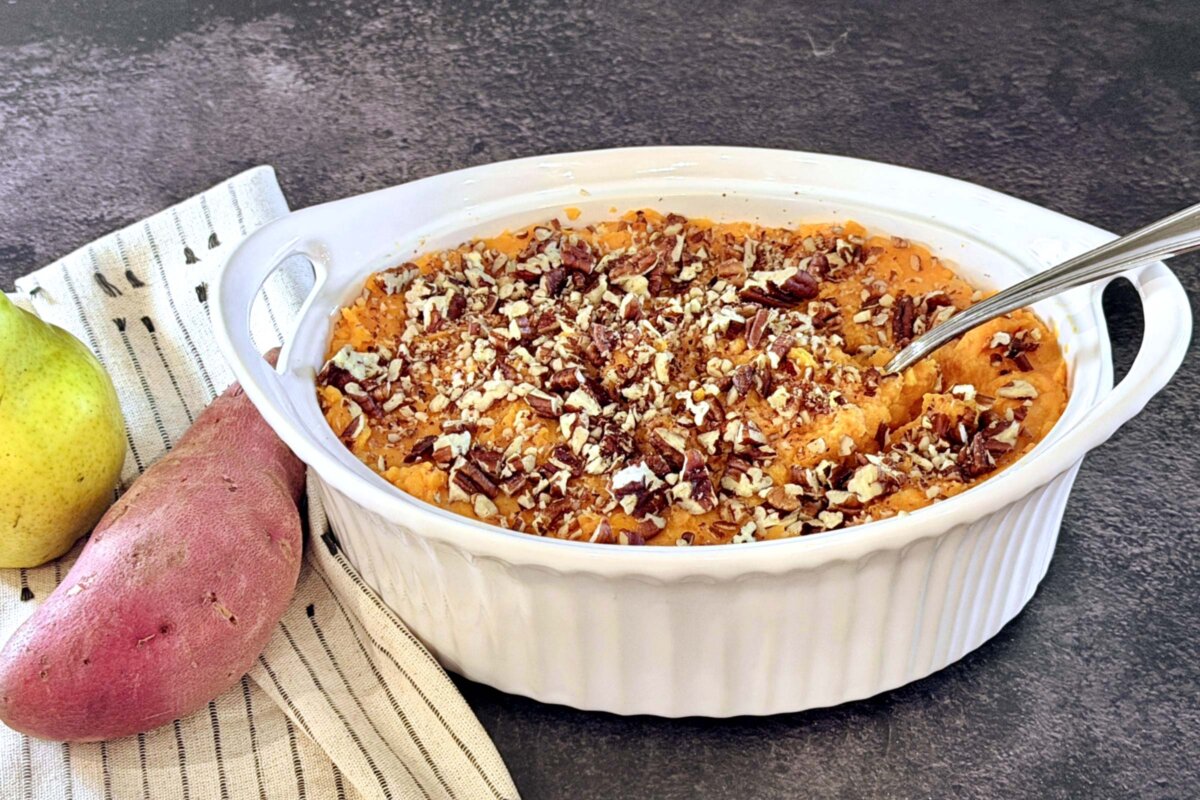
My son first introduced me to pairing sweet potatoes with pears. Now, I enjoy their natural sweetness not buried under sugar and marshmallows and have made this dish part of our Thanksgiving tradition.
Grandpa might still reach for the butter, though, and I wouldn’t blame him.
How Marshmallows Took Over Thanksgiving
Americans were making sweetened sweet potato dishes long before marshmallows entered the picture. But in 1917, Angelus Marshmallows’ marketers hired Janet McKenzie Hill, founder of “Boston Cooking School Magazine,” to create recipes that encouraged families to use more marshmallows. One of those recipes featured mashed sweet potatoes baked beneath a marshmallow topping.
A candy company’s sales promotion helped create a Thanksgiving tradition that has lasted more than a century.
Oh, the power of marketing!
Sweet Potatoes vs. Yams: What’s the Difference?
Despite the names on grocery store signs, most “yams” sold in American supermarkets are actually sweet potatoes. True yams are an entirely different plant, rarely stocked in American supermarkets but often available at international markets. Common in African, Caribbean, and Asian cooking, they’re generally starchier, less sweet, and often have rough, bark-like skin. They range from the size of a small potato to 5 feet long and can weigh up to 130 pounds.
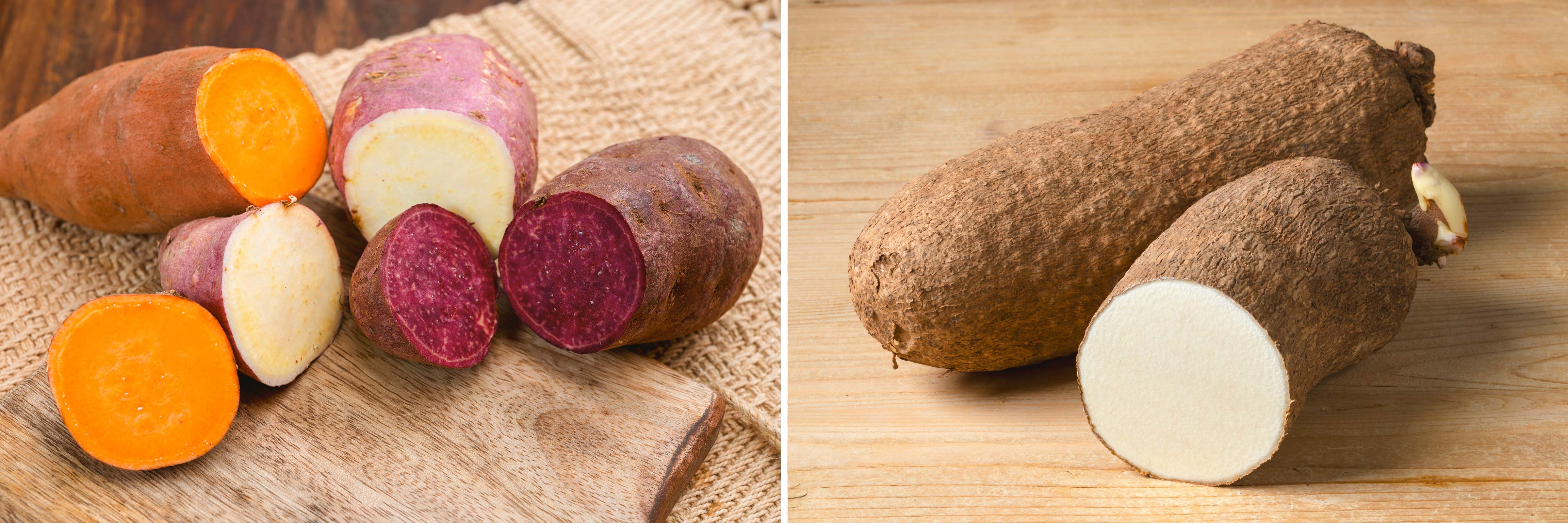 (Left) Sweet potatoes commonly sold in America, sometimes called yams. (barmalini/Shutterstock)(Right) True yam. (Picture Partners/Shutterstock)
-
Orange-Fleshed Sweet Potatoes: This variety tends to become soft, moist, and sweet when cooked. Beauregard and Jewel are familiar examples. They’re also especially rich in beta-carotene, which the body converts to vitamin A to support vision and immune function.
-
White- or Cream-Fleshed Sweet Potatoes: Generally firmer and drier, with a milder sweetness. Some have a texture closer to a baking potato, so they’re good for baking, roasting, frying, or savory dishes where you don’t want too much sweetness.
-
Purple-Fleshed Sweet Potatoes: Their striking color comes from anthocyanins, plant pigments with antioxidant properties. Higher anthocyanin intake is associated with lower cardiovascular disease risk and improved blood vessel function. Their flavor and texture vary by variety.
For this recipe, orange-fleshed sweet potatoes are the best choice for a soft, creamy result. Purple varieties can work, too, although their texture may differ.
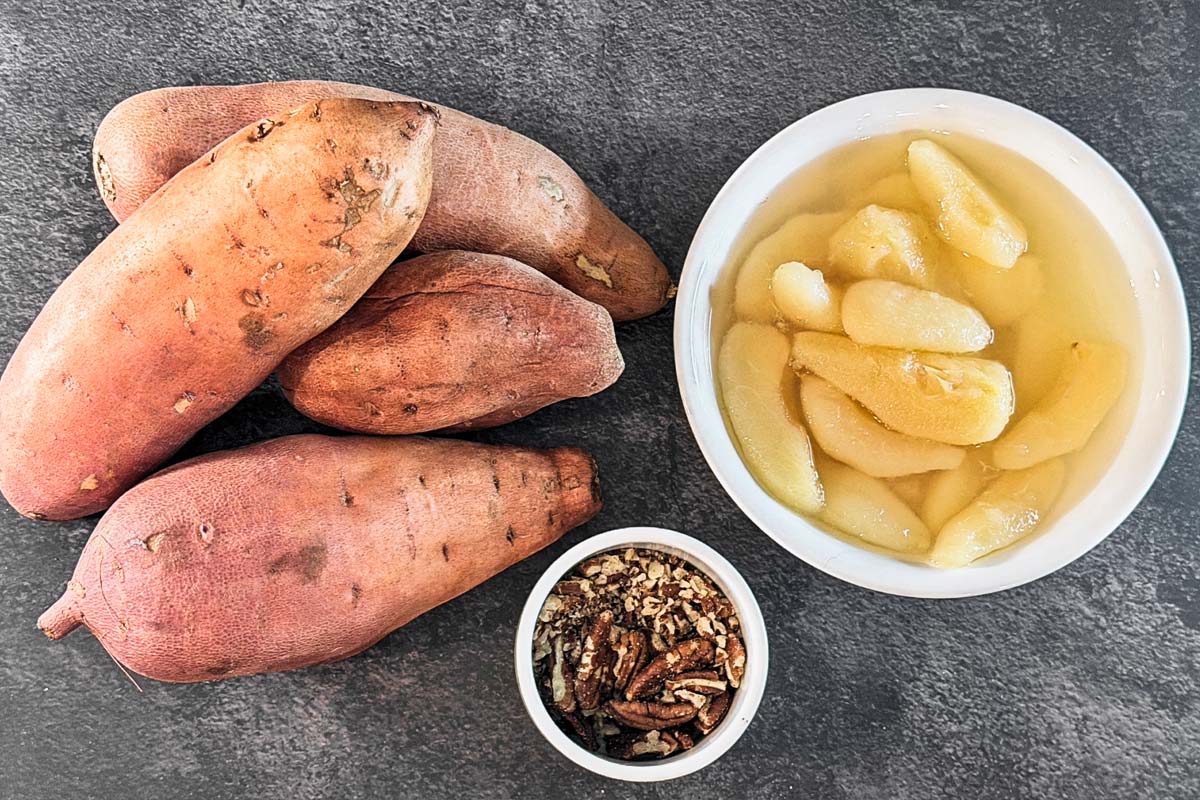 (Terri Ward/The Epoch Times)
Frequently Asked Questions
Q: Can I make sweet potatoes and pears ahead of time?
A: Yes, and it helps when oven and stovetop space is tight. Prepare the dish through the mashing, without the pecans. Cool promptly and refrigerate covered for up to four days. Reheat in the microwave, stirring halfway through, or in a covered 350-degree oven until hot. Add a splash of pear juice or water if needed. Toast the pecans separately and add them just before serving to keep them crunchy. Be sure total refrigeration time before and after serving does not exceed four days.
Q: Can I add spices to sweet potatoes and pears?
A: Absolutely. We like them plain, but for a warmer holiday flavor, add 1/2 teaspoon of cinnamon when you mash the sweet potatoes and pears together.
Q: Can I use fresh pears instead of canned?
A: Yes. Peel, core, and dice one to two ripe pears to make about 1 cup. Add them to the sweet potatoes during the last five to 10 minutes of simmering, until both are soft enough to mash. Because you won’t have the reserved juice from the can, add a little sweet potato cooking water or unsweetened pear juice, 1 or 2 tablespoons at a time, if needed to loosen the mash.
Q: Can I use pears packed in syrup?
A: You could, but syrup adds sugar, so fresh pears would be a better alternative. If syrup-packed pears are all you can find, drain and discard the syrup, and use sweet potato cooking liquid instead to moisten the mash.
Q: Can I use canned yams?
A: For this naturally sweetened recipe, fresh sweet potatoes are best. Most canned yams are actually sweet potatoes packed in syrup, which adds unnecessary sugar. However, if that’s all you can find, they’ll save you the peeling, chopping, and cooking time. Drain and discard the syrup before mashing the canned sweet potatoes with the pears.

