

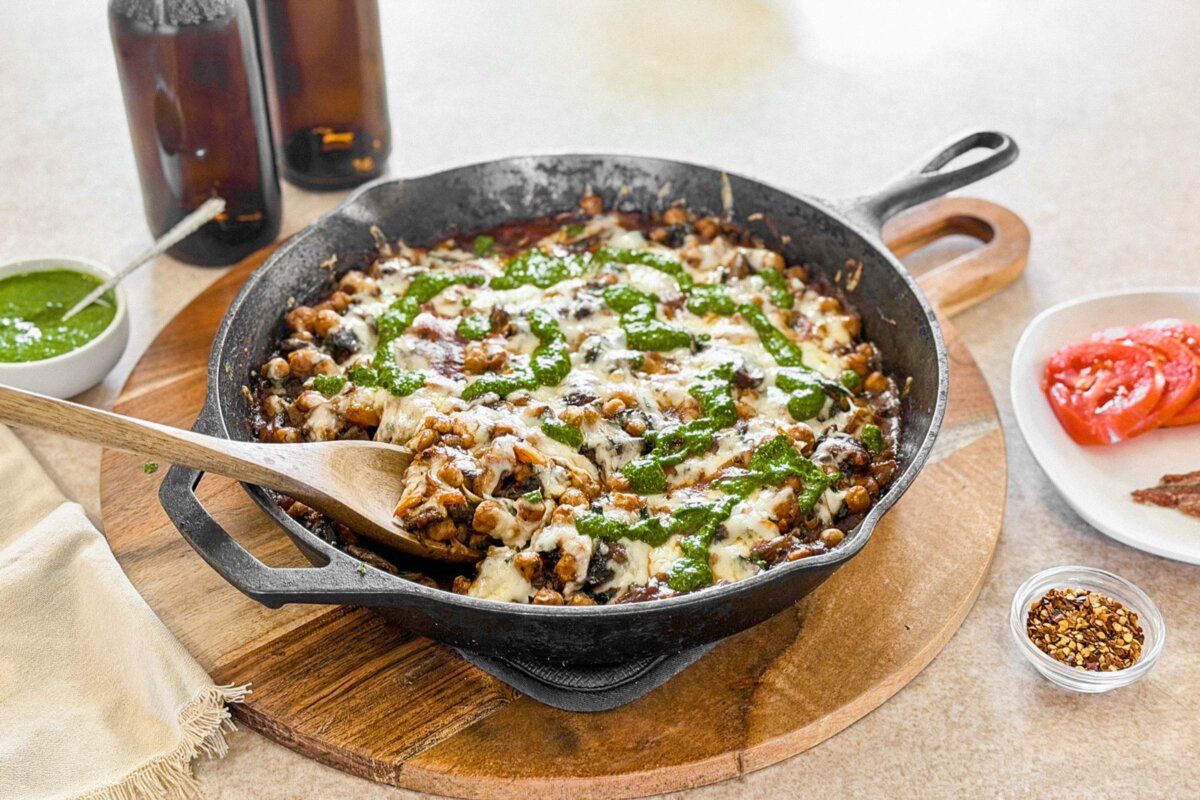
Pizza chickpeas bring the comfort and flavors of pizza night to a skillet, with approximately 26 grams of protein and 19 grams of fiber per serving. You get that familiar comfort on a more nutritious foundation, without the crust.
Inspired by pizza beans, a dish that combines beans with pizza-style sauce and toppings, I created this pizza chickpeas recipe because I love chickpeas. I also knew they would provide a satisfying bite that stands up to the sauce, plus plenty of protein and fiber. Mushrooms, bell pepper, red onion, and kale bring classic veggie pizza flavors to a hearty skillet dinner. My husband’s verdict? “Mmmm. You could make that again.”
Simple Homemade Pizza Sauce
You don’t need to buy a jar of sauce with sugar and other unnecessary ingredients or spend an afternoon simmering sauce to make a great sauce for pizza chickpeas. One of my first junior-high home economics projects was a simple pizza sauce, and I’ve never forgotten the lesson: a short ingredient list can still make something delicious.
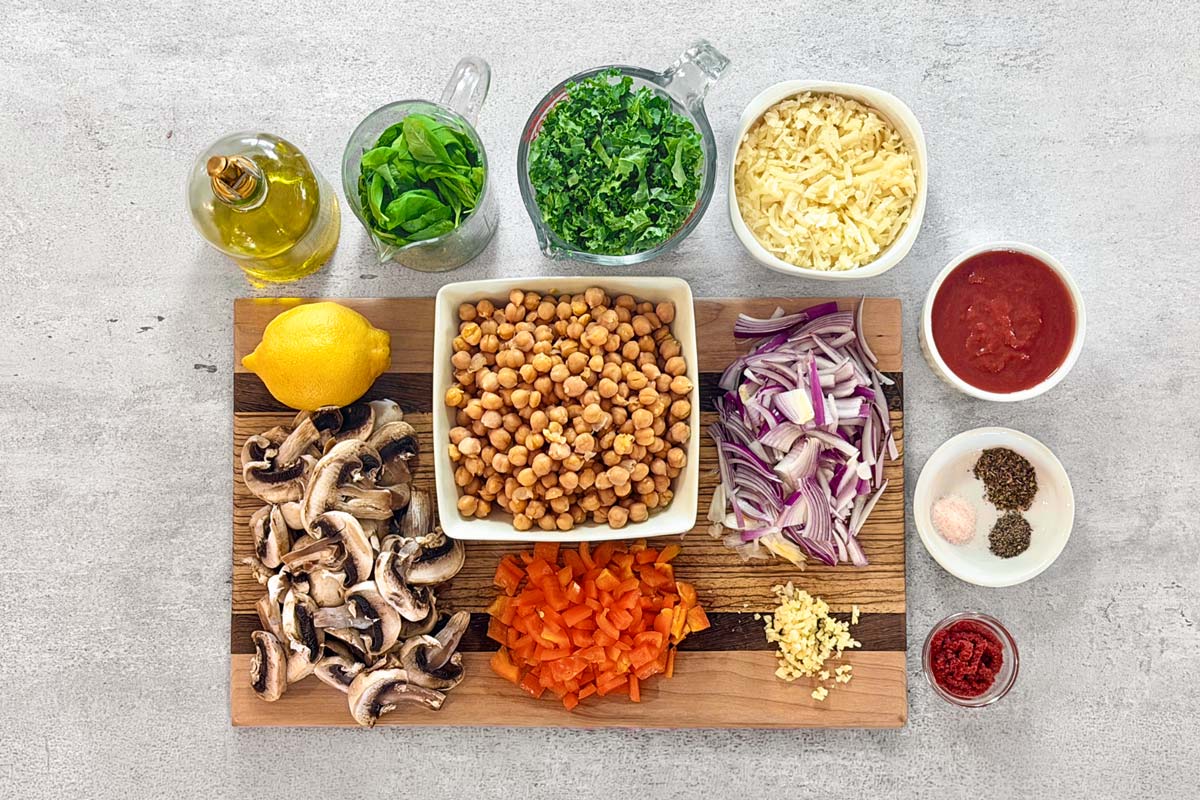
Here, tomato sauce and a little tomato paste form the base, and oregano supplies that familiar pizza flavor. Sautéed onion and garlic enrich the Italian flavor profile.
This sauce is one of the places I sneak in unflavored collagen peptides. They add protein without changing the flavor or texture.
Why Pizza Chickpeas Are Rich in Protein and Fiber
 (Terri Ward/The Epoch Times)
Each serving delivers about 19 grams of fiber, with 10.5 grams from the chickpeas and the vegetables and tomato sauce providing the rest. The fiber helps support digestion and nourish beneficial gut bacteria.
The 26 grams of protein come from chickpeas (10 grams), mozzarella (6 grams), collagen (4 grams), and smaller amounts from the vegetables and sauce. Together, the protein and fiber help make this a satisfying meal while supporting muscle and gut health.
It’s pizza-inspired comfort food with plenty of nutrition, and no dough to make.
A Fresh Basil Puree for Extra Flavor
I am allergic to cow dairy, so pizza feels a bit incomplete without cheese. My husband’s favorite margherita pizza comes with a side of basil puree for drizzling on top. One night, he suggested I order the puree with my pizza. It more than made up for the missing cheese, and I order it every time now. It’s pesto’s simpler cousin: just fresh basil blended with olive oil, lemon juice, water, and salt.
Frequently Asked Questions
Q: Can I use dried chickpeas instead of canned?
A: Absolutely. While canned chickpeas are convenient, I prefer soaking them overnight in filtered water before pressure cooking to help reduce antinutrients. For tender chickpeas, soak them overnight in filtered water with 1/2 teaspoon of baking soda per cup of dried chickpeas. Drain and rinse, then pressure cook in fresh water on high for 15 minutes, followed by a natural pressure release. Older chickpeas may need to cook longer. Substitute 3.5 cups of cooked, drained chickpeas for the two cans.
For more info, check out: “5 Ways to Prepare Legumes for Better Digestion and Nutrient Absorption.”
Q: Can I make pizza chickpeas dairy-free?
A: Yes. You can use vegan cheese or, if you tolerate it, goat mozzarella. However, because the basil puree and sauce provide so much flavor, you could skip the mozzarella altogether. Skipping the mozzarella would reduce the protein by about 6 grams per serving.
Q: Do I need to add the collagen?
A: No. The collagen boosts the protein, but without it, each serving still provides about 22 grams. Collagen is animal-derived, so omit it if you want a vegetarian version.
Q: Can I use other vegetables or legumes?
A: Certainly. Spinach or Swiss chard leaves can replace the kale and will wilt more quickly. Collard greens also work but may need more cooking time. Other cooked beans, such as pinto, butter, or navy, can stand in for the chickpeas. Zucchini, artichokes, or olives would be nice additions, too.
Q: Can I freeze pizza chickpeas?
A: Yes, but the texture and moisture content may be different from when it’s fresh. Mushrooms and kale release water as they thaw, mozzarella melts best fresh, and the chickpeas may soften. For best results, freeze the skillet mixture (without the cheese or basil puree) in an airtight container for up to three months. Thaw it overnight in the refrigerator, reheat until steaming hot, then top with fresh mozzarella and bake until melted. Finish with fresh basil puree.

