
A tremor settles. Movement becomes easier. A task that had become difficult feels more manageable.
For people with Parkinson’s disease, these small victories can mean keeping a little more independence with a disease that can gradually take it away—and a growing body of research is asking whether a noninvasive, surgery-free technology called pulsed electromagnetic field (PEMF) therapy might help deliver them.
PEMF is an emerging area of research, but early findings are encouraging.
How Might PEMF Affect the Brain?
Deep brain stimulation, an established Parkinson’s treatment, uses surgically implanted electrodes to send electrical pulses deep into the brain. It can control tremors dramatically; patients can sometimes switch the device off and on and feel the tremor return or disappear almost instantly.
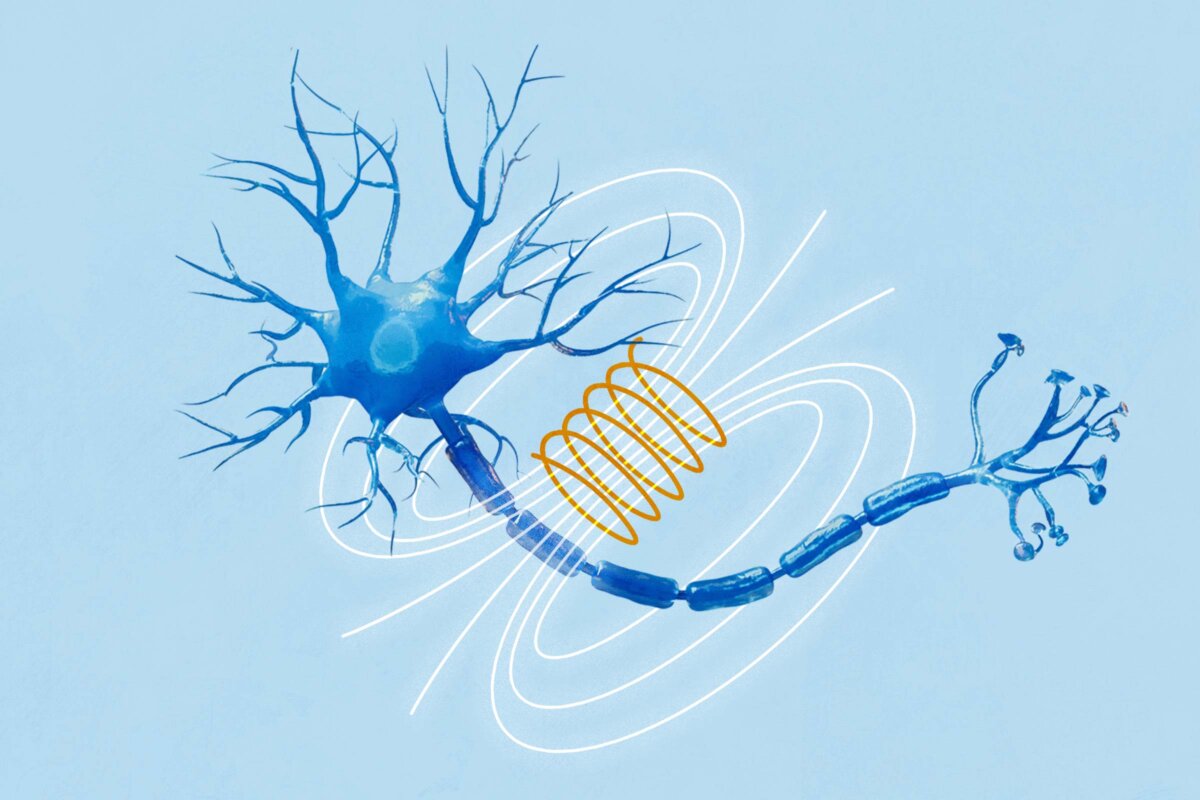
Unlike deep brain stimulation, PEMFs use a device positioned outside the skull to generate magnetic pulses that penetrate the skull and induce small electrical currents in the brain, without surgery or implanted electrodes.
Because neurons communicate through electrical signals, the small current induced by a changing magnetic field can alter their electrical state and influence whether they fire.
Parkinson’s disease “is not simply a disorder of dopamine deficiency,” said Dr. Giuseppe Lanza, a neurologist and full professor at the University of Catania in Italy who researches neurodegenerative diseases and has published extensively on Parkinson’s disease.
“It involves abnormalities in the activity, connectivity, and plasticity of several interacting brain networks,” he told The Epoch Times.
Researchers believe that PEMF may work through several overlapping channels: changing how brain cells signal one another, influencing the brain’s ability to adapt and rewire itself, and affecting how cells produce energy and how the brain manages inflammation.
Some experimental work has also suggested possible effects on cellular metabolism and neuroinflammatory or neuroprotective pathways. In other words, it affects how brain cells produce energy, how inflammation is regulated, and how nerve cells are protected from damage.
Lanza’s research has long focused on clinical neurophysiology and noninvasive brain stimulation, particularly on how these approaches can help us understand and potentially modulate altered brain network function in neurological disorders.
Nevertheless, the precise mechanisms relevant to Parkinson’s disease remain elusive, particularly in humans; as such, further clinical evidence and follow-up are needed, Lanza said.
What Does the Research Show So Far?
In one recent study, daily PEMF treatment given over three eight-week periods to 14 people with Parkinson’s disease was shown to reduce hand tremor intensity on the most affected side. The treatment also appeared to improve the abnormal, rhythmic brain activity associated with Parkinson’s tremor.
Other studies have found that high-intensity PEMFs can moderately improve the movement symptoms of Parkinson’s disease compared with sham treatment, with a greater number of pulses per session or across sessions. Larger improvements were seen when patients received more magnetic pulses per session or over the course of treatment.
Some researchers suggest that PEMFs might work by increasing dopamine levels in the brain, possibly by protecting dopamine-producing nerve cells from damage and supporting their ability to function and repair themselves.
“Many patients have reported improvements in motor symptoms such as rigidity, mobility, or overall motor performance,” Lanza said.
There has also been interest in the possible effects of PEMF on non-motor symptoms, including fatigue, mood, sleep, and aspects of cognitive functioning, he said.
Things to Consider
Despite the promising early signals, Lanza cautioned against getting ahead of the evidence.
PEMF should currently be regarded as an investigational approach for Parkinson’s rather than a replacement for established treatments, he said. The studies so far have involved small numbers of participants, inconsistent treatment protocols, and short follow-up periods.
“Noninvasive neuromodulation is a very promising field, but noninvasive does not automatically mean universally effective,” he said.
Further questions include which patients might benefit, which stimulation parameters are optimal, how long any benefit lasts, and how these techniques should best be combined with medication and rehabilitation.
Although no Food and Drug Administration-approved device exists in the United States for Parkinson’s patients, several clinical trials are underway. Dr. Adeeti Gupta, a functional medicine physician and the founder and CEO of American Longevity Centers, told The Epoch Times that she is optimistic.
“We live in exciting times. I am hopeful that we will have a plethora of noninvasive options as we advance through the next few years. I would propose that the sooner the treatments are initiated, the better the chances of improvement, as is always the case in neurodegenerative conditions,” Gupta said.
Lanza sees the future as being tailored.
“More broadly, I believe the future of neuromodulation in Parkinson’s disease may lie less in a one-size-fits-all approach and more in personalized interventions based on the individual patient’s clinical and neurophysiological profile,” he said.