
Aimie Apigian had tried therapy and medication. Neither touched the anxiety and burnout that had brought her, a surgical resident at the time, to the end of her rope. What finally worked was something she found in common drinking water: a trace mineral called lithium.
It was a leave of absence that gave Apigian time to research ways she could improve her mental health, and lithium in supplement form became a key part of her strategy.
“It stabilized me and took the edge off, made things much more manageable,” Apigian told The Epoch Times.
The effect was so profound that she pivoted her career and became double board-certified in preventive and addiction medicine. Lithium expanded beyond her personal toolbox; she saw that it could prevent relapse by eliminating mood swings that cause addicts to reach for a fix.
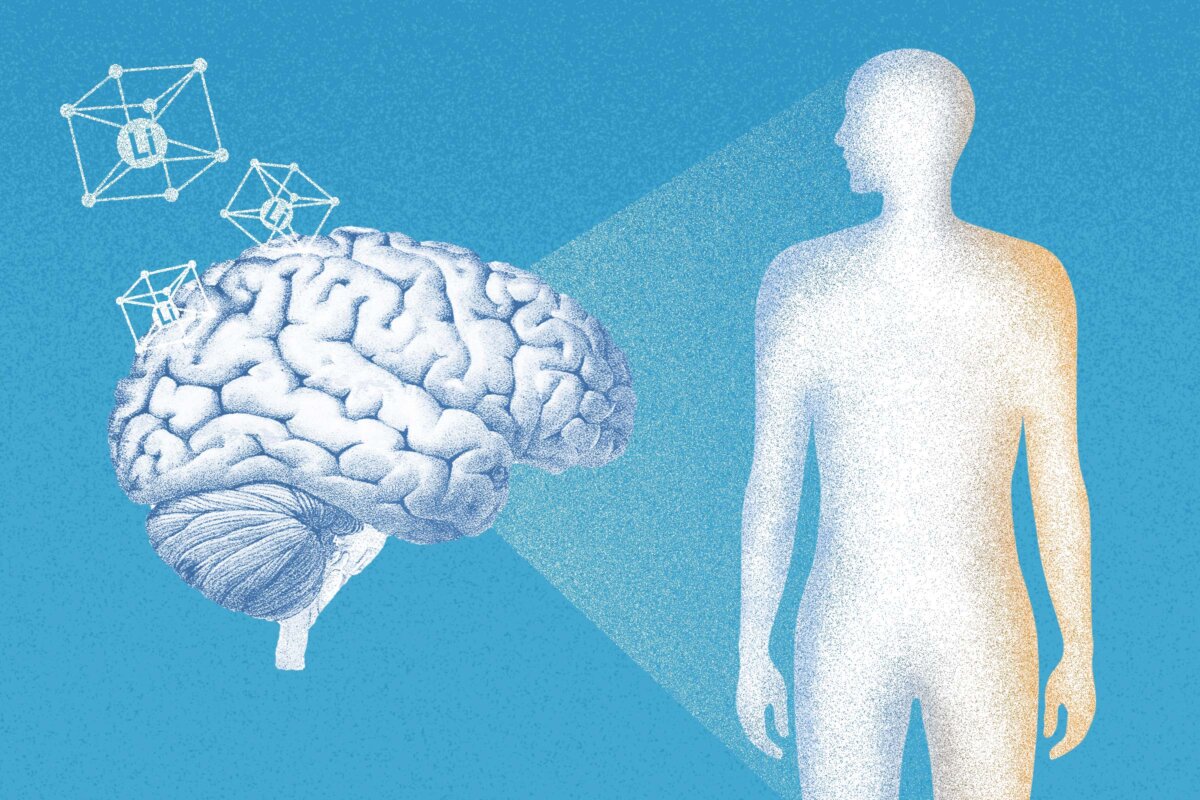
Best known as a treatment for bipolar disorder, lithium is naturally present in trace amounts in the body, as it is found in food and water, and influences dozens of signaling pathways involved in brain health, inflammation, and cellular repair. Apigian is among a small but vocal group of physicians who describe lithium as an essential nutrient.
Some Don’t Have or Get Enough Lithium
People with kidney disease and those on dialysis are at risk of becoming deficient in lithium because treatment filters it from the body. However, whether that deficiency is linked to other problems is unknown. There’s no established dietary requirement for lithium.
Your lithium level depends in part on your daily exposure, and most of it comes from groundwater. Depending on where you live, groundwater levels can vary from less than 2.3 micrograms per liter, the level in parts of Florida and Massachusetts, to more than 149 mg per liter, the level in West Texas and communities in Arizona.
Lithium is absorbed through the intestine and excreted through the kidneys within a day, and it is replenished by drinking water, grains such as cereals, and produce such as potatoes, tomatoes, chickpeas, leafy greens, and cabbage.
Changes in diet—especially reverse osmosis water filtration—may limit one’s exposure.
“It could be the bottled water everyone’s drinking or environmental toxins getting in the way of absorption. One study showed ultraprocessed food lowers lithium—so there are many factors,” Dr. James Greenblatt, a psychiatrist who has used supplemental lithium with patients of all ages for 30 years and author of “The Lithium Revolution,” told The Epoch Times.
More than half of the children tested in his practice have negligible or undetectable levels of lithium—one of many micronutrients he tests for because he has found that deficiencies are linked to attention, mood, and neurological health.
Lithium’s Reputation With Mental Health
Based on large-scale population studies, lithium is generally associated with better mental health outcomes.
Areas with high concentrations of lithium in public drinking water around the world were found to have lower suicide rates, according to a meta-analysis published in The British Journal of Psychiatry. The authors suggested the reason may be that lithium can ameliorate the symptoms of mood disorders or that it has anti-aggressive effects.
Because of its small molecular size, lithium can cross the blood-brain barrier to reach key areas of the brain, influencing cell signaling pathways that regulate inflammation, mitochondrial function, cellular repair, and neurotransmitter levels.
Low exposure to lithium is associated with higher homicide rates, aggressive behaviors, unipolar/bipolar disorders, and acute mania, according to a review published in Science of the Total Environment.
“Lithium is one of the most effective psychopharmacological agents that has outlived a variety of psychotherapeutic trends in half a century,” the authors wrote.
A small study published in the Journal of the American Association of Nurse Practitioners showed how genes might be relevant. Among 50 patients with depression, bipolar disorder, or generalized anxiety disorder who carried a CACNA1C risk variant, depression scores decreased by 66 percent and anxiety scores by 65 percent after lithium treatment. Because the study had no control group, however, it’s uncertain whether lithium alone caused those improvements. Nevertheless, the authors and other studies note that such genetic screening could help direct more personalized psychiatric treatments.
Not All Lithium Is the Same
Lithium in water and food is bioavailable, but when lithium is taken as a supplement or medication, it requires a carrier molecule, such as orotic acid, to cross cell membranes.
Many studies focus on lithium orotate—a form of lithium that delivers a much smaller dose than pharmaceutical-grade lithium carbonate, which is used to treat mania in bipolar disorder and aggressive/self-harm behavior.
A dose of 5 to 20 milligrams of lithium orotate poses no safety concerns and is equivalent to 27 to 107 milligrams of lithium carbonate.
The prescription form of lithium is typically delivered with the carrier molecule carbonate in doses that start at 250 milligrams. Carbonate doesn’t cross the cell very easily, requiring doses of lithium that—at high levels—can become toxic and raise the risk of neurological and organ damage.
Many healthcare providers and patients are hesitant to consider lithium as a supplement because they confuse the supplement with the prescription form, Greenblatt said.
“I think that people have been scared of understanding and utilizing low-dose lithium because of its association with the medication, lithium carbonate,” he said. “It’s really important that people understand that it’s very different. Lithium orotate potential side effects are very rare, and at these lower doses, it seems to have a pretty significant clinical benefit.”
Lithium’s Many Mechanisms of Action
Lithium’s modulating effect on neurotransmitters receives the bulk of attention, but it operates through many mechanisms and interconnected pathways.
“It’s just so mind-boggling, and that’s both fascinating and frustrating to try to teach because there are so many mechanisms of action,” Greenblatt said.
Lithium increases brain-derived neurotrophic factor (BDNF), a protein that improves your nervous system by keeping neurons alive and aids in the growth of new synapses that help the brain adapt, learn, and form new memories.
Increasing BDNF takes place with the help of one of lithium’s primary mechanisms: inhibition of glycogen synthase kinase 3 (GSK3), an enzyme that regulates cell death, metabolism, and inflammation.
“There are people looking at drugs to do this because that’s a major enzyme that causes inflammation in the brain,” Greenblatt said.
Overactivity of GSK3 is linked to the progression of problems such as neurodegeneration, tumor growth, and insulin resistance.
Low lithium was discovered in the brains of people with mild cognitive impairment, a precursor to Alzheimer’s disease, in a study published in Nature. Researchers also found that depleting lithium from the brains of mice increased amyloid plaque deposits and tau tangles—hallmarks of Alzheimer’s disease—and accelerated cognitive decline, but therapy with lithium orotate prevented brain changes and memory loss.
Among 252,178 men and women followed for more than three and a half years, those with higher lithium in their groundwater had reduced cancer risk, according to a study published in JAMA Network Open. The authors noted that lithium may block enzymes such as GSK3 and inositol monophosphate that are involved with cancer progression.
Lithium appears to help the body respond more efficiently to insulin; diabetes is associated with the discontinuation of lithium in bipolar patients. Lithium inhibits GSK3, which normally puts the brakes on insulin signaling. Without the brakes, insulin can more easily move glucose into cells and preserve the pancreas from overproducing insulin, protecting it from oxidative damage.
Other studies indicate lithium may be protective against viruses such as COVID-19, HIV, and herpes. Lithium is also associated with benefits for cardiovascular, musculoskeletal, metabolic, and cognitive function, as well as inflammatory and antioxidant processes of the aging body, according to a study in Current Neuropharmacology. GSK3 was once again highlighted as a mechanism, in these instances, for regulating inflammation, cell survival, metabolism, and tissue repair.
How Much Lithium Is Necessary?
Some psychiatrists—Greenblatt included—and researchers argue that lithium should be considered an essential nutrient.
It’s been suggested that lithium be added to cereals and to multivitamins for adults. In 1929, lithium citrate was one of the main ingredients in a soft drink called Bib-Label Lithiated Lemon-Lime Soda, which later became 7UP. The ingredient was removed in 1950, and since then, it’s been largely considered a contaminant.
However, dosing may be complex, according to a review published in Biological Trace Element Research that pointed to a case of severe nausea and vomiting associated with 120 mg of lithium—a regular supplement dose is usually 5 mg.
“The risk of intentional abuse of the supplement or accidental poisoning … also constitutes an obstacle to increasing the intake of this element at a population level,” the authors of the review wrote.
Fortifying water supplies or foods would be a step too far, Greenblatt said. He said he believes that lithium supplementation should match an individual’s levels and needs and be used only for those who would benefit, rather than being forced on everyone.
Combined with trends he’s seen in who responds best to lithium—those struggling with irritability, anger, and impulsivity who have a family history of addiction—he often recommends low doses of lithium orotate, typically five to 10 mg.
Apigian said that not only is lithium a safer alternative to many medications, but also, it is vital to optimal well-being.
“We have all of the research that we need to really be able to stand on that firm foundation to say it is a key nutrient,” she said. “What we need is to accept the fact that not everything is [fixed with] a prescribed medication.”