

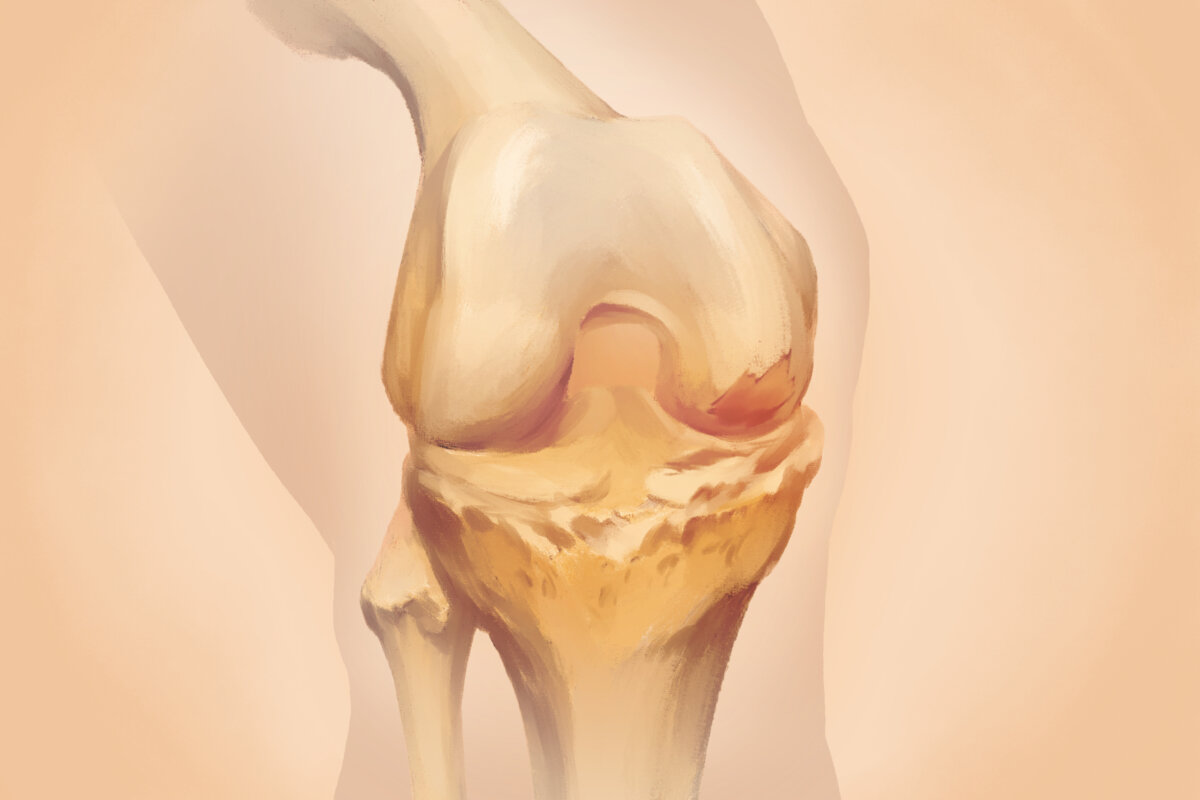
Knee osteoarthritis, also called degenerative joint disease, is the most common form of osteoarthritis and a leading cause of pain and loss of function. Up to 17 percent of adults aged 45 and older have symptomatic knee osteoarthritis.
It develops through four overlapping changes: gradual breakdown of the joint’s cartilage, changes in the bone beneath it, inflammation of the joint lining, and the growth of extra bone, known as bone spurs.
-
Knee Pain: This is the most common symptom. It can be mild to severe, dull or sharp, constant or intermittent. Pain often develops gradually, may persist for months, and typically worsens with activity. In advanced stages, pain may occur while resting or at night.
-
Swelling and Tenderness: The knee may become swollen, mildly warm, or painful when pressure is applied, reflecting inflammation within the joint.
-
Joint Stiffness: Stiffness is common in the morning or after prolonged sitting or rest. It usually improves within 30 minutes of movement.
-
Reduced Range of Motion: Cartilage loss, joint changes, and stiffness limit how far the knee can bend and straighten, making everyday tasks harder.
-
Grinding, Cracking, or Clicking Sounds: A grinding feeling or popping and cracking sounds, known as crepitus, may occur when moving or bending the knee, due to changes in the joint surfaces, including cartilage degeneration and irregularities in the underlying bone. Some people also experience clicking or catching sensations.
-
Muscle Weakness: Pain can lead people to move less, which weakens the muscles surrounding the knee. This reduces joint support, impairs knee control, and contributes to instability.
-
Changes in Knee Shape or Alignment: As cartilage wears away and bone changes develop, the knee may look enlarged, bowlegged, or knock-kneed.
Knee osteoarthritis symptoms do not always match the changes seen on X-rays. This is because X-rays only show bone changes, such as bone spurs and narrowing of the joint space. Pain, by contrast, also depends on soft tissues, the degree of inflammation, and how sensitive the nervous system has become.
[shortcut_anchor id=”anchor_1794083928804″ label=”Causes”]What Causes Knee Osteoarthritis?[/shortcut_anchor]The knee is a large, weight-bearing joint formed by three bones: the femur (thigh bone), tibia (shin bone), and patella (kneecap). The ends of these bones are covered with a smooth, slippery layer of tissue called cartilage, which reduces friction, cushions the bones, and allows the knee to move smoothly.
Within the knee there are two thick pads of cartilage called the menisci, which act as shock absorbers, spread body weight across the joint, and help keep the knee stable.
The whole joint is enclosed in a tough capsule lined by a membrane that produces fluid to lubricate and nourish the cartilage.
In a healthy knee, cartilage undergoes a continuous process of breakdown and repair. In knee osteoarthritis, cartilage breakdown begins to outpace the body’s ability to repair it.
The cartilage’s collagen network is altered, and the tissue loses elasticity. As a result, the cartilage cracks and fissures, and the joint surface gradually erodes. Because cartilage lacks a direct blood supply, contains relatively few repair-capable cells, and has limited ability to regenerate its complex structural matrix, the damage keeps building, reducing cushioning between the bones and narrowing the joint space.
However, knee osteoarthritis is not just a “cartilage problem.”As the disease advances, the bone underneath the cartilage is also affected. It thickens and enlarges, and bone spurs form at the joint edges. The menisci may also fray or tear. It’s a progressive condition of the entire joint.
Age is the most significant risk factor for osteoarthritis. As we age, the body’s ability to repair cartilage declines. Risk rises especially after age 45, and prevalence reaches as high as 40 percent in people over 70. Primary knee osteoarthritis was once dismissed as normal wear and tear associated with aging. However, researchers now understand that osteoarthritis develops through the interaction of several factors, including genetics, biological processes within the body, and the mechanical stresses placed on the joints. Some of these factors you cannot change; many you can.
-
Articular Trauma: Previous knee injuries, such as fractures, ligament tears, or meniscal damage, can all increase the risk of developing osteoarthritis.
-
Overtraining: Regular, moderate physical activity protects the knee, while intensive training and repetitive high-impact sports may increase the risk of osteoarthritis through repeated stress on the joint. A sedentary lifestyle is also a risk, because inactivity weakens the muscles that support the knee.
-
Muscle Weakness or Imbalance: Weak or imbalanced muscles around the knee reduce stability and distribute the load unevenly across the joint.
-
Occupation: Jobs involving prolonged standing, frequent kneeling, repetitive knee bending, squatting, or heavy lifting can place greater stress on the knee.
-
Weight: Excess body weight increases mechanical stress on the knee and may promote inflammation, as excess fat tissue releases inflammatory substances such as interleukin-6 and tumor necrosis factor-alpha. These inflammatory substances can stimulate enzymes that break down cartilage and interfere with cartilage cells’ ability to maintain and repair the tissue. Research found that the risk of knee osteoarthritis increased by 35 percent for every 5-unit increase in body mass index.
-
Certain Medical Conditions: Rheumatoid arthritis, in which the immune system mistakenly attacks joint linings, Type 2 diabetes, gout, and knee infections may increase the risk of osteoarthritis. In Type 2 diabetes, its link may run through high blood sugar and body-wide inflammation, as well as obesity, which is associated with both conditions. Gout and osteoarthritis share several risk factors, including older age, obesity, and previous joint injuries. Joint infections may also damage cartilage, increasing the risk of secondary osteoarthritis.
-
Sex: Women have a higher risk of developing knee osteoarthritis than men, particularly after menopause. This may be partly due to declining estrogen levels. Estrogen plays a role in maintaining cartilage health, regulating inflammation, and supporting bone and joint metabolism. After menopause, reduced estrogen levels may contribute to increased inflammation, changes in cartilage metabolism, and reduced protection against joint degeneration.
-
Genetics: A family history of osteoarthritis may increase susceptibility due to inherited genetic factors, such as variants in the COL2A1 gene, which helps produce type II collagen, a protein that gives cartilage its strength and structure.
-
Bone Deformities: Abnormal alignment or shape of the bones around the knee can increase the risk of developing osteoarthritis.
-
Osteoarthritis in Another Joint: People who have osteoarthritis in another joint may be more likely to develop it in the knees as well.
[shortcut_anchor id=”anchor_1794083940073″ label=”Diagnosis”]How Is Knee Osteoarthritis Diagnosed?[/shortcut_anchor]When knee osteoarthritis is suspected, your doctor will first check whether a previous knee injury or another health condition could explain the pain and joint damage. Diagnosis typically rests on your medical history and a physical exam that assesses the knee’s range of motion, stability, strength, and overall leg alignment, while checking for signs such as joint-line tenderness, bony enlargement, and crepitus.
Your doctor may also perform a neurovascular exam to assess quadriceps and hamstring strength, sensation in the leg and foot, and blood flow by checking pulses. This helps identify muscle weakness, nerve problems, and potential circulation issues that might be contributing to your symptoms.
If the diagnosis is uncertain or another condition is suspected, your doctor may recommend additional tests or assessments:
-
X-Rays: X-rays are generally the first test used to evaluate knee osteoarthritis. They identify narrowing of the joint space between the thigh bone and shin bone, bone spurs, and changes in the shape of the bones.
-
MRI Scan: Used after X-rays to take a closer look at cartilage, soft tissues, or bone, or to rule out other possible causes of symptoms.
-
Ultrasound: Uses high-frequency sound waves to produce real-time images of the knee joint, to help identify soft-tissue inflammation, excess fluid in or around the joint, and bone spurs. If excess fluid is present, a doctor may use arthrocentesis, or joint aspiration, to remove it, potentially relieving pain and allowing the fluid to be tested to help identify the cause of inflammation and guide treatment.
-
Knee Scoring Systems: Assess the severity of knee osteoarthritis by evaluating pain, symptoms, physical function, and how osteoarthritis affects daily activities and exercise.
-
Arthroscopy: A minimally invasive surgical procedure in which a small camera is inserted into the knee joint to directly examine its internal structures. Although it was previously used to assess and treat cartilage damage associated with osteoarthritis, it is not routinely recommended for diagnosing or treating uncomplicated knee osteoarthritis.
-
Blood Tests: Cannot diagnose osteoarthritis, but they can help rule out other conditions that cause similar joint symptoms, such as rheumatoid arthritis.
[shortcut_anchor id=”anchor_1794084192105″ label=”Lifestyle Approaches “]What Are the Natural and Lifestyle Approaches to Knee Osteoarthritis?[/shortcut_anchor]You can manage mild symptoms on your own. Healthy habits are the foundation of knee osteoarthritis management.
1. Self-Care Strategies
Maintaining a healthy weight can help reduce pressure on the knees and relieve pain. Weight loss can be beneficial at any stage of knee osteoarthritis.
Break up long periods of sitting by getting up and walking around regularly to prevent stiffness and maintain mobility.
Wearing supportive athletic shoes and replacing worn-out pairs regularly (at least once a year) can also help reduce strain on the knees. If walking is difficult, consider using an assistive device such as a cane or walking stick to improve balance and reduce pressure on the affected knee. Hold the cane in the hand opposite the painful knee. If you have a higher risk of falling or need additional support, crutches or a front-wheeled walker may be more appropriate.
Apply ice to reduce pain or swelling (short term) or use heat to relieve stiffness or relax muscles; use topical pain-relief creams or gels; take over-the-counter pain relievers as needed; or try a knee brace. If pain persists or interferes with your daily activities, it’s time to consult a doctor.
2. Exercise
Exercise is among the best-supported treatments for knee osteoarthritis. Regular exercise helps manage knee osteoarthritis by strengthening the muscles surrounding the joint, particularly the quadriceps and hamstrings. These muscles help stabilize the knee, control movement, and absorb some of the forces placed on the joint. Exercise also improves flexibility, maintains joint mobility, supports cartilage nutrition, and helps reduce pain and stiffness. A 2019 study of 1,564 adults with symptoms affecting their lower-limb joints, including knee osteoarthritis, found that about one hour of moderate-to-vigorous physical activity per week was associated with a lower risk of disability than doing less activity.
Aerobic exercise appears especially helpful, improving pain, walking ability, and quality of life. Low-impact activities such as swimming and cycling are often recommended, and exercises that cause excessive pain can be modified.
Exercise should begin at a manageable intensity and progress gradually. Consistency matters most for long-term benefit. At the same time, limit high-impact activities, such as running and contact sports, as well as repetitive movements that place excessive strain on the knees.
A 2025 study involving 68 people with knee osteoarthritis found that personalized walking retraining could improve knee pain and reduce pressure on the affected part of the joint. Participants received feedback to adjust their foot angle while walking to reduce stress on the inner side of the knee. After one year, those who followed the personalized walking program experienced greater pain reduction and reduced knee loading compared with those who maintained their usual walking pattern. MRI findings also suggested a possible slowing of cartilage deterioration.
Traditional Chinese medicine physician Wu Kuo-pin introduces three simple knee rehabilitation exercises in an Epoch Times article to help middle-aged and older adults manage knee pain: leg stretching on a bench, gentle tapping behind the knee, and knee joint massage.
3. Anti-Inflammatory Diet
Certain foods may help support joint health by providing omega-3 fatty acids, antioxidants, and other bioactive compounds with anti-inflammatory properties. These foods may help regulate inflammatory pathways, reduce oxidative stress, and support overall metabolic health.
A practical approach is to eat plenty of vegetables and fruits, such as berries and broccoli, whole grains, protein-rich foods, including plant-based sources, fatty fish, olive oil, nuts, seeds, and legumes. Get enough calcium and vitamin D to support bone health, and consult a healthcare professional about whether supplements are needed. Choose water and other unsweetened drinks most often, and limit sugary, high-calorie beverages.
Maintaining a healthy weight and blood sugar levels can reduce stress on the joints and improve metabolic health.
4. Dietary Supplements
Several supplements have been studied for knee osteoarthritis. The evidence is generally limited or mixed.
-
Curcumin Extract (From Turmeric): A 2019 study of nearly 140 participants with knee osteoarthritis found that taking 500 milligrams of curcumin extract three times daily reduced knee pain to a similar extent as diclofenac, an NSAID, with fewer side effects.
-
Omega-3 Fatty Acids: A 2023 meta-analysis of nine studies involving 2,070 people with osteoarthritis found that omega-3 fatty acid supplements may modestly help reduce joint pain and improve physical function compared with a placebo.
-
Glucosamine With Chondroitin Sulfate: In a 2025 study involving 65 adults aged 40 to 75, those who took the supplements alongside exercise improved earlier and more than those who only exercised, in overall symptoms, pain, stiffness, and some measures of muscle strength. The study was small, and larger trials are needed. The formulation may help manage knee osteoarthritis through several potential mechanisms. Glucosamine and chondroitin sulfate may support cartilage health by promoting proteoglycan production and reducing cartilage breakdown.
-
Frankincense (Boswellia): A 2024 meta-analysis of nine studies involving 712 participants found that frankincense supplements significantly reduced osteoarthritis pain, stiffness, and physical limitations compared with control treatments. Frankincense may help manage knee osteoarthritis through its anti-inflammatory properties. Its active compounds may inhibit inflammatory enzymes and cartilage-degrading enzymes, as well as proinflammatory cytokines. These effects may help reduce joint inflammation, cartilage breakdown, and pain.
5. Balneotherapy
Balneotherapy involves bathing in mineral-rich water, thermal water, or seawater, sometimes combined with therapeutic mud or natural gases, to help relieve pain and manage certain health conditions.
A 2021 meta-analysis of 21 studies found that mud-bath therapy improved pain, stiffness, and physical function following treatment. The benefits may be related to the warmth of the mud and the mineral content of the water and mud, which may help regulate inflammation and processes involved in cartilage breakdown.
6. Meditation
Meditation may help by reducing the stress and tension that amplify pain. A 2013 pilot study examined the effects of an eight-week mantra meditation program in older adults with knee osteoarthritis. Participants were instructed to meditate for 15 to 20 minutes twice a day. The nine participants who completed the study showed improvements in knee pain, stiffness, physical function, and sleep-related symptoms. However, the study was small and lacked a control group, so the findings are preliminary.
[shortcut_anchor id=”anchor_1794083952373″ label=”Treatments”]What Are the Treatments for Knee Osteoarthritis?[/shortcut_anchor]Your doctor may recommend a treatment plan tailored to your symptoms, health, and goals. Treatment typically starts with conservative options such as self-care, exercise, medication, and physical therapy. Injections or surgery may be considered if these measures do not provide enough relief.
1. Painkillers
Over-the-counter pain relief medications, such as acetaminophen and nonsteroidal anti-inflammatory drugs (NSAIDs), including ibuprofen and naproxen, may help relieve knee pain and stiffness. However, acetaminophen can cause liver damage at high doses, while NSAIDs may increase the risk of stomach ulcers, high blood pressure, and kidney problems. If these medications are ineffective or cause side effects, your doctor may recommend prescription medications such as duloxetine or topical anti-inflammatory creams or gels.
2. Physical Therapy
A physical therapist can help you find exercises that can manage symptoms and maintain function. Physiotherapy aims to strengthen the quadriceps and hamstring muscles and improve flexibility and range of motion.
A physical therapist may also use the following supporting techniques:
-
Ultrasound Therapy: Uses high-frequency sound waves to treat soft tissues, potentially improving circulation, relieving muscle spasms, and supporting tissue healing.
-
Laser Therapy: Uses concentrated low-intensity light energy to help relieve pain, reduce inflammation, or target specific tissues.
-
Kinesio Taping: Uses elastic therapeutic tape, usually cotton or a cotton-polyester blend, to relieve pain, support circulation, and reduce pressure on underlying tissues while allowing normal movement.
-
Hydrotherapy: Involves exercising or moving in water, which may help people with knee osteoarthritis reduce pain and improve their ability to perform daily activities.
These techniques may provide additional symptom relief for some people, although evidence of their effectiveness varies.
3. Braces and Shoe Inserts
Knee orthoses (braces) are devices worn around the knee to provide support, improve stability, or redistribute weight away from the damaged part of the joint, potentially reducing pain. Their effectiveness also depends on how often and how long they are worn.
Insoles, or shoe inserts, are devices placed inside shoes to alter foot positioning and loading patterns, which may help reduce stress on the knee in selected people. Research shows mixed results regarding the effectiveness of insoles and specialized footwear.
4. Topical Treatments
Topical medications are applied to the skin over the knee and work in different ways.
These include capsaicin, NSAIDs, and salicylates, which help relieve pain through different mechanisms. Topical NSAIDs reduce pain and inflammation while generally causing fewer systemic side effects than oral NSAIDs, although skin irritation may occur. Salicylates may relieve pain primarily through a counter-irritant effect, stimulating sensory nerves to help reduce the perception of pain.
5. Knee Injections
If physical therapy and pain medications do not provide enough relief, doctors may recommend injections directly into the knee joint.
-
Corticosteroid Injections: These anti-inflammatory treatments can reduce knee pain, typically providing relief for several weeks, although effectiveness varies. The corticosteroid usually begins working within two to three days. Corticosteroids can also temporarily raise blood sugar levels, so people with diabetes may need to monitor their levels more closely.
-
Hyaluronic Acid Injections: These injections aim to improve knee joint lubrication by supplementing a component of synovial fluid that helps cushion the joint. They may also provide pain relief, potentially lasting several months.
-
Platelet-Rich Plasma Therapy: This experimental technique involves taking a small sample of your blood and using a centrifuge to concentrate platelets and growth factors, which are then injected into the knee to promote tissue healing, reduce pain, and improve joint function.
-
Stem Cell Therapy: This experimental treatment typically uses cells obtained from your own bone marrow or other tissues, which are then injected into the knee to reduce inflammation, relieve pain, and support tissue repair. The benefits and risks of this therapy remain uncertain, and further research is needed to establish its safety and effectiveness.
6. Surgery
The surgical procedures used to treat knee osteoarthritis include:
-
Knee Osteotomy: This procedure is used when osteoarthritis affects mainly one side of the knee. The surgeon removes or inserts a small wedge of bone from the thigh bone or shin bone to realign the leg and shift body weight away from the damaged area, reducing pressure and pain. Ideal candidates are generally younger, active people with early-to-moderate osteoarthritis predominantly affecting one side of the knee, while maintaining good joint mobility and relatively healthy cartilage on the unaffected side.
-
Knee Replacement Surgery (Arthroplasty): May be recommended when advanced knee osteoarthritis causes severe pain, stiffness, and significant limitations in daily activities. During the procedure, the surgeon removes damaged cartilage and bone and replaces the joint surfaces with metal components and a durable plastic spacer. Ideal candidates are people with advanced knee osteoarthritis who continue to experience severe pain and substantial limitations in daily activities despite appropriate nonsurgical treatments.
-
Knee Arthroscopy: A minimally invasive procedure in which a small camera is inserted into the knee through tiny incisions to examine the joint. In people with knee osteoarthritis, it may be considered to address specific problems, such as certain meniscal tears or loose fragments causing locking. However, it is generally not recommended for treating knee osteoarthritis itself, as it provides limited benefit.
7. Complementary and Alternative Therapies
The following therapies can be used alongside conventional treatments. Patients should consult a healthcare professional to determine whether they are suitable.
-
Apitherapy (Bee Products): This is a traditional therapeutic approach that uses products derived from beehives, such as propolis, beeswax, and bee venom, for potential health benefits. A 2019 study involving 538 people with mild to moderate knee osteoarthritis found that purified honey bee venom therapy significantly improved knee pain and physical function compared with a control treatment after 12 weekly sessions.
-
Aromatherapy: In a 2022 study of adults age 50 and older with knee osteoarthritis, participants who applied a 3 percent essential oil blend for eight weeks reported less pain and better function than those who used a mineral oil placebo, with improvements generally growing the longer they used it.
-
Transcutaneous Electrical Nerve Stimulation (TENS): Uses a small, battery-powered device to deliver mild electrical currents through adhesive pads on the skin to help relieve pain. Evidence of its effectiveness for knee osteoarthritis is very limited.
In addition to these therapies, herbal medicines and acupuncture may help relieve knee osteoarthritis symptoms, although evidence of their effectiveness remains limited:
-
Thyme Gel: A 2019 study involving 120 people with osteoarthritis compared a 5 percent thyme gel, a 1 percent diclofenac gel, and a placebo over six weeks. All participants also took the anti-inflammatory medication celecoxib. The thyme gel appeared to provide symptom relief comparable to diclofenac, although the study does not establish that thyme alone caused these improvements.
-
Duhuo Jisheng Decoction: A 2025 study involving 108 people with knee osteoarthritis found that a Vietnamese herbal formulation based on the Duhuo Jisheng decoction improved pain, stiffness, physical function, and knee mobility compared with a placebo. Larger studies are needed to confirm its long-term safety and effectiveness.
-
Acupuncture: Acupuncture may help relieve pain and improve joint function by promoting blood flow, reducing inflammation, and stimulating the release of endorphins, the body’s natural pain-relieving chemicals. A 2021 overview of 14 systematic reviews and meta-analyses suggested that acupuncture may help relieve pain associated with knee osteoarthritis.
8. Genicular Artery Embolization
This experimental minimally invasive procedure may help treat moderate to severe knee osteoarthritis pain, particularly when other conventional treatments have not provided enough relief. It aims to reduce knee osteoarthritis pain by targeting abnormal blood vessel growth associated with chronic joint inflammation.
An interventional radiologist uses a catheter to deliver tiny embolic particles into selected genicular arteries, blocking these abnormal vessels while preserving the normal blood supply to the knee. This may reduce inflammation and associated pain signaling.
Potential complications include skin or bone ischemia and contrast-related kidney problems. It may be considered for selected patients who wish to delay or are not suitable for knee replacement surgery.
[shortcut_anchor id=”anchor_1794083968070″ label=”Prevention”]How Can I Prevent Knee Osteoarthritis?[/shortcut_anchor]Although osteoarthritis cannot be completely prevented, certain lifestyle changes may help reduce the risk of developing it. These include avoiding joint injuries and overuse, seeking proper rehabilitation after injuries, and performing weight-bearing and strengthening exercises to support joint health. Regular physical activity, such as brisk walking or cycling for at least 150 minutes per week, along with strength exercises on two or more days per week, can help maintain overall health. Additionally, practicing good posture, avoiding prolonged periods in the same position, and taking regular movement breaks may also help support joint health and reduce unnecessary strain.
A 2025 review found that a Mediterranean diet rich in omega-3 fatty acids from fish, monounsaturated fats from olive oil, fiber from plant foods, and antioxidants such as vitamins C and E, selenium, and polyphenols may help reduce the risk of osteoarthritis by lowering inflammation, supporting gut health, and protecting cartilage from oxidative stress.
[shortcut_anchor id=”anchor_1794083976757″ label=”Complications “]What Are the Possible Complications of Knee Osteoarthritis?[/shortcut_anchor]Knee osteoarthritis can lead to reduced mobility due to persistent pain, stiffness, and difficulty walking or performing daily activities. Limited physical activity may increase the risk of weight gain and cardiovascular problems, including heart disease, while ongoing pain and discomfort can interfere with sleep and contribute to fatigue. Over time, chronic pain, reduced independence, and limitations in daily activities may increase the risk of depression and anxiety. Furthermore, joint stiffness, muscle weakness, and impaired balance can increase the likelihood of falls, potentially leading to further injuries and loss of independence.
Other complications include:
-
Changes in Knee Joint Shape and Alignment: These result from cartilage loss, bone wear, and the formation of bone spurs, which can cause knee pain and instability.
-
Baker’s Cyst: Also known as a popliteal cyst, it occurs when the osteoarthritis-damaged joint tissues cause irritation and inflammation, leading to increased production of synovial fluid. As excess fluid accumulates, it can form a small fluid-filled sac behind the knee.
-
Changes in Posture and Walking Patterns: Osteoarthritis may also affect posture and walking patterns, placing additional strain on other joints, such as the hips and back, and potentially causing discomfort in these areas.
