
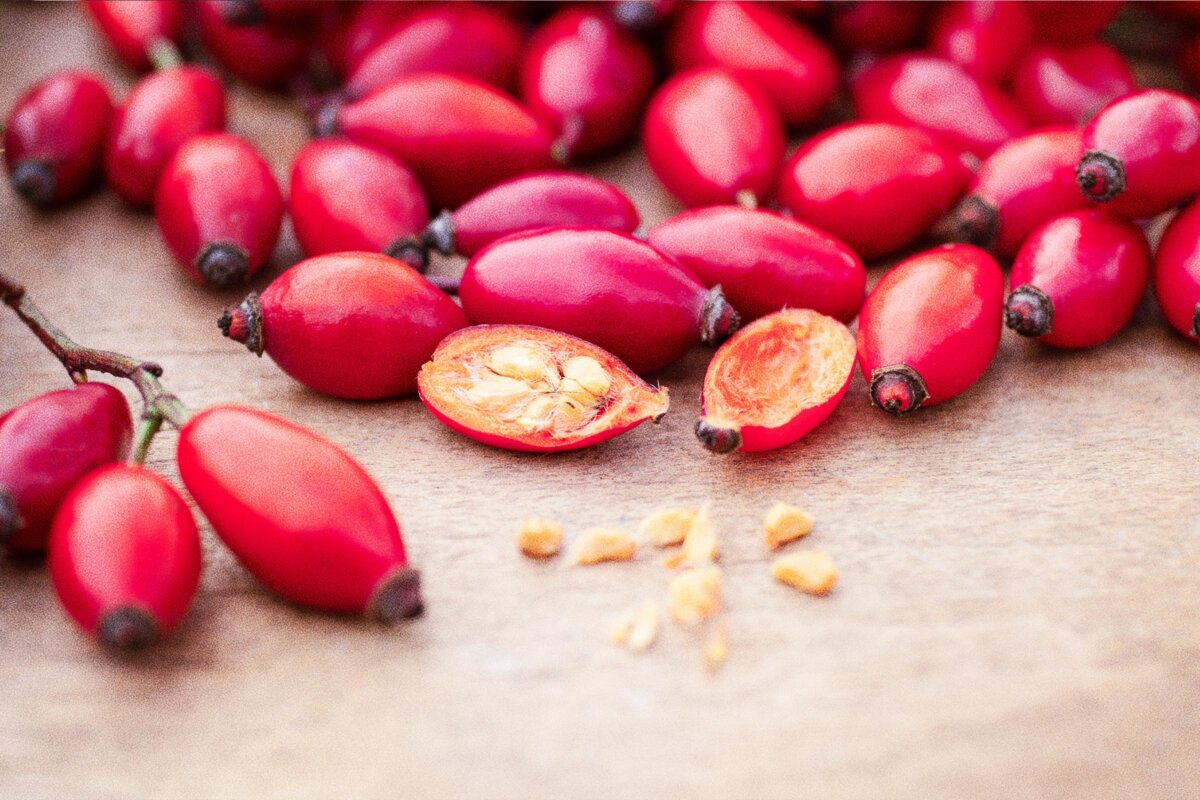
Bursting with antioxidants and rich in vitamins C and E, rose hips are tiny powerhouses for your health. They boost your immune system, encourage vibrant cell growth, and shield your body from chronic inflammation. Savor them raw, turn them into syrups and jams, or transform their flesh into nourishing skin care oil.
As you explore this remarkable fruit and learn how to make simple, delicious rose hip tea, you will find that it not only brightens autumn displays but also offers a wealth of natural health benefits.
What Are Rose Hips?
Rose hips are the small, round or oval fruits that form on wild roses after the flowers fade. Native to Europe, Asia, and the continental United States, they thrive in natural hedgerows and along forests, roadsides, and coastal areas.
You can easily find these nutritious fruits throughout the United States. However, if rose hips do not grow in your garden or local area, many well-stocked health food stores carry dried rose hips. Or you can buy them online.
Rose hips can be eaten fresh or dried and used to make powders, teas, jams, fruit bars, tinctures, skin care oils, or vinegar blends known as oxymel.
Best Varieties to Use
Most often used for food are the fruits of the common dog rose (Rosa canina), hedge rose (Rosa corymbifera), or beach rose (Rosa rugosa). However, all varieties are safe to eat and nontoxic, although some may have a less pleasant taste.
You can recognize the common dog rose by its many thorns, whereas the hedge rose has fewer thorns and slightly larger flowers. The beach rose grows mainly on sandy shores, hence its name.
Before you purchase a new rose bush, remember that older rose varieties tend to contain more beneficial plant compounds than newer hybrids. A 2023 study published in Plants found that many modern roses are often bred for showy, fragrant blooms and disease resistance rather than fruit quality or nutritional benefits.
Health Properties of Rose Hips
For centuries, rose hips have been prized in traditional medicine for their healing and protective qualities. Herbalists used rose hip salves to soothe skin irritation, and our grandmothers brewed rose hip tea to help recover from colds, the flu, and other infections. The fruit was also valued for easing joint pain and supporting faster healing after illness or injury.
Today, scientific research supports much of this traditional wisdom and has found that fresh rose hips are among the richest sources of L-Ascorbic acid (vitamin C), surpassing many fruits and vegetables. Rose hips are also rich in antioxidants and anti-inflammatory compounds that help strengthen the immune system, support healthy skin, and protect the body from chronic inflammation.
Rose hips are also rich in carotenoids and tocopherols, plant pigments and fat-soluble antioxidants that the body converts into vitamins A and E. These nutrients promote healthy vision, enhance skin elasticity, and protect cells from oxidative stress.
Rose hip seeds also contain essential fatty acids, which the body cannot make on its own. The fruit contains some fatty acids as well, although in smaller concentrations. These healthy fats may help lower bad cholesterol, support brain function, and benefit conditions such as high blood pressure. A 2023 study found that the combination of these fats and antioxidant compounds gives rose hip oil its skin-nourishing and protective properties.
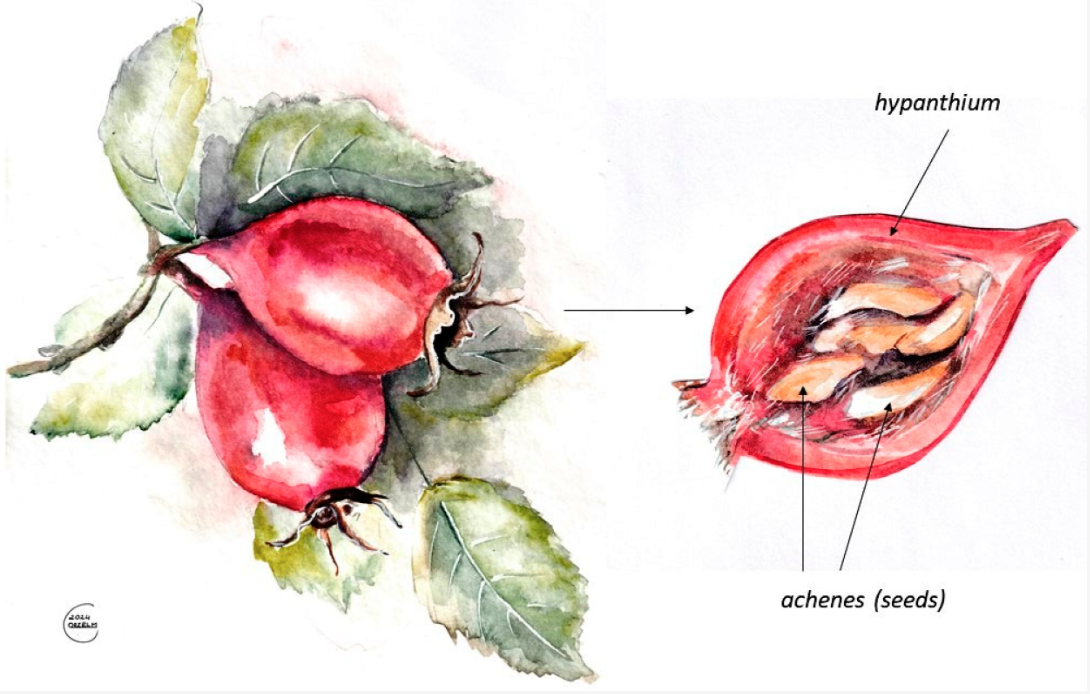
When using fresh rose hips to brew tea, use the whole fruit and strain after steeping. Although rose hip seeds offer great health benefits, they can also irritate the mucous membranes of the mouth, throat, and digestive tract because of the small, hair-like fibers that cover them.
Harvesting and Preparation
Rose hips ripen in early fall, turning bright red and firm to the touch when ready to pick. Avoid any that are green or starting to brown. As temperatures drop, they naturally sweeten and soften, which makes them perfect for soothing herbal teas and delicious jams.
Harvest from clean, pesticide-free areas. Wear gloves or use pruning shears to protect your hands from thorns. Once harvested, rose hips can be used fresh or preserved for months. Completely dried fruit can be stored in an airtight container in a dark, cool area for up to one year.
Important Note: Only harvest plants and fruits that you can identify, and take only as much as you need. Rose hips also serve as a food source for wild animals during winter.
Rose Hip Tea
Rose hip tea supports the immune system, and its high level of antioxidants helps protect against cellular damage.
To prepare rose hip tea, you need only two ingredients: the fruit and water.
Ingredients:
- 1 to 2 teaspoons dried rose hips (or up to 1/4 cup if preparing the tea with fresh fruit)
- Water
Note: Straining the tea helps remove the seeds and small hairs that may irritate the mouth, throat, or digestive tract.
Instructions:
- Remove any remaining flower stems and blackened fruit heads.
- Lightly crush or grind the fruit with a mortar and pestle to release nutrients.
- Place the prepared rose hips in a fine-mesh tea filter or strainer set in a cup. Pour boiling water over the fruit, and let it steep for 15 to 20 minutes.
- Strain the tea thoroughly to ensure that no stray hairs remain.
Alternatively:
- Simmer the prepared fruit directly in a pot of boiling water for 10 minutes.
- Remove from heat, let it rest for an additional 10 minutes, then strain through a fine-mesh strainer or filter.
Enjoy throughout the day, adding your favorite sweetener or a slice of lemon for a slightly sour taste.
Seasonal Tip: Rose hip tea pairs well with hibiscus and lemon balm for a refreshing summer drink. Add lemon slices and ice cubes for a cooling beverage.
Be creative; wild roses and their fruit shine in the kitchen, the apothecary, and even as floral centerpieces. Beach rose petals are edible delights, perfect as fresh, dried, or candied garnishes for desserts, drinks, or salads.