

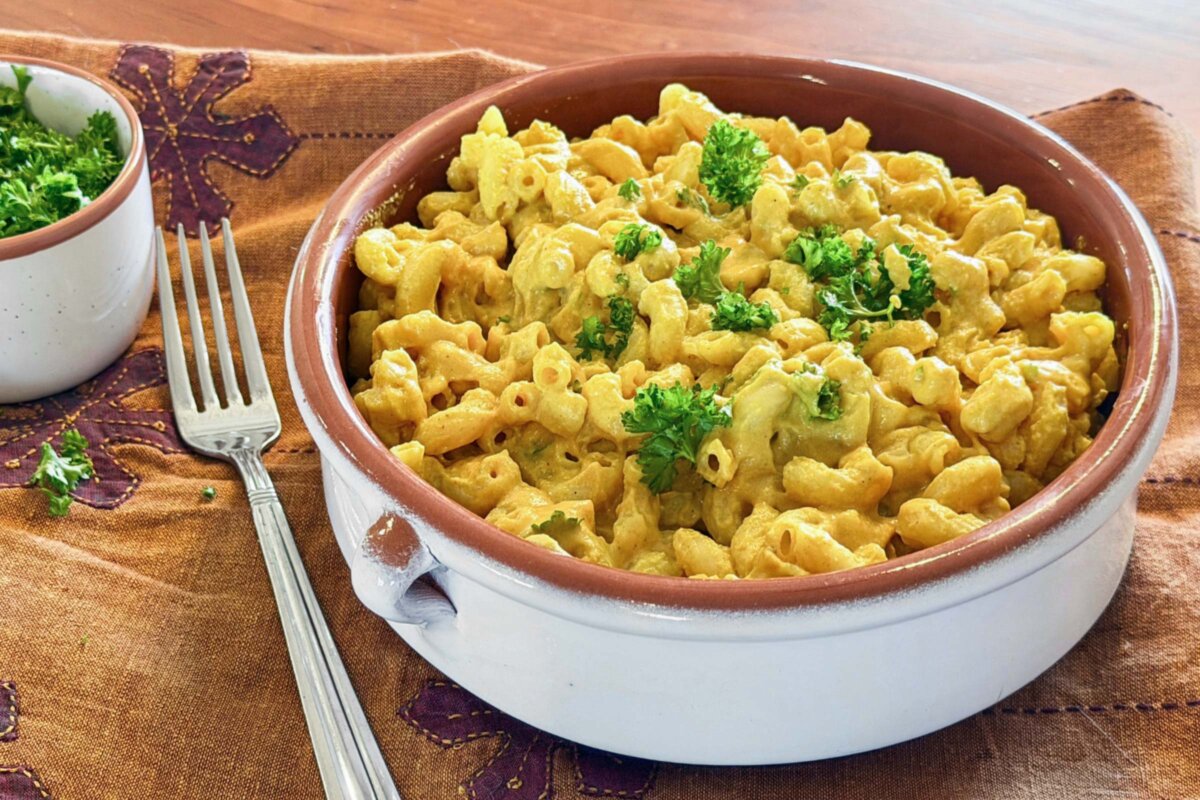
My mother never made us eat food we didn’t like growing up, but she wasn’t a short-order cook either. If we didn’t want what was for dinner, we simply didn’t eat.
One night, however, she decided I was going to eat my mac and cheese. I stared at that bowl until bedtime. I didn’t know why I couldn’t eat it, only that my stomach would be happier empty than with mac and cheese in it.
Neither of us knew then that gluten and cow dairy weren’t my friends.
Years later, when I began remaking foods I could no longer eat, I had two rules: Substitutes shouldn’t taste like substitutes, and guests shouldn’t notice what’s missing. My husband, who has no dietary restrictions, became my taste tester. If he loved it, I knew I’d succeeded.
This new series gives some of America’s favorite foods a healthier makeover by improving the ingredients while keeping the flavor, texture, and nostalgia that made us love them in the first place.
How Real-Food Ingredients Make This Mac and Cheez Work
Since this dish contains no cheese, I call it mac and cheez. It gets its creamy body from whole foods—cashews and vegetables—rather than powdered cheese and additives for flavor and texture, while also adding to your daily veggie total.
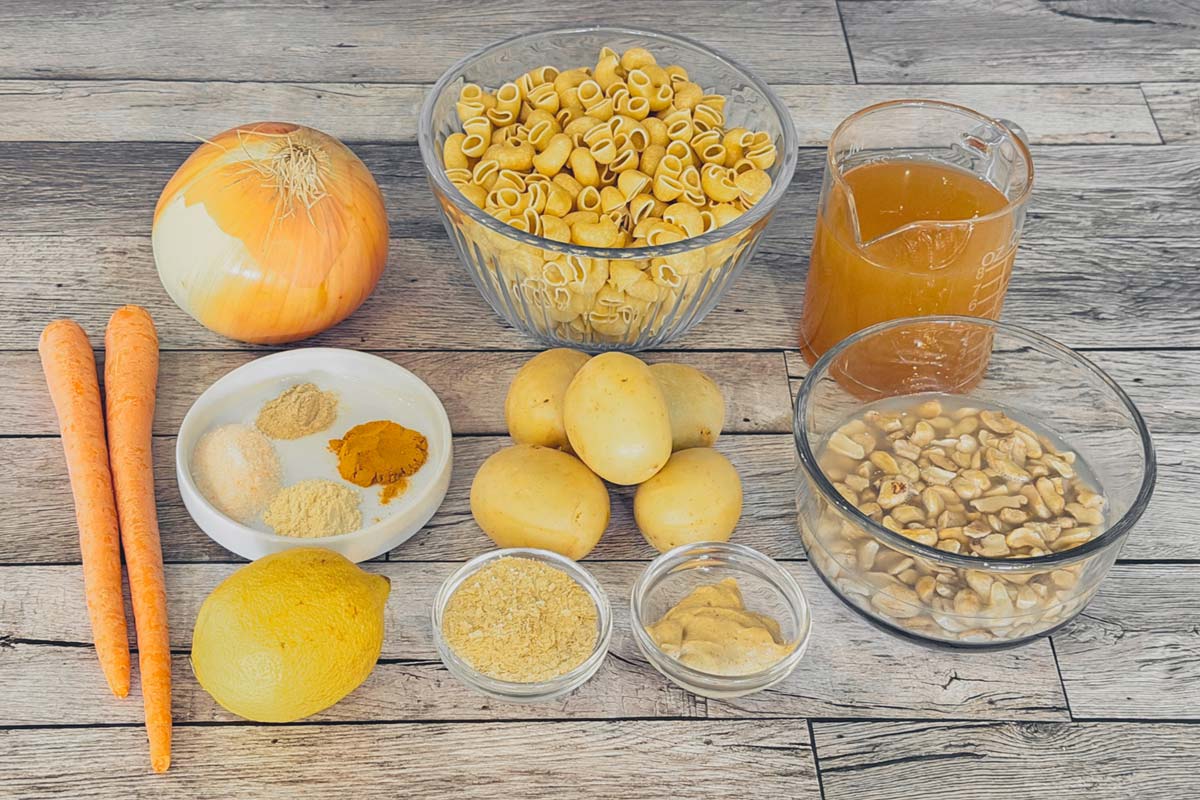 (Terri Ward/The Epoch Times)
-
Potato, Carrot, and Onion: Give the sauce body and creaminess. Together, they provide fiber, potassium, beta-carotene, and inulin, a prebiotic fiber in onion that feeds beneficial gut bacteria.
-
Cashews: Replace the richness of dairy, delivering mostly heart-healthy monounsaturated and polyunsaturated fats along with magnesium, copper, and zinc.
-
Dijon Mustard and Nutritional Yeast: Create a savory, cheese-like flavor.
-
Turmeric: Adds golden color and curcumin, a compound with anti-inflammatory and antioxidant properties.
-
Chickpea Pasta: Replaces refined flour for more protein and fiber, contributing 13 grams of protein and 6 grams of fiber per serving.
-
Collagen Peptides: Add extra protein and amino acids your body uses to build skin, joints, and connective tissue, without changing the flavor or texture. Collagen peptides are animal-derived; leave out this ingredient for a vegan version.
Creamy Mac and Cheez
A creamy cashew-vegetable sauce coats chickpea pasta for a satisfying, gluten- and dairy-free mac and cheez that serves eight as a side or four as an entree.
Prep Time: 10
Cook Time: 15
Total Time: 50
Servings: 8
Ingredients
-
3/4 cup cashew pieces
-
1 1/2 cups low-sodium vegetable broth
-
1 1/8 cups diced yellow potato (1/4-inch)
-
3/4 cup diced carrot (1/4-inch)
-
6 tablespoons chopped onion (1/4-inch)
-
16 ounces chickpea pasta
-
3 tablespoons collagen peptides (optional)
-
4 1/2 teaspoons nutritional yeast
-
1 tablespoon Dijon mustard
-
1 tablespoon freshly squeezed lemon juice
-
1 1/2 teaspoons sea salt
-
3/4 teaspoon turmeric
-
3/4 teaspoon garlic powder
-
1/2 teaspoon white pepper
Instructions
Step 1: Put the cashews in a small bowl and cover with boiling water. Let them soak for 40 to 45 minutes.
Step 2: In a medium saucepan, combine the broth, potato, carrot, and onion. Bring to a boil over medium-high heat. Cover, reduce the heat, and simmer for 12 to 15 minutes, until the vegetables are very soft.
Step 3: Meanwhile, cook the pasta al dente according to the package instructions. Drain well.
Step 4: Transfer the vegetables and cooking broth to a blender. Drain the cashews and add them to the blender along with the collagen, nutritional yeast, Dijon, lemon juice, salt, turmeric, garlic powder, and pepper. Blend for one to two minutes, scrape down the sides, and blend again until smooth.
Step 5: Pour the sauce over the cooked pasta and toss gently to coat evenly. Serve hot.
Storage and Reheating: Refrigerate leftovers in an airtight container for up to four days. For longer storage, freeze for up to three months, and thaw overnight in the refrigerator. The pasta may be softer after thawing. Reheat on the stovetop over low heat, adding a splash of broth or water as needed to loosen the sauce.
Frequently Asked Questions
Q: Can I use a different type of pasta?
A: Yes. Chickpea pasta was chosen because it’s gluten-free and provides more protein and fiber, but any pasta should work. Keep in mind that using a different pasta will change the protein and fiber per serving.
Q: Can I make this without cashews?
A: You could use macadamia nuts, but cashews are the best replacement for the texture and flavor of dairy.
Q: What is nutritional yeast and does it really taste like cheese?
A: Nutritional yeast is an edible, heat-inactivated yeast usually sold as flakes, granules, or powder. It has a savory, nutty flavor often described as cheesy. Many brands are fortified with added B vitamins, but unfortified versions are also available. Do not confuse it with brewer’s yeast, a by-product of beer making that tastes more bitter and may contain gluten from barley.
Q: Can I make it ahead of time?
A: Yes. In fact, chilling cooked chickpea pasta can convert some of its digestible starch into resistant starch, which passes through the small intestine undigested and can feed beneficial bacteria in the colon. To preserve the texture, wait to toss the pasta with the sauce. Dip the pasta briefly in boiling water to reheat it, warm the sauce separately, and then combine them.

