
Mental health is an essential part of our well-being that affects how we think, feel, and act. People with impaired mental health have difficulties handling stress, making choices, and relating to others.
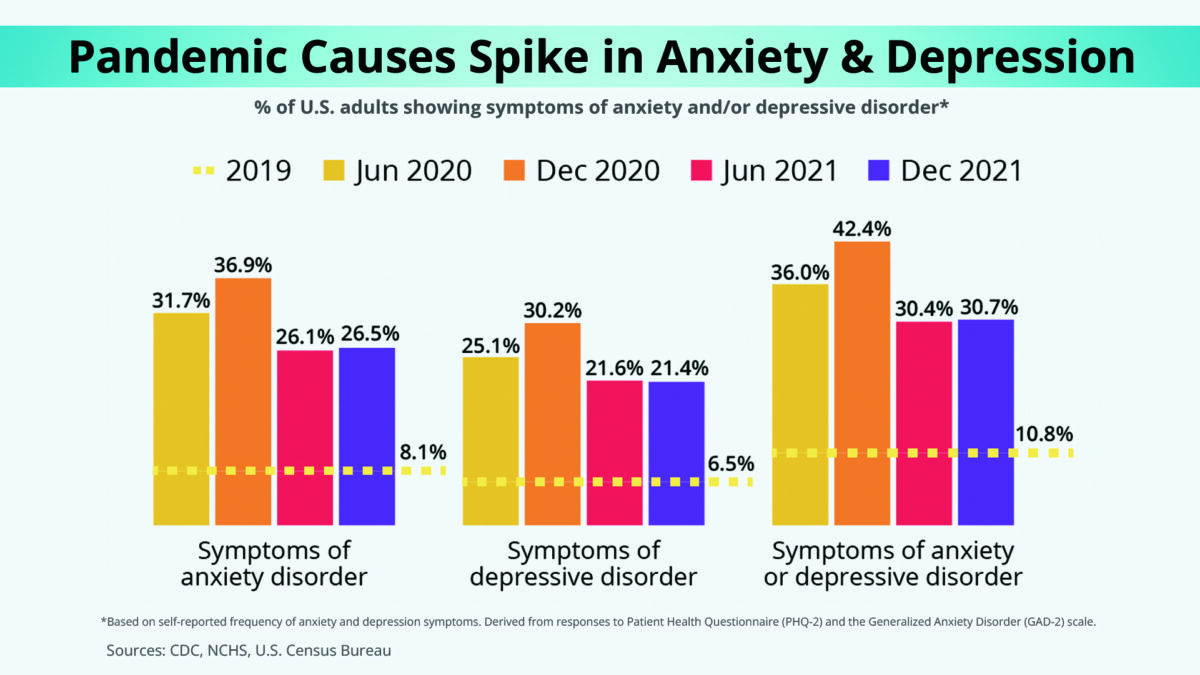
The number of people with mental disorders has increased in the past two decades, especially during the COVID-19 pandemic. By the end of 2020, more than four in 10 U.S. adults (42.8 percent) have anxiety or depressive disorder symptoms, while before the onset of the pandemic in 2019, this number was 10.8 percent. Attention deficit/hyperactivity disorder (ADHD) among children under age eighteen in the United States has increased to 10.8 percent, and almost 22 percent of adolescents aged 16 to 17 have had at least one major depressive episode.
Medical treatment for various mental disorders have existed for decades; however, the increasing prevalence of mental disorders reconsiders the reasons, effectiveness, availability, and affordability of medical treatment. Lately, nutrition has shown its potential as an important factor in maintaining and improving mental health.
This article explains the positive effects of some food and provides tips and habits beneficial for your mental health.
What Has Conventional Medicine Achieved So Far?
Conventional medicine relies on treating mental disorders with medications, as a basic approach, often combined with psychotherapies and therapies that stimulate the brain. People with mental conditions may react differently to medications; therefore, doctors prescribe various pharmaceuticals, alone or in combination, to achieve the desired improvement.
Mental Health Medications and Side Effects
Many mental disorders are treatable with medications available today. For instance, panic attacks and temporary fear and worry, as well as symptoms of anxiety disorder, are treated with anti-anxieties, such as benzodiazepines. Psychosis, a condition characterized by lost contact with reality, can be treatable with antipsychotics, as monotherapy or in combination with other medicines. Serotonin reuptake inhibitors (SSRIs), and serotonin-norepinephrine reuptake inhibitors (SNRIs), used in the treatment of anxiety, are commonly used for the treatment of depression.
Research and development of new medicines has advanced so far that today we have an antidepressant in the form of a nasal spray.
Medications used for mental disorders, like other drugs, have side effects that people should be aware of. Some are mild (upset stomach or headache) and improvable over time, but others are severe, such as antipsychotics being associated with an increased risk of stroke and death in older people with dementia.
Thus, don’t discontinue treatment on your own, instead, share with your health provider the effects that you experience from the therapy, so the doctor can find the most effective approach with the fewest side effects.
Some Medications Might Lose Effectiveness Over Time
Aside from known side effects, some findings raise a concern about these medications’ long-term effectiveness. While benzodiazepines in the short term reduce severe anxiety, taking them in the long term may lead to drug tolerance and dependence. Antidepressants can induce manic conversion, a risk modified by age, with the highest hazard in children aged 10 to 14. Some people with depression who already have altered sleep patterns may experience more complications in sleep if taking SSRIs.
It becomes questionable how long doctors can count on the positive effects of some medicines. Early evidence of the long-term effect was available over 20 years ago. In a study published in 1999 in Psychological Medicine, most of the patients reported residual symptoms, despite successful treatment of unipolar major depression and bipolar disorder.
Results from another study, published in the Journal of the American Academy of Child and Adolescent Psychiatry in 2007, showed that the positive outcome of the medications achieved in 14 months of ADHD treatment in children was no longer apparent by 36 months. Behavior therapy increased from 14 to 45 percent, and its combination with medication management decreased from 91 to 71 percent.
Such findings were the reason for the continuous development of the existing medications and research of new medications, to achieve better clinical results. The findings of the possible lack of long-term treatment effectiveness suggest exploring other possibilities that could improve mental health.
Nutrition and Mental Health
While medications are the first treatment option for ADHD, depression, or other mental disorders, many scientists in recent years are shining a spotlight on nutrition deficiencies and dietary supplementation in association with mental health. The findings of those studies are promising, and suggest that diet can play an important role in mental health.
Benefits of Healthy Food on Mental Health
For more than a decade, we’ve known about the potential association of dietary patterns with mental conditions. As of 2013, it has been known that the so-called Mediterranean diet may contribute to the prevention of some brain diseases because it reduces the risk of stroke, depression, and cognitive impairment.
Four years later, results of another meta-analysis support the findings that healthy dietary patterns including eating fish and olive oil, whole grains, lots of fruits and vegetables, low-fat dairy, and little meat, are associated with decreased risk of depression. A systematic review of 56 studies shows that the Mediterranean diet is inversely associated with the risk of depression and symptom improvement in adolescents.
These studies address the association of a healthy diet with mental disorders, and became a basis for further research to prove the positive effects. The very first outcomes are promising: results from the study indicate that dietary improvement can provide an efficacious and accessible treatment strategy for moderate to severe depression management. A meta-analysis of 16 trials has similar conclusions of dietary intervention in reducing symptoms of depression, but no effect on anxiety was observed.
Many studies, like the review of 42 trials, suggest that peptides and amino acid derivatives, probiotics, plant extracts, and herbal supplementation should be a future field for research for mental health improvement, supportive of standard treatment.
There is no doubt about the overall benefits of food on our health, including mental health. Here are some tasty and healthy food suggestions for a healthy diet.
Fruits and Vegetables to Reduce Depression
Fresh fruits and vegetables contain fiber, carbohydrates, and vitamins, essential elements for both physical and mental health. Leafy greens, berries, and citrus fruits may promote higher levels of optimism, improve self-efficacy, and protect from depression. “The Better Brain,” written by scientists Bonnie Kaplan, PhD, and Julia Rucklidge, PhD, describes the benefits of fruit and vegetables to overcome anxiety and depression, and reduce ADHD and stress.
Have a look at this tasty spinach salad with shrimp from Asian cuisine and enjoy it while preparing and eating at home.
Salmon Can Improve Brain Functions
This tasty and widely available fish contains omega-3 fatty acids (healthy fats) that reduce inflammation and lower high blood pressure. Salmon is a natural source of B vitamins that helps the brain and nerve cells to function properly.
Moreover, it is a high source of potassium, important for blood pressure and stroke risk reduction.
Here is a tasty recipe for a healthy salmon steak, Atlantic Salmon Provencal, prepared by the chef Alessandro Serni.
Sweet Potato: Rich With Vitamins and Minerals
Vitamins and minerals are essential for metabolic processes in the body. Recent findings on moderate or severe depression treatment show a positive mood change if people take micronutrients.
Sweet potato, aside from being a source of carbohydrates, is rich in vitamins A, B, and C, and micro minerals: calcium, iron, magnesium, phosphorus, and zinc. Thanks to this long list of micronutrients, this superfood when boiled may control blood sugar and lower bad cholesterol and inflammation in the body.
Creamy Thai Sweet Potato and Carrot Soup, made by chef Enrico Alaggia, is a tasty recommendation for the intake of the long list of nutrients that sweet potato contains.
Not Every Food Is Healthy Food
The facts about healthy food mentioned earlier are probably familiar to most; still, many people choose the easier way, consuming packed, semi-cooked, or frozen food, known as the Western diet (WD). It is practical, saves time, and can be less expensive. WD contains a higher amount of calories and makes us feel full faster and longer. But, is it what we need from the food?
WD is rich in saturated fats, refined sugar, and salt, and can trigger addictive-like eating behaviors. It initiates seeking and binging consumption of fat and sugar. Such behaviors lead to increased obesity, diabetes, cardiovascular diseases, and cancer.
Moreover, WD affects memory, decision-making, and other cognitive functions, and increases the risk of depression. Dietary patterns with saturated fat and added sugars are associated with increased anxiety in adults aged 50 years or older.
Frequent salty snacks in-between meals, sugar-sweetened beverages, or too much alcohol worsen our dietary habits, and consequently our health, including mental well-being.
The negative effects of WD on our mental health have been known for more than a decade, so the decision of what we eat is ours.
Instead of “running” all day long and taking our health for granted, we should maintain our health and prevent diseases. Healthy homemade food is beneficial for our health and brings happiness of being together while preparing and consuming.
So, let’s reconsider the answer to the routine question “What shall we have for dinner?” as observed in the bestseller The Omnivore’s Dilemma, which challenges the existing eating patterns of Americans.
More Tips to Support Your Mental Health
Taking care of mental health is a complex process and choosing only one recommendation will not lead you to the maximum possible results. Aside from healthy dietary habits, here are more tips to be considered, if they haven’t been practiced yet:
Regular meal times – Even if you’re eating healthy food, having irregular mealtimes can negatively affect mental health. Have meals every day at the same time as much as possible to avoid neuroticism, losing productivity, sleep disorders, and other conditions that affect your mental health.
Proper sleep – Eight hours of good quality sleep is necessary for the body and the brain of adults. Although we could feel energized after a few hours of sleep, in the long run, it will negatively affect our mental health. Avoid energy drinks, caffeine, late-night meals, or hitting the gym late that can disturb your sleep.
Mindful eating – It is like a form of meditation, far from just eating when you feel hungry, until you feel full. Mindful eating involves slow eating, eating only when hungry but not triggered by other senses, adjusting eating based on individual effects that some food has on your body, and many more factors.
Physical activity – This improves fitness and helps you become more energized, and will reduce stress and make you more positive and relaxed. It is also motivating once the results become apparent.
Be aware that the results will not come overnight. Being too ambitious by introducing many changes at once might just end up frustrating you. This should be a long-run journey that will ensure new healthy habits are adopted.
Therefore, take small steps, and don’t be disappointed if you fail. Instead, keep on trying as needed, until you see the results.
Final Thoughts
This increase in mental disorders challenges what our existing treatments and the paradigm of mental health treatment. Scientific discussion of these treatments’ effectiveness in the short and long term, and their availability for all individuals who need them, are coming to the forefront.
Predictions that one in two adults will be diagnosed with a mental illness or disorder at some point in their lifetime prompt the need for more options, to support treatments that are effective in preventing the diseases or reducing the symptoms.
Food is one of the basic needs for people to live, but today, food also plays a critical role in our health and well-being. Sufficient findings are available today on how the Mediterranean diet is good for our mental health. We should get the maximum of what is available and make necessary changes in our diet to maintain or improve our mental health.
Healthy people have hundreds of wishes, while sick ones have only one: to get healthy. Make small changes in your diet today, to have a big positive impact on your health.