
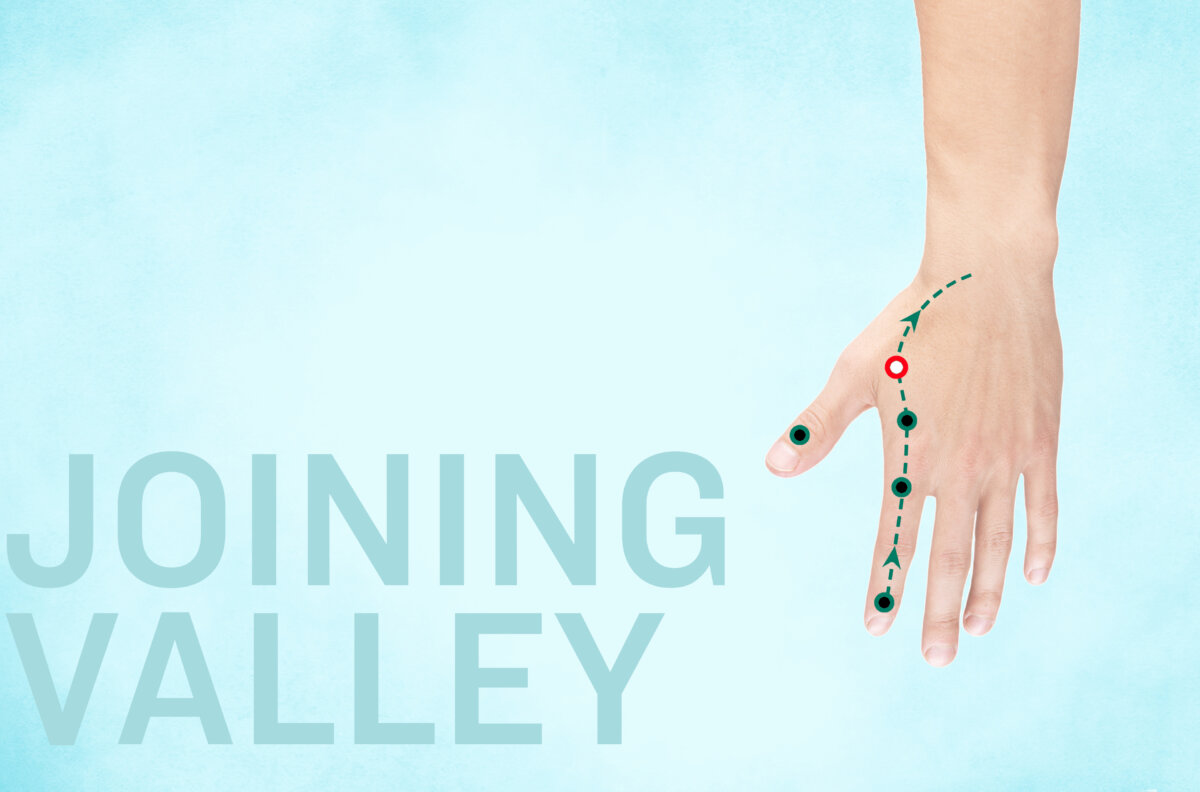
Even people with no exposure to traditional Chinese medicine (TCM) or acupressure will confidently point to the web between their thumb and index finger and swear by its powers. It’s recommended in all sorts of situations, from headaches to motion sickness to fainting. The area is arguably the most famous acupoint: Joining Valley (He Gu, LI4).
If there were a “one size fits all” in acupressure, it would be He Gu. How much of that belief is myth, and how much is verified?
He Gu’s Unique Standing in Traditional Theory
He Gu is a yuan-source acupoint. Yuan-source points are considered directly connected to the yuan qi—our inherited vital energy that shapes our constitution from birth. These points are rich in both blood and qi. In Hegu’s case, the Large Intestine meridian, already rich in these energetic resources, amplifies this potency.
This amplification gives He Gu the reputation of being a “multifunctional painkiller,” thanks to its ability to nurture and mobilize qi, making it effective for relieving pain anywhere in the body. Its connection to qi also makes it useful in gynecological treatments, especially in promoting labor, which is why it must be avoided during pregnancy.
He Gu also strengthens wei qi—protective energy loosely relating to immunity or resistance—and is one of six command points, with influence over the face and mouth. This makes it useful for a variety of head-related symptoms.
Widespread Effects Match He Gu’s Reputation
He Gu lives up to its name. As a yuan-source point, it’s stimulated in conditions like abdominal pain, constipation, and diarrhea. It is also often used for treating chronic pain, delayed labor, and irregular menstruation. Its status as a command point explains why it’s included in treatment protocols for facial and head-related conditions such as headaches, toothaches, facial swelling, acne, sore throats, nosebleeds, and allergy-related or flu-related runny noses.
Evidence From Clinical Studies
With hundreds of studies involving He Gu, meta-analyses offer clearer insights into its effects.
A meta-analysis of 19 neuroimaging studies examined how acupuncture at He Gu affects the brain in healthy people. It found that certain brain regions, like the left postcentral gyrus, became more active, while others, such as the left anterior cingulate and right superior temporal gyrus, became less active. Results varied between studies, suggesting that a person’s physical state influences the brain’s response to He Gu. This variability reflects the broad range of He Gu’s effects.
Another study applied data mining to 42 clinical studies on acupuncture for amyotrophic lateral sclerosis (ALS), often called Lou Gehrig’s disease. This progressive disease affects nerve cells in the brain and spinal cord, leading to muscle weakness and loss of motor function. Out of 141 acupoints, He Gu appeared in 67 percent of the studies, often paired with Quchi, Zusanli, and Sanyinjiao. It was among the most frequently used and centrally positioned points in ALS acupuncture prescriptions.
How to Locate and Activate He Gu
He Gu is located on the thumb side of the second metacarpal bone. The easiest way to find it is by placing the first crease of your thumb against the center of the webbing between your thumb and index finger of the opposite hand, then bending the thumb down to touch the back of the hand—the spot where the tip of your thumb lands is He Gu.
Gently press around that area until you find a spot that feels sore or tender. This tenderness signals the presence of the acupoint.
Simple Ways to Activate He Gu
- Firm pressure: Press firmly for three to five seconds, then relax for three seconds. Repeat for one to three minutes on each side.
- Circular massage: Massage in small circles with your index finger or thumb for one to three minutes on each side.
- Herbal patch: Apply an herbal patch overnight for longer activation.
- Advanced methods: Acupuncture or moxibustion (a gentle heat therapy using dried mugwort) by a trained professional can deepen the therapeutic effects.
Precautions
He Gu should not be stimulated during pregnancy, as it may cause uterine contractions. Avoid using it if the area is injured. For herbal patches, choose gentle natural formulas, especially if you have sensitive skin.
Bringing He Gu into Your Routine
Now that you know the secrets behind this famous acupoint, you can confidently incorporate He Gu into your wellness toolkit. It’s not just a last resort for headaches or pain. He Gu can be your go-to for boosting energy, restoring balance, and supporting resilience. Next time you need a quick reset, remember: Relief, calm, and vitality are right at your fingertips—literally.
TCM expert Shihhsiang Hung helped ensure the accuracy and clarity of this article.