
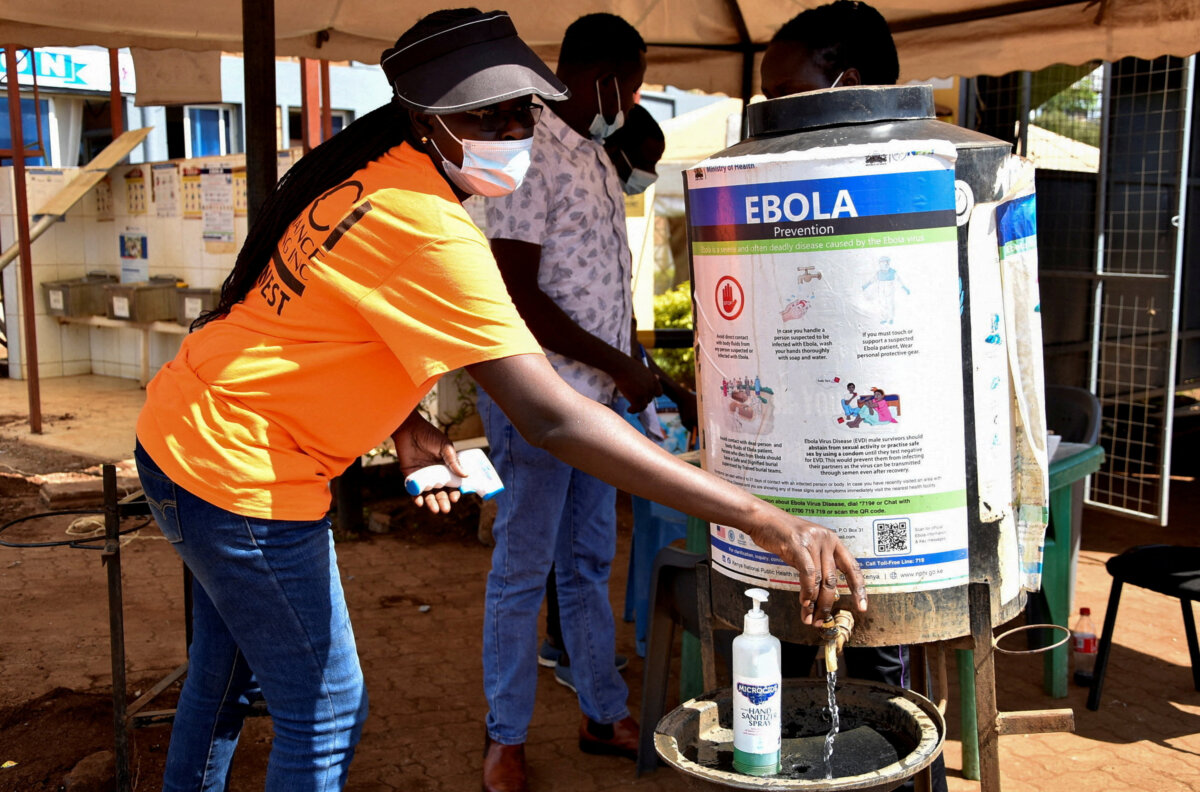
Nigerian authorities on Oct. 20 confirmed the country’s first case of Ebola this year, detected in a woman who flew into the West African nation from Uganda.
The patient was admitted to a private hospital and received treatment for several days before the diagnosis was confirmed, according to the Federal Ministry of Health and Social Welfare.
She is isolated and receiving medical care.
Forty-four people have been identified as being in close contact recently with the woman, and authorities are working on tracking those individuals down.
All health care facilities across Nigeria must be on high alert, with workers promptly identifying and isolating suspected cases, the agency said.
“There is no need for panic,” health officials said. “What matters is staying informed, practising good hand hygiene, knowing the symptoms and seeking guidance from public health authorities if you suspect exposure.”
Nigeria is a western African country with more than 230 million people.
Ebola, a severe disease caused by several virus species, spreads through contact with bodily fluids from infected people or surfaces and materials contaminated by such fluids. The disease causes a range of symptoms including bleeding and fever.
One of the largest Ebola outbreaks in history has been ongoing in the Democratic Republic of the Congo in central Africa. Officials in Congo said Oct. 20 that the number of cases had reached 9,552 and about half had resulted in death.
The current outbreak is caused by the Bundibugyo virus. There are no approved vaccines or treatments for Ebola caused by the virus, although Congo officials have been administering vaccines cleared to combat the Zaire virus.
Dr. Jean Kaseya, the director-general of the Africa Centres for Disease Control and Prevention, said on X on Oct. 20 that the outbreak “has already become the most geographically extensive in history, affecting several countries spread across three regions of Africa.”
He added that the organization “has already begun mobilizing its support to Nigeria, while intensifying its response in the [Congo] and Kenya and maintaining heightened vigilance in Uganda.”
Uganda, which borders Congo, has reported 20 confirmed Ebola cases and several deaths this year. Uganda’s health minister said in July that the country was officially Ebola-free after the last patient was discharged.
Kenya, in eastern Africa, which shares a border with Uganda on the opposite side as Congo, recently confirmed an Ebola case in a male patient who had been living in Congo. The patient died.
Kenyan officials have reported eight other cases, all of whom came into contact with the first patient. A total of 134 people who came into contact with the patient have been quarantined.
“As of today, there is no evidence of transmission outside this group,” Dr. Patrick Amoth, Kenya’s director-general for health, said in a statement.
The Nigeria Centre for Disease Control and Prevention had in an earlier assessment said the risk of Ebola importation was high “due to increasing on-going regional transmission, international travel, regional population movement, major airports, seaports, porous land borders, informal crossings, trade routes, and the overlap of early Ebola symptoms with common febrile illnesses such as malaria, Lassa fever, and other endemic infections.”