
Canada’s chief trade negotiator, Janice Charette, said Canada should prepare for a deal that will involve some level of tariffs, given Washington’s repeated resistance to fully tariff-free trade.
While Canada’s trade negotiators would like to reach an agreement that lifts all tariffs, the current U.S. administration has “shown, to date, an unwillingness to enter into any arrangement in which there is full tariff-free trade,” Charette told the House of Commons Committee on International Trade on Nov. 17.
Charette said the United States-Mexico-Canada Agreement (USMCA) had allowed for tariff-free trade, and while Ottawa would like to “get back to that position,” we need to “prepare ourselves for a world that, like other countries, that’s not an arrangement which we are able to arrive at with the United States.”
“We have to prepare for that eventuality, but obviously, our goal is to get as close to tariff-free trade as possible.”
Ottawa and Washington have continued efforts to reach a trade agreement after negotiations collapsed on Aug. 21. The breakdown of talks led the White House to impose 50 percent tariffs on $27.6 billion worth of Canadian goods on Aug. 22. Canada followed suit on Sept. 8, imposing retaliatory tariffs of 15, 25, and 50 percent on $27.6 billion worth of U.S. imports.
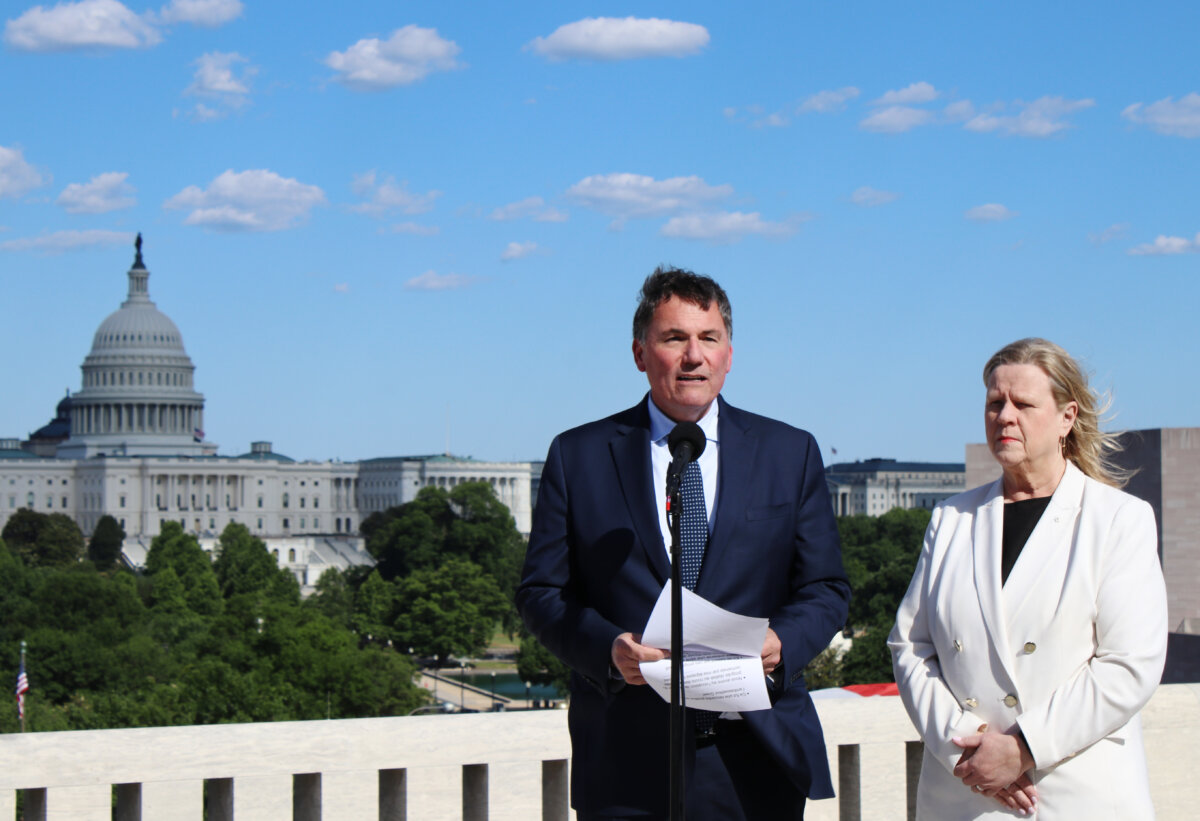
Canada-U.S. Trade Minister Dominic LeBlanc told the committee that Ottawa has attempted to “provide greater certainty, protect Canadian jobs, support Canadian businesses, and ensure that Canadian workers and their families can continue to compete and succeed in a challenging global economy.”
Conservative MP Jacob Mantle questioned LeBlanc on why Canada-U.S. trade talks fell apart in August. While Prime Minister Mark Carney has said Washington made demands that would have restricted Canada’s ability to engage in free trade agreements with other countries, United States Trade Representative Jamieson Greer later said “that characterization goes far beyond” what was discussed.
“Who is telling the truth?” Mantle asked.
“The prime minister accurately described the conversations we had in those last days in Washington,” LeBlanc said.
Carney had also said in August that Washington made unacceptable demands around the exclusion of medium- and heavy-duty trucks from tariff exemptions, and weaker protections for the French language and Canadian culture. On Nov. 3, Carney told reporters that the United States had walked back some of its previous demands and was now “asking less” and “offering more.” He has suggested that the auto sector remains an area of contention.
Carney said in an interview at the New York Times’ DealBook Summit on Nov. 18 that some progress had been made toward a trade deal with the United States, but “we’re not there yet” in finalizing an agreement.