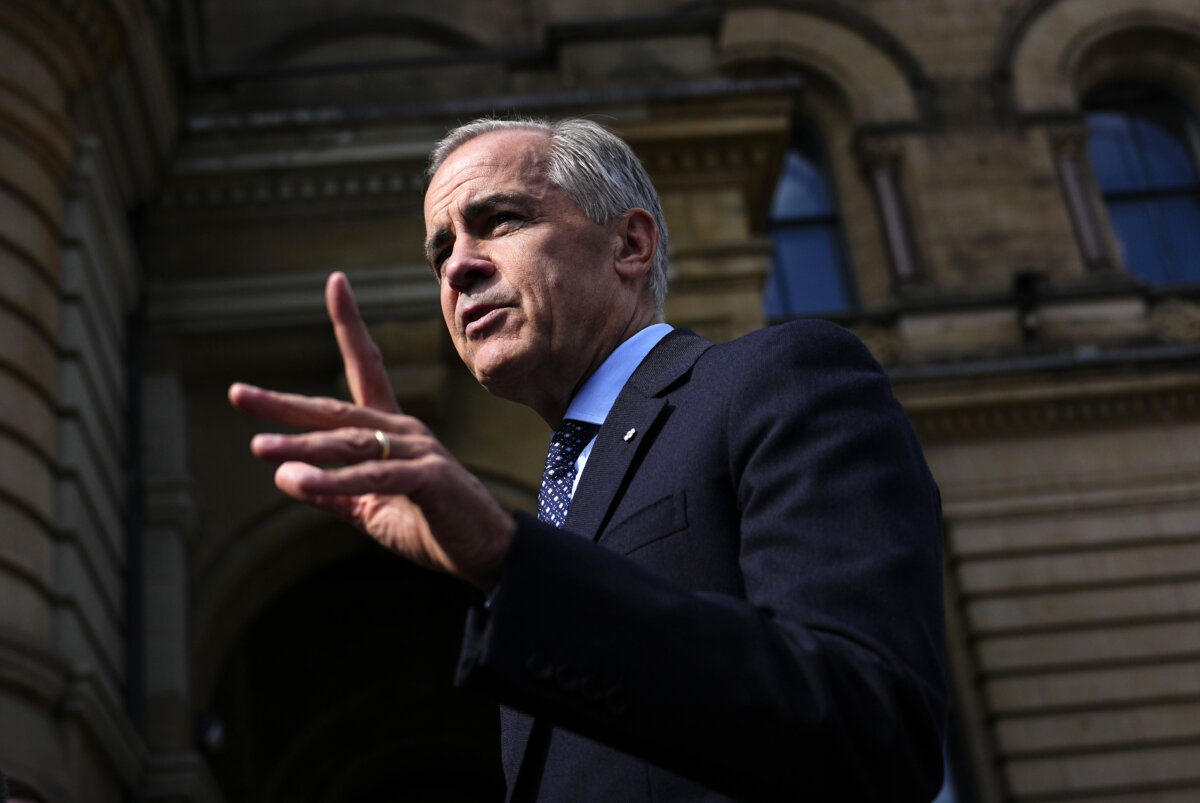

Prime Minister Mark Carney said his government remains focused on domestic priorities following U.S. midterm elections that saw Democrats win control of both chambers of Congress.
Carney made the comments Nov. 5 when reporters asked how the election results might affect his approach to relations with the United States.
“Yes it’s important what happens in the U.S., and things will evolve, but we’re focused here. We’re focused on the same issues as we were at the start of the week, as we will focus on next week,” he said.
Carney described Canada as a “confident country moving forward” and said his government would continue to focus on domestic issues.
“We’re focused on affordability. We’re focused on opportunity. We’re focused on sovereignty for Canada; more independence. We can live our lives as we choose, make our own decisions,” he said, noting that his government would table its budget later that day.
Carney’s comments were similar to remarks made the previous day by Canada-U.S. Trade Minister Dominic LeBlanc, who congratulated those elected to Congress but said Ottawa’s priorities and approach to trade negotiations had not changed.
LeBlanc added that it was “not particularly constructive” for Canadians to read too much into the election results, saying Ottawa would continue working with U.S. officials.
The Nov. 3 midterm elections resulted in Democrats winning control of both the House of Representatives and the Senate, ending Republican majorities in both chambers. The newly elected Congress will take office in January 2027. Democrats’ control of both chambers could increase congressional scrutiny of the Trump administration and affect its legislative priorities, including oversight of trade policy and tariffs on Canadian goods.
Trade discussions between Canada and the United States have resumed in recent days, although formal negotiations remain stalled following a breakdown in August. On Nov. 3, Carney said that Washington had dropped some of its previous demands in discussions with Ottawa, and that “more intense” negotiations had begun.
The prime minister has said trade talks fell apart back in August after Washington wanted to restrict Canada’s ability to pursue trade agreements with other countries, exclude medium- and heavy-duty trucks from tariff exemptions, and weaken protections for the French language and Canadian culture.
U.S. officials have disputed this characterization and accused Canada of introducing additional demands late in the negotiations.
Trump administration officials have also accused Canada of making additional trade demands at the last moment.
Following the collapse of negotiations, the White House moved ahead with its previously announced threat to impose 50 percent tariffs on approximately CA$27.6 billion worth of Canadian goods on Aug. 22, and Ottawa responded on Sept. 8 with retaliatory tariffs of 15, 25 and 50 percent on approximately CA$27.6 billion worth of U.S. imports.