
Canada-U.S. Trade Minister Dominic LeBlanc says Ottawa’s trade priorities will remain unchanged following U.S. midterm elections that saw Democrats win control of both chambers of Congress.
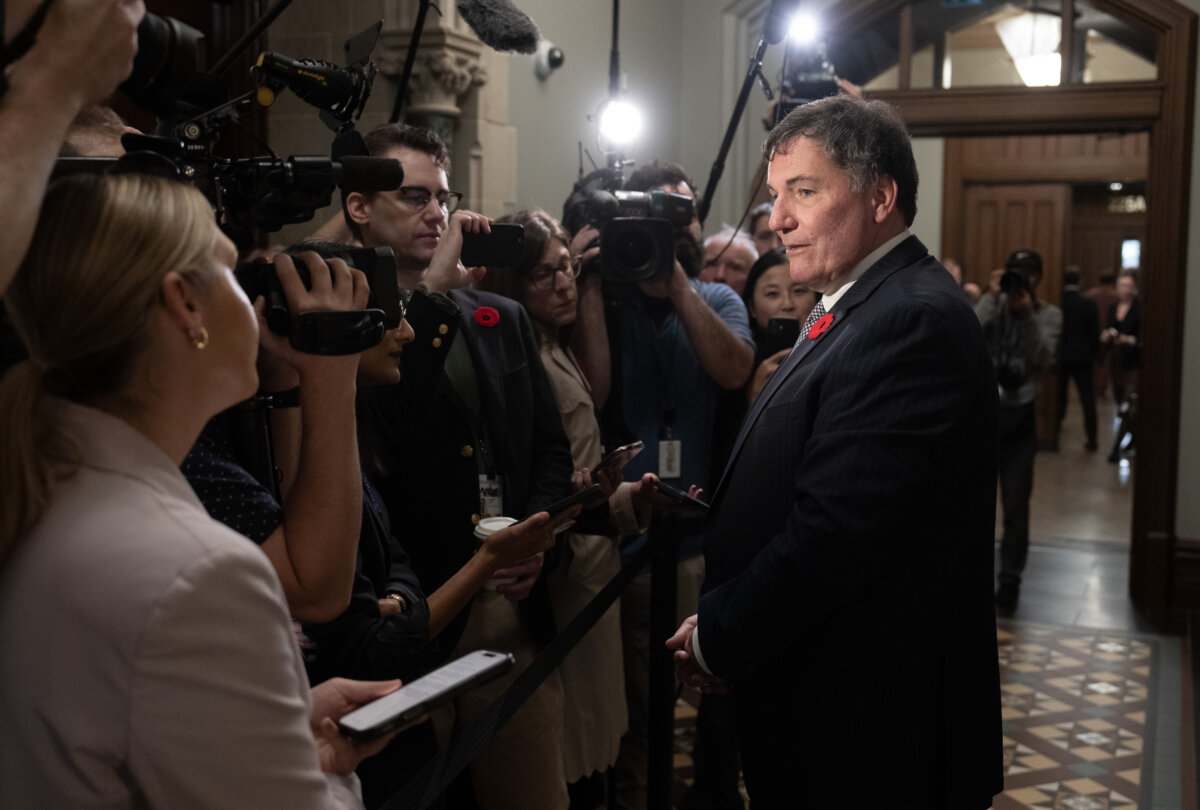
“We obviously want to congratulate the women and men who were elected to the United States Congress. Many interesting races at the state level as well. So we congratulate those that were elected, but our focus hasn’t changed,” LeBlanc told reporters on Parliament Hill on Nov. 4.
LeBlanc said the government remains focused on cost-of-living issues, building major projects, diversifying trade relationships, and strengthening the economy.
“That was our focus yesterday. That is actually our focus today, and will be the focus tomorrow in the budget, so it’s an exciting week,” LeBlanc said.
He added it is “not particularly constructive” for Canadians to read too much into the election results, saying Ottawa would continue working with U.S. officials.
The Nov. 3 midterm elections resulted in Democrats winning control of both the House of Representatives and the Senate, ending Republican majorities in both chambers. The change in congressional control could affect the Trump administration’s legislative priorities and increase congressional oversight of its trade policies, including tariffs on Canadian goods.
Asked by reporters whether Canada’s counter-tariffs on U.S. goods had been designed to target products from Republican states to put political pressure on the White House, LeBlanc rejected that interpretation.
“You haven’t seen me say that,” he told reporters. “The purpose of our tariffs were to add to the protection Canadian industries and Canadian workers. How they were interpreted by American voters is up to Americans to discuss.”
Industry Minister Mélanie Joly had made remarks in March 2025 suggesting Ottawa was targeting Republican states in its counter-tariff strategy. She said the government was “doubling down on products that will have an impact, politically, in Republican states,” particularly through counter-tariffs on aluminum and motorcycles.
Before the midterms, the U.S. Embassy in Ottawa cited those comments in raising concerns about potential Canadian interference in the American elections.
Meanwhile, trade discussions between Canada and the United States have resumed in recent days, although formal negotiations remain stalled following a breakdown in August.
Prime Minister Mark Carney told reporters on Nov. 3 that Washington had dropped some of its previous demands in discussions with Ottawa.
“Some of our red lines have clearly shifted around language, around culture, around sovereignty, our ability to have trade deals,” Carney said.
The prime minister has said trade negotiations broke down in August after Washington sought restrictions on Canada’s ability to pursue trade agreements with other countries, the exclusion of medium- and heavy-duty trucks from tariff exemptions, and weaker protections for the French language and Canadian culture. U.S. officials have disputed this characterization and accused Canada of introducing additional demands late in the negotiations.
Following the collapse of talks, the White House proceeded with its previously announced threat to impose 50 percent tariffs on approximately CA$27.6 billion worth of Canadian goods, effective Aug. 22. Ottawa responded on Sept. 8 with retaliatory tariffs of 15, 25 and 50 percent on approximately CA$27.6 billion worth of U.S. imports.
Conservative Leader Pierre Poilievre said on Nov. 4 that the midterm results reinforced his view that Americans oppose tariffs and that Canada should use the “goodwill” of the American public as leverage in seeking tariff-free trade with the United States.
He said the results showed that opposition to tariffs extended across party lines and among American workers and businesses.
When asked by reporters whether Democratic control of Congress would help persuade Washington to lower tariffs on Canada, Poilievre said the outcome would depend on Trump’s political calculations.
“But one thing is for sure: any president, first or second term, early or late mandate, needs as much goodwill from the population to get anything done. And we have that goodwill on Canada’s side,” he said.