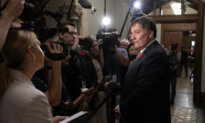

Finance Minister François-Philippe Champagne says the upcoming federal budget aims to strengthen Canada’s economy and help it navigate a “volatile” world.
“We need to be more independent. We need to open up new markets. We need to build one Canadian economy. We need to buy Canadian,” Champagne told reporters on Nov. 4. “So we’re going to be on a strong footing, regardless, because those are the kind of investments that we need to make.”
Champagne said the Nov. 5 budget will focus on affordability, citing Canadians’ concerns about rent, gasoline and food prices. He said the budget will aim to give Canadians a “boost,” as the federal government has the fiscal capacity to support them.
The finance minister also suggested that the budget will include additional support for sectors hit by U.S. tariffs, such as the automotive, steel, aluminum, and forestry industries.
When asked by reporters if the Republicans’ setback in the U.S. midterms could help Canada’s negotiating position in trade talks, Champagne said his focus “is very much on the budget.”
“Whatever happens—south or somewhere else in the world—we need to be more resilient,” he said.
Champagne made the remarks while shopping for new shoes ahead of the budget, continuing a longstanding tradition among Canadian finance ministers.
Two days earlier, Champagne said the budget would include measures to help small and medium-sized businesses and boost Canada’s low productivity.
Champagne also said on Nov. 4 that the budget will provide more details about the Canada Strong Fund, intended to attract private investment in projects involving energy, critical minerals and agriculture. The fund is meant to allow Canadians to share in the returns generated by those investments.
Conservative Leader Pierre Poilievre told reporters on Nov. 4 that the budget should prioritize saving money for Canadians. He called for eliminating taxes on diesel until Canada Day 2027, and suspending the GST on fuel until the summer.
“Save you money. That’s our mission as conservatives, and it’s our demand for the budget,” he said.
The Conservatives have called for the upcoming budget to reduce what they describe as “wasteful, inflationary spending,” such as money spent on bureaucracy, consultants, and certain foreign aid programs. They also want Ottawa to lower the debt-to-GDP ratio.