

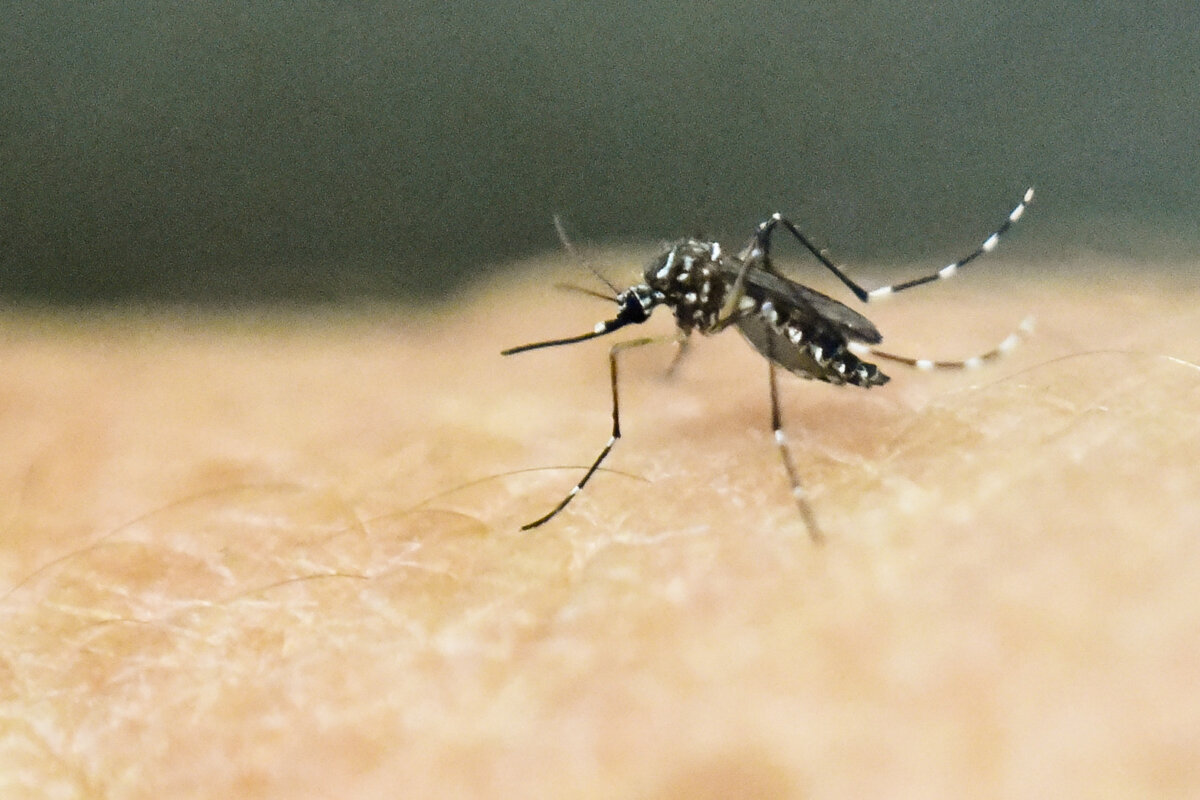
Officials in Florida reported dozens of new cases of dengue fever, a virus transmitted by infected mosquitoes, according to a new update from the state health department.
Health officials reported last week that 425 locally acquired cases of the mosquito-borne viral disease have been recorded so far in 2026.
The majority of them were in Hillsborough County, which includes the city of Tampa.
Health officials said the cases, along with 20 mosquito pools, have been reported in 11 counties in the state.
Hillsborough County reported 346 locally transmitted cases. Another Tampa Bay-area county, Pinellas, has reported 51 cases, they said.
The most recent data from the Florida Department of Health show 57 cases of locally acquired dengue for the week of Oct. 11–17.
Meanwhile, 32 cases of travel-associated dengue were reported for that week, and the 2026 total reached 320 cases, according to officials.
Historic data on dengue outbreaks are limited. But available information from state health departments and medical journals suggests that the Florida outbreak marks the most cases in a calendar year for any state since at least the 1940s.
Puerto Rico is consistently hit hard by dengue, with numbers much higher than those seen in any of the 50 states. But in the continental United States, Florida usually gets the most locally transmitted cases.
The state’s previous worst year was 2023, when just under 200 locally spread cases were reported.
Authorities in Hillsborough and several surrounding counties have declared emergencies over the outbreaks.
Officials have said workers in the area have been spraying to kill mosquitoes to prevent further spread.
Symptoms and Signs of Dengue
Dengue, which is sometimes referred to as “breakbone fever,” is caused by a virus transmitted through an infected Aedes species mosquito bite, state officials have said.
Because there is no specific treatment for dengue, the main focus involves dealing with pain symptoms.
Acetaminophen is generally used to deal with the pain, while drugs such as aspirin, ibuprofen, and other non-steroidal anti-inflammatory drugs should be avoided because they increase the risk of bleeding, according to the World Health Organization.
Experts with the Mayo Clinic say that “many people” can experience no signs or symptoms of a dengue infection.
But when symptoms do occur, they can be mistaken for another illness such as influenza.
Symptoms usually start between four and 10 days after being bitten by a dengue-infected mosquito, according to the Mayo Clinic.
Florida health department officials say symptoms can start three to 14 days after a bite, while the illness itself lasts four to seven days.
Those other signs and symptoms can include a fever of 104 degrees Fahrenheit; muscle, bone, or joint pain; vomiting; upset stomach; pain behind the eyes; swollen glands; and a rash.
In some cases, the symptoms can become the life-threatening dengue hemorrhagic fever, or dengue shock syndrome, according to the clinic.
The severe symptoms often can occur after the fever goes away and can include persistent vomiting, fatigue, bleeding gums or nose, blood in stool or vomit, and pale and cold skin, according to World Health Organization and Mayo Clinic officials.
The CDC did not respond to an Epoch Times request for comment on Oct. 26.

