
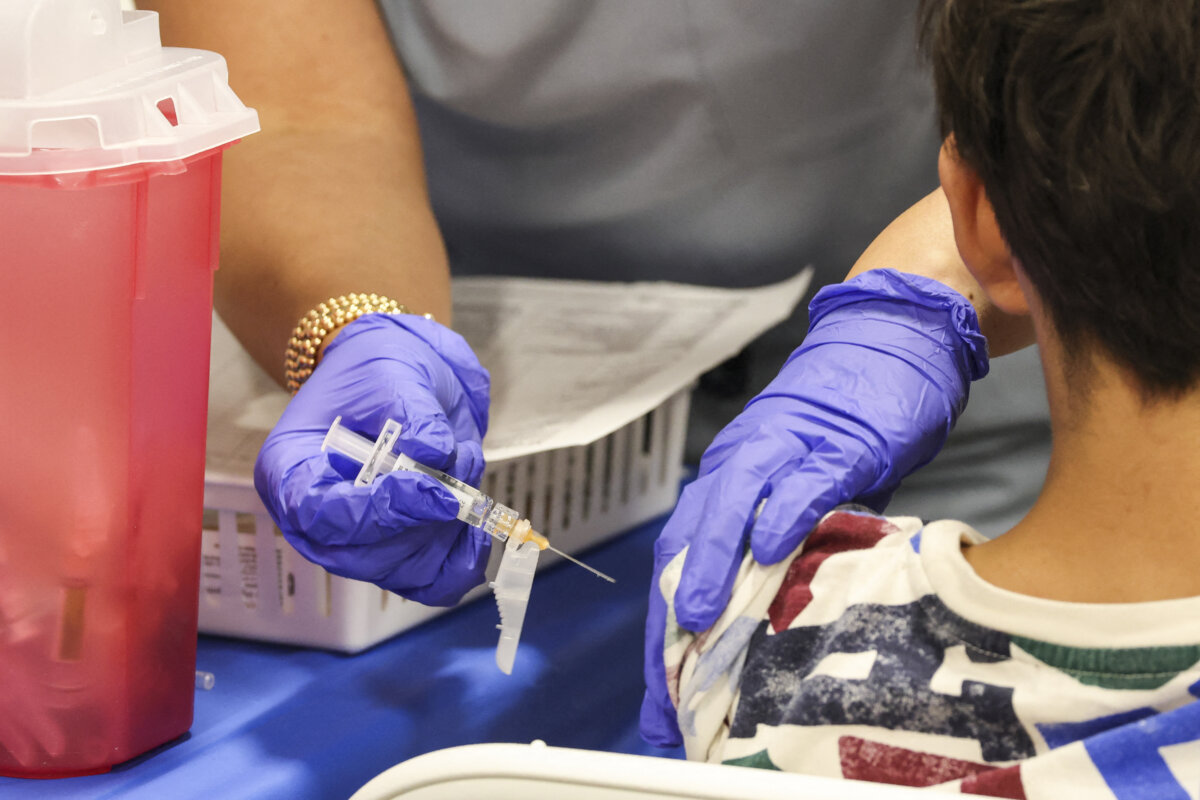
A report on the safety of childhood vaccines is delayed, the director of the Centers for Disease Control and Prevention has said.
“It’s still going through the clearance process,” Dr. Erica Schwartz, the CDC’s director, said in Washington during an event held by the Milken Institute on Nov. 12.
President Donald Trump in August ordered Health Secretary Robert F. Kennedy Jr., through the Task Force on Safer Childhood Vaccines, to present to him within 90 days options to administer single-antigen vaccines as alternatives to combination shots, assess the ideal timing and sequencing of childhood vaccines, and present ideas for adjuvants other than aluminum.
Schwartz described the plans as a report and acknowledged that the Nov. 8 deadline has passed. She declined to provide any details from the report, saying reporters should ask National Institutes of Health Director Dr. Jay Bhattacharya, who is leading the task force.
The agency did not respond to a request for comment by the time of publication.
The task force was revived in 2025 by the Department of Health and Human Services, which is led by Kennedy. It includes representatives from the CDC and Food and Drug Administration.
The report is designed to be given to the CDC’s vaccine advisory panel, known as ACIP, according to Schwartz.
“ACIP will be able to take that report, decide whether there is merit to some of the things in the report or not,” she said. “But that is the goal.”
ACIP is in limbo after a federal judge in the spring said that Kennedy appeared to violate federal law and regulation when appointing members. An appeal is ongoing.
Health officials in October said they’re accepting nominations for new members for the panel.
“Nominees will be selected to represent a balanced range of scientific, clinical, and public health expertise relevant to the Committee’s mission, including person(s) knowledgeable about consumer perspectives and/or social and community aspects of immunization programs,” the notice reads.
“We’re still waiting to hear from the appellate court about the case,” Schwartz said on Thursday.
She added later: “As soon as we know whether we can actually reconstitute ACIP, we will do so. We’re just putting out the notice so that when the appellate court, if the appellate court rules in our favor, we’ll be ready to go, hit the ground running.”
A designated federal official, who was not identified, will decide which applicants will become ACIP members, despite the ACIP charter saying the health secretary shall select new members, the CDC director said.
She also said that nine individuals whom Kennedy appointed are also being asked whether they want to stay on.
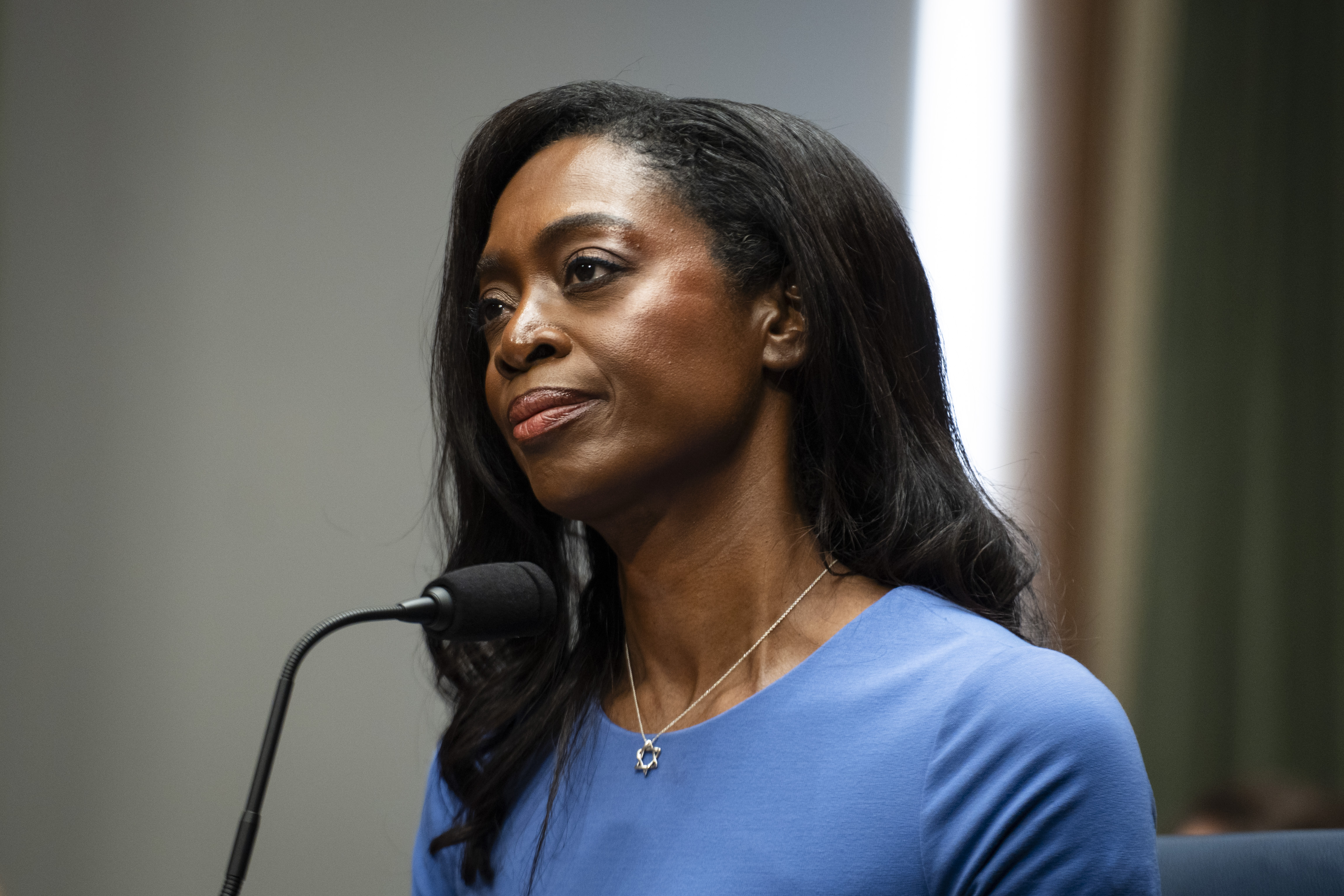 Dr. Erica Schwartz, nominee for director of the Centers for Disease Control and Prevention, testifies before the Senate Committee on Health, Education, Labor, and Pensions, on Capitol Hill in Washington, on July 15, 2026. (Madalina Kilroy/The Epoch Times)
 Health Secretary Robert Kennedy Jr. testifies on Capitol Hill in Washington on April 22, 2026. (Madalina Kilroy/The Epoch Times)
Measles
The Pan American Health Organization is meeting this week to decide whether the United States will lose its measles elimination status or whether a chain of transmission involving a certain measles strain has spread uninterrupted for at least 12 months. There have been more than 5,100 measles cases recorded in the country in 2026, the highest annual number since 1991.
Regardless of what the organization decides, the CDC will continue supporting states with vaccines, personnel, and other support, Schwartz said.
She and Kennedy have both endorsed the measles, mumps, rubella (MMR) vaccine as the best way to prevent measles. But many of the cases are occurring among communities that include unvaccinated people, according to the CDC and states.
“Having big CDC come in and say ‘Verily, thou shalt’ is not going to work,” Schwartz said.
“But what will work is going with the states, with those trusted agencies, to talk about what can we do to bring awareness to these close-knit communities.
“Because once again, these communities typically do not believe in the MMR vaccine; they don’t believe in vaccinations in general. Some of them can be convinced. Some of them can’t be convinced. So it’s really sort of a different way of thinking about it.”
If people cannot be convinced to get a vaccine, they should be told about the seriousness of measles, how to identify the disease, when to see a doctor, and how to isolate to avoid infecting relatives, the CDC director said.
Conversations With Kennedy
Schwartz, a former military health officer who was confirmed in August, indicated in her confirmation hearing that she goes over areas of disagreement with superiors in private. She said that has happened with Kennedy, including during the daily meetings she and other division heads have with the health secretary.
“We have robust conversations. What I love about the secretary is that he listens to those disagreements. He’s not someone who just says, ‘No, I don’t have room for that.’ He really does value different opinions,” Schwartz said.
Kennedy’s leadership style is inclusive and decisive, often involving holding a meeting with people, hearing their opinions, and making a decision, according to Schwartz. She said her style is more insular and indecisive.
Sometimes, Kennedy’s decisions have been in her favor; sometimes, they have been against her.
Schwartz also said she has never met with new White House chief of staff Stephen Miller, whom Kennedy recently praised, and that she is prepared to work with incoming lawmakers, including the Democratic doctors and public health experts who helped flip the House of Representatives and Senate.
“We may not agree on every issue,” she said, “but I do think there’s a common ground where we can actually focus on really trying to make Americans healthy again.”