SEARCH


Commentary
Courage under fire is inspiring to most people in or out of uniform. The soldier who charges forward or crawls through mud towards an objective, who takes out a machine-gun nest, clears an enemy trench, or who dies trying, will always be admired. Perhaps even more, the heroism of saving a fellow soldier’s life is deeply embedded in our culture, decisively shaped by the New Testament saying, “Greater love hath no man than this, that a man lay down his life for his friends.”
And so, since ancient times, armies and governments have, where possible, rewarded brave actions. The Victoria Cross (VC), a British Empire bravery medal established in 1856, was innovative in that it was open to all ranks regardless of class distinction. Among the first VC recipients were an Upper Canadian lieutenant (1857) and a Nova Scotian petty officer of black loyalist ex-slave parentage (1859). Clearly, men who have shown outstanding courage in the most dire circumstances come from many backgrounds.
Leo B. Clarke was working as a ranch hand in Saskatchewan in August 1914 when news reached him that war had broken out in Europe. A great athlete at school, especially at boxing and running, he had worked in northern Saskatchewan as a surveyor for the Canadian Northern Railway and Canadian Pacific Railway. He could have stayed on the ranch. There was nothing to compel him to join up. There was no requirement. But enlist he did, in the 27th (City of Winnipeg) Battalion, better known as the Royal Winnipeg Rifles.
Clarke was in some ways a typical volunteer in the Canadian Expeditionary Force. Canadian by birth, he had both family ties and a wider sense of citizenship in the Empire. Though a private, he resembled the officers, the majority of whom (70 percent) in the First Contingent in 1915 were Canadian-born. In contrast, most members (70 percent) of the junior ranks of the First Contingent, though living in Canada, had been born in Britain. (By 1918 that had begun to change, and 51 percent of the victorious Canadian Corps were of Canadian birth.)
Born Lionel Beaumaurice Clarke in East Flamborough, near Waterdown, Ont., in 1892, his family returned to Billericay in rural Essex to farm when he was 3. He thus spent his childhood in England’s idyllic agricultural milieu, attending picturesque St. Nicholas Church in Laindon where his grandfather, Beaumaurice, had been rector, and returning to Manitoba in 1903 when he was 11.
The family background illustrates how a Canadian’s life naturally intertwined with the Old Country. Clarke’s father, Henry, had originally moved to Canada in 1887 at the age of 18. After their return to Winnipeg, they attended St. Jude’s Anglican Church. Young Nobby attended Mulvey and Argyle Schools and sold newspapers after school. He was a keen athlete, skilled at boxing and running and showed “no interest in any military work prior to going to the war.”
Having trained for a month in Valcartier in Quebec, the Canadian Expeditionary Force sailed to England for further training on Salisbury Plain. There, Clarke managed to transfer to the 2nd Battalion (Eastern Ontario Regiment), reuniting with his brother, Charles. They were infantry “bombers,” trained in the use of Mills No. 5 grenades and rifle grenades. He was “Leo” for short but “Nobby” to the boys. He was wounded in the Ypres Salient in Belgium on Dec. 8, 1915, and he also battled influenza for three weeks in April 1916.
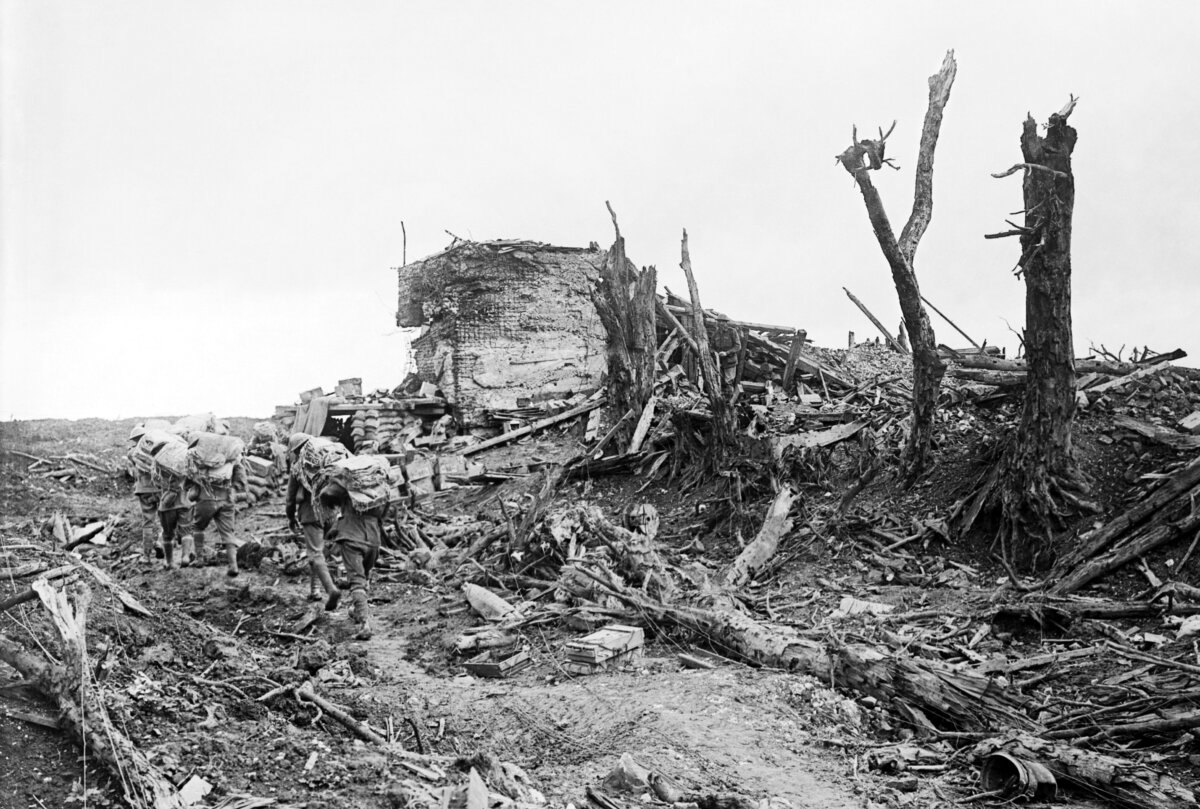
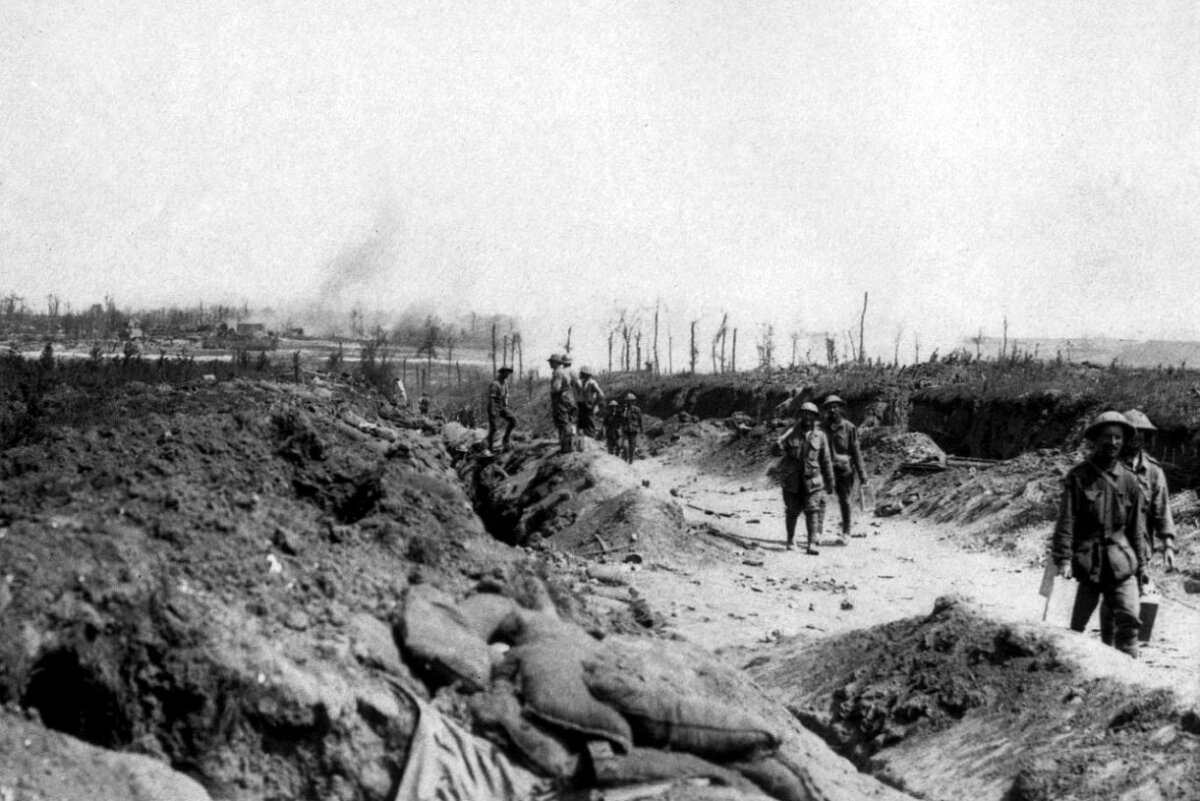
In the build-up to the Battle of Flers-Courcelette in September 1916, part of the wider Somme offensive in France, Clarke was acting corporal when his section was given the job of clearing part of a long enemy trench in a 500-metre salient before the town of Pozières. The objective lay between the Canadians and the village of Courcelette, and was needed in order to establish a Canadian forward position as part of the impending assault towards the village.
When Clarke’s section reached the trench, they found it still occupied and energetically defended by the Germans. The Canadians proceeded to clear forward using grenades and bayonets, and using their rifles as clubs at close quarters.
But the Germans were too numerous. Clarke suddenly found himself the last man standing and “not a casualty” in the face of a new counter-attack by 19 Germans. He emptied his revolver into them, then picked up enemy rifles and fired them too, so fierce in his advance that they began to withdraw. He received a bayonet wound in the leg from a German officer, but Clarke killed him and obtained valuable papers from his pockets. Of the 19, only one German survived, begging for his life.
Later Clarke said: “I also got a sore back caused by the explosion of a German bomb – main thing is, I’m still here and very much alive.” Even after these actions, Clarke still did not withdraw and had to be ordered to leave the field to be seen by medics. He was promoted to acting sergeant.
Amid rumours that he would get the British Empire’s highest award for valour in the presence of the enemy, to his parents he wrote, “I don’t care so much for the VC as getting home for a couple of months.”
The Victoria Cross is the most famous award for valour in the English-speaking world, awarded “For most conspicuous bravery or some daring or preeminent act of valour or self-sacrifice or extreme devotion to duty in the presence of the enemy.” When the VC was Canadianized in the early 1990s, the definition of “enemy” was expanded to include “armed mutineers, armed rebels, armed rioters and armed pirates,” not necessarily under an official declaration of war.
By Oct. 11, 1916, Nobby Clarke was back at the front helping secure the recently captured Regina Trench. But that was his last action. According to “Annals of Valour: Empire Day,” “While moving forward with his battalion … a shell fell behind him as he was crouching in a hole and the back of the trench caved in, burying him” and four other men, all killed. His brother Charles dug him out. Clarke was alive but “paralyzed with a crushed back and injured spine.” He could barely speak, but he had the grace of knowing that his brother had found him. He was carried out to a hospital and died five days later.
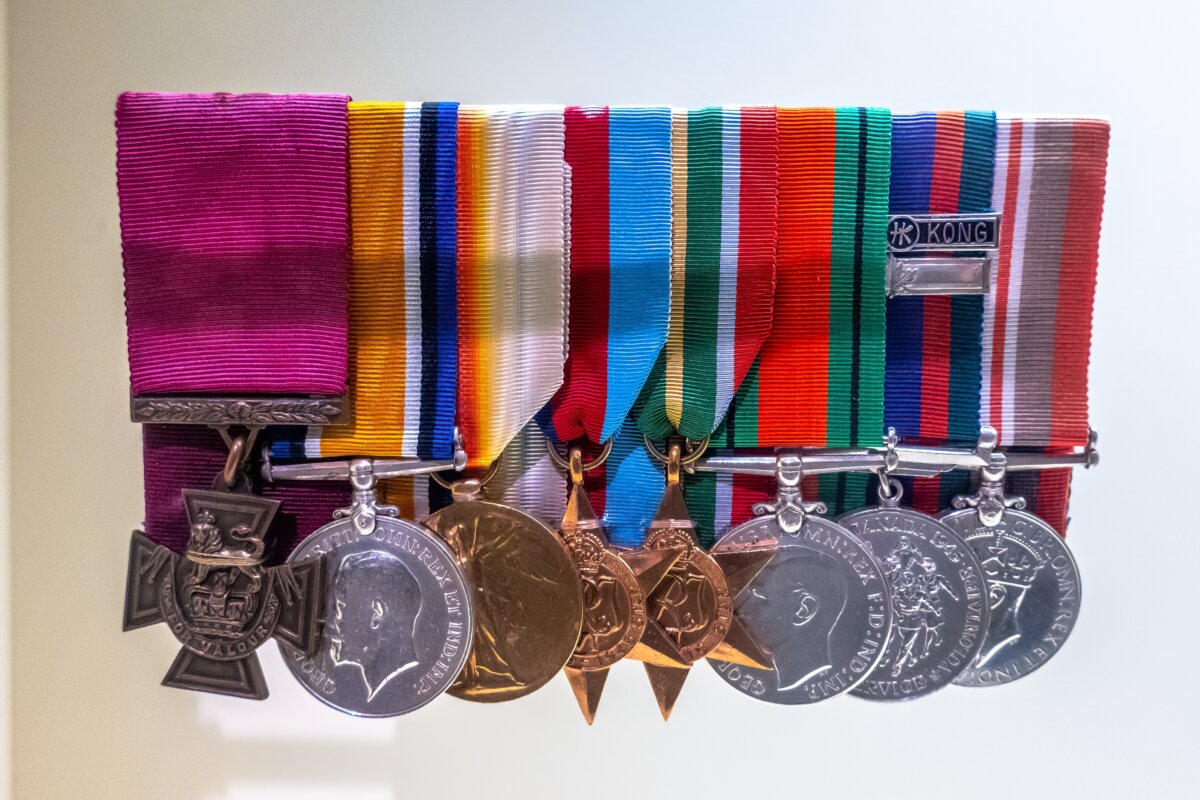
Clarke’s posthumous Victoria Cross was presented the following April to his father in Winnipeg personally by the governor general, the Duke of Devonshire, before tens of thousands of well-wishers. The 2nd Battalion’s chief contributing unit had been the Governor General’s Foot Guards, established in 1872, and four smaller Ontario units. Today the GGFG perpetuates the “Iron Second,” and a copy of Clarke’s VC is displayed in the Junior Ranks Mess, named after Leo B. Clarke, at Cartier Square Drill Hall.
Why is it that some men under fire, huddled in a dugout shelter, “funk it,” and even shoot themselves in the foot (something that could be tempting to many of us) in order to avoid having to “jump the parapet”—go over the top in the face of the enemy—while others find it within themselves to go forward, charge bravely or crazily ahead, kill countless enemy soldiers, and take the trench?
Whether such courage is owing to group cohesion and peer pressure, a desire to protect comrades, a type of professional identity (“just get the job done”), a related “fixed resolve not to quit,” or even, as some have proposed, to gain sexual attractiveness, or other factors, will probably always be debated.
Although some equate bravery under fire with an appetite for calculated or senseless risk-taking, the ancients were, I think, wiser. To them, courage was not something extreme but actually the mean, the reasonable mid-point, between the two extremes of abject cowardice and foolish rashness.
In the same era that the VC was Canadianized in 1993, Australia (1991) and New Zealand (1999) did the same. India had already instituted the Param Vir Chakra in 1950. Canada unveiled its updated and redesigned Victoria Cross in 2008, though no Canadian has been awarded the VC since Pilot Officer Andrew Mynarski in 1946. In May this year, the federal government promised an Independent Military Honours Review Board to consider whether the late Pte. Jess Larochelle should get a posthumous VC for his brave actions in Afghanistan in 2006, for which he received the Star of Military Valour in 2007.
There’s a strong case for Larochelle to get it, though some opponents want the VC saved for even braver actions while others oppose its award because the VC is “not Canadian” and should be abolished from the Canadian honours system.
The 99 Canadians, including Leo Clarke, who were awarded the Victoria Cross may be dead but they were most certainly Canadian, and a chunk of historically significant bronze can hardly change that.
Views expressed in this article are the opinions of the author and do not necessarily reflect the views of The Epoch Times.