

A primary school student with a patch of atopic dermatitis on his elbow visited a traditional Chinese medicine (TCM) clinic for treatment. As the student’s physician, Yingta Lee, examined his tongue and noticed irregular patches on the surface—a condition known as geographic tongue.
“Clinically, this is more common among children,” he told The Epoch Times. “It is usually associated with weaker digestive function and reduced immunity.” Lee prescribed Chinese herbal medicine to improve his digestive function, and after a period of treatment, the child’s dermatitis was completely cured.
In TCM, it is believed that the state of the internal organs is inevitably mirrored in external manifestations. Changes in the internal organs can be reflected on the skin as well as on the tongue—specifically, its color, shape, and coating.
Tongue: A Reflection of Internal Health
Distinct from conventional medicine, TCM emphasizes a holistic approach, even in diagnosis. TCM practitioners rely on four primary diagnostic methods—inspection, auscultation (listening to bodily sounds, including the voice, breath, and coughing and smelling body odors), inquiry, and palpation—with tongue examination being a key component of inspection for more than 2,000 years.
By regularly checking your tongue in the mirror, you can detect subtle changes early and recognize possible warning signs of illness. For certain tongue patterns, there are things you can do to correct the imbalance in the body.
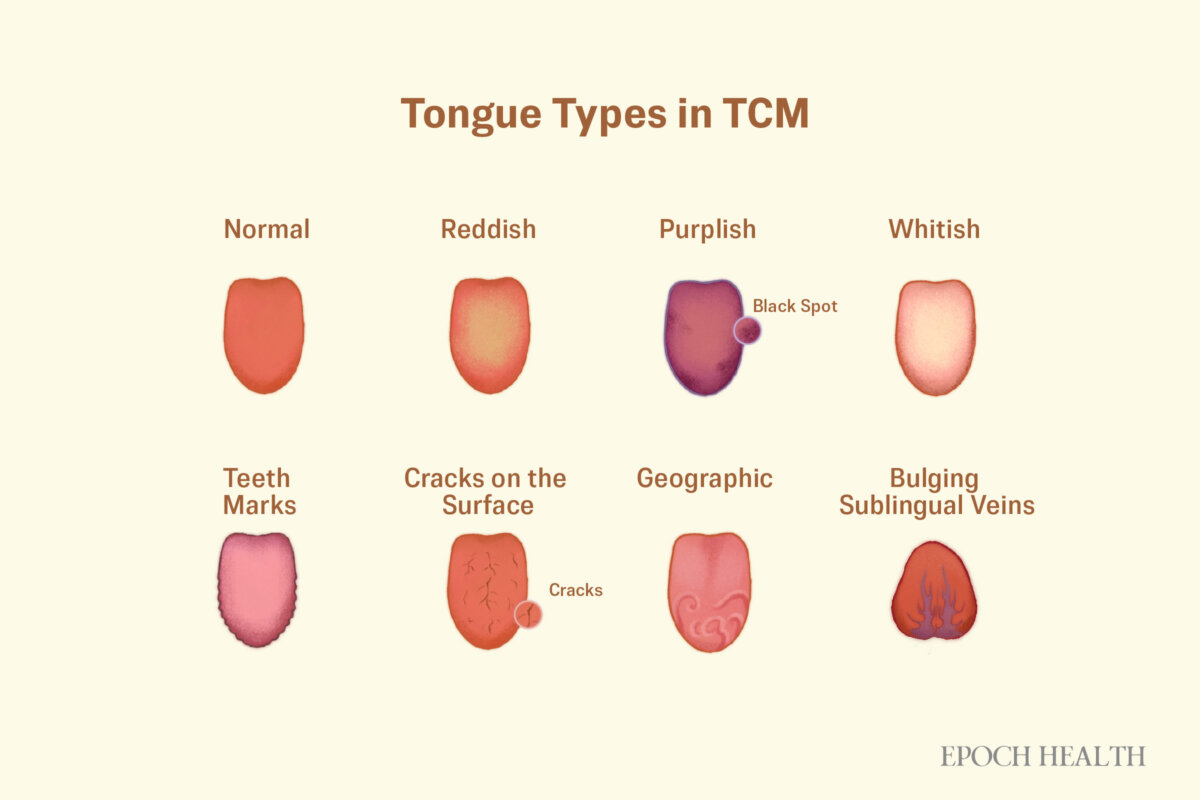
Tongue Color
A healthy tongue is typically light pink in color, and changes in color may signal different health conditions. Below are some of the most common tongue patterns.
Reddish Tongue
When the tongue appears noticeably red or dark crimson with a yellow, dry coating, it often indicates internal or excessive body heat—meaning you feel hot or restless. As heat accumulates in the body, blood vessels dilate to release the excess warmth, causing the tongue to appear redder than usual.
This pattern may also suggest that the body is undergoing an infection or an inflammatory response.
Purplish Tongue
When the tongue appears purplish in color, it may indicate blood stasis or a cold pattern—both of which suggest poor blood circulation. This is often accompanied by symptoms such as stiffness in the shoulders and neck or soreness in the lower back.
Keeping warm and engaging in gentle exercise can help promote circulation. If the tongue remains purplish for an extended period, consult a physician to rule out potential health issues.
In addition, according to TCM, people with a blood stasis [when blood flow slows down or stagnates in certain areas of the body] constitution are more prone to developing tumors, whereas those who are sensitive to cold or have a cold constitution tend to have weaker immunity, which may in turn increase their risk of cancer.
A 2016 study found that the tongues of cancer patients tended to appear more purplish than those of healthy people.
Additionally, a purplish tongue can sometimes appear in cases of poisoning.
Whitish Tongue
In TCM, a whitish tongue provides important clues about the body’s internal balance—particularly relating to cold—and poor digestive function.
From a western medicine perspective, a whitish tongue—appearing in lines, a lacy pattern, or thick patches—may indicate a fungal infection, an inflammatory condition, or even a potential risk of precancerous changes.
Tongue Shape
A healthy tongue has a rounded and symmetrical shape. Abnormalities in tongue shape can reflect certain underlying health conditions.
Teeth Marks Along the Tongue Edges
When the tongue appears swollen with visible teeth marks along its edges, it usually signals a deficiency in yang energy. Yang represents the body’s warmth and vital energy. When it becomes depleted, coldness increases within the body, leading to reduced digestive function and slower fluid metabolism. As a result, symptoms such as poor appetite, cold hands and feet, and edema may occur.
People with the appearance of teeth marks are advised to limit alcohol intake and avoid foods that are heavily seasoned or high in fat and sugar.
Bulging Sublingual Veins
Swollen, bluish-purple sublingual veins are considered a sign of a blood stasis pattern in TCM. It often indicates poor blood circulation and may be associated with cardiovascular issues, which should be closely monitored.
A 2023 study found that, compared with healthy subjects, patients with diabetes had darker sublingual veins and redder tongues, which are associated with sluggish microcirculation caused by high blood sugar levels. Additionally, using images of the back of their tongues to diagnose diabetes achieved an average accuracy rate of 93.38 percent. Long-term diabetes is linked with blood stasis.
It is advisable to manage blood sugar and lipid levels by increasing dietary fiber and omega-3 fatty acid intake through foods such as whole grains, vegetables, fruits, fish, and organic soy products.
Cracks on the Tongue Surface
Cracks on the tongue surface are often linked to a blood deficiency pattern. This condition is often associated with poor nutrition and may be accompanied by anemia.
Tongue Coating
Ritsugaku Ken, a Japanese TCM practitioner, told The Epoch Times that a healthy tongue coating appears as a thin, evenly distributed white layer with a moist surface. However, tongue coating changes that may warrant attention include:
Thick and Yellow Coating
A thick, yellow coating on the tongue often indicates overeating or eating too quickly, which can lead to indigestion and excessive dampness in the body, resulting in a heavy and sluggish feeling. People with this pattern may experience gastrointestinal discomfort, diarrhea, or constipation. Additionally, a yellow tongue coating may also be associated with bacterial overgrowth, dehydration, smoking, or the intake of certain vitamins. Conditions such as psoriasis and jaundice can also cause the tongue to appear yellow.
People with this sign should reduce consumption of fatty, sugary, and heavily flavored foods, eat more vegetables and legumes rich in plant-based protein, and incorporate aerobic exercise to promote metabolism.
Thin Coating
A thin coating on the tongue may indicate a deficiency of vital energy and blood, reflecting physical weakness and fatigue, and may be associated with a poor diet or indigestion.
Glossy Tongue
A glossy tongue without coating suggests that the body is dehydrated or overheated internally, with insufficient yin (moisture or cooling energy) to balance the yang (heat).
Geographic Tongue
Geographic tongue, or benign migratory glossitis, appears as smooth red patches on the tongue bordered by white or gray edges. People with eczema, asthma, or diabetes have a higher risk of developing this condition.
Dry Coating
The moisture level of the tongue coating reflects the body’s fluid metabolism. A moist coating indicates normal saliva secretion and smooth circulation of body fluids, while a dry coating suggests impaired fluid metabolism.
Black Coating
A black tongue coating suggests a significant imbalance between yin and yang within the body. It may also result from long-term use of certain antibiotics that disrupt the body’s microbial balance.
By paying attention to subtle changes in your tongue—its color, shape, and coating—you can gain early insight into your body’s internal balance before symptoms fully develop. While tongue observation is not a substitute for medical care, it can serve as a powerful daily check-in, helping you take timely steps to restore harmony and protect long-term health.