
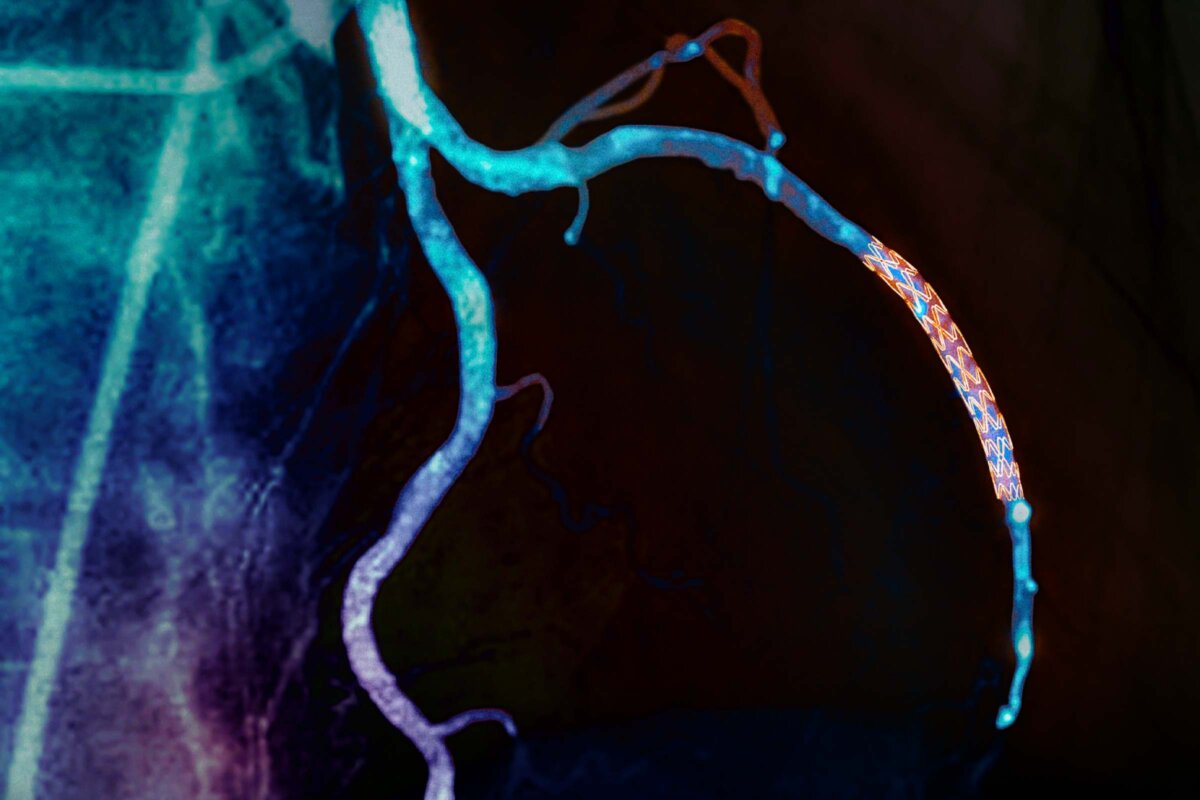
When you hear that an artery is narrowing, it’s hard not to feel like a walking heart attack waiting to happen. When the doctor starts talking about putting in a stent, it can feel like there’s no time to waste. But what sounds like an emergency often isn’t for stable patients. There’s time to weigh the different options. Unfortunately, many patients don’t realize that.
Two new studies published this month in JAMA, one following patients for up to 25 years, found that for people with stable heart disease, opening the artery right away didn’t help them live longer than starting with medication and having a procedure later if needed.
These are patients who might feel chest tightness when climbing stairs or become short of breath when carrying groceries, only to feel much better when they stop or rest. Having a heart attack is another matter entirely, and that’s where a stent can save your life.
There are reasons to consider a stent, especially if chest pain or shortness of breath makes life hard. But the procedure comes with risks, and it opens a blockage without curing the underlying problem. With or without one, the disease still needs treatment. The research may have changed how some cardiologists think about stents, but not necessarily how every doctor uses them.
The Finding That Started a Fight
Dr. William Boden, a cardiologist and professor of medicine at Boston University School of Medicine, remembers well what happened when he published a study in 2007. The reaction was “shock, disbelief, and strong resistance,” he told The Epoch Times.
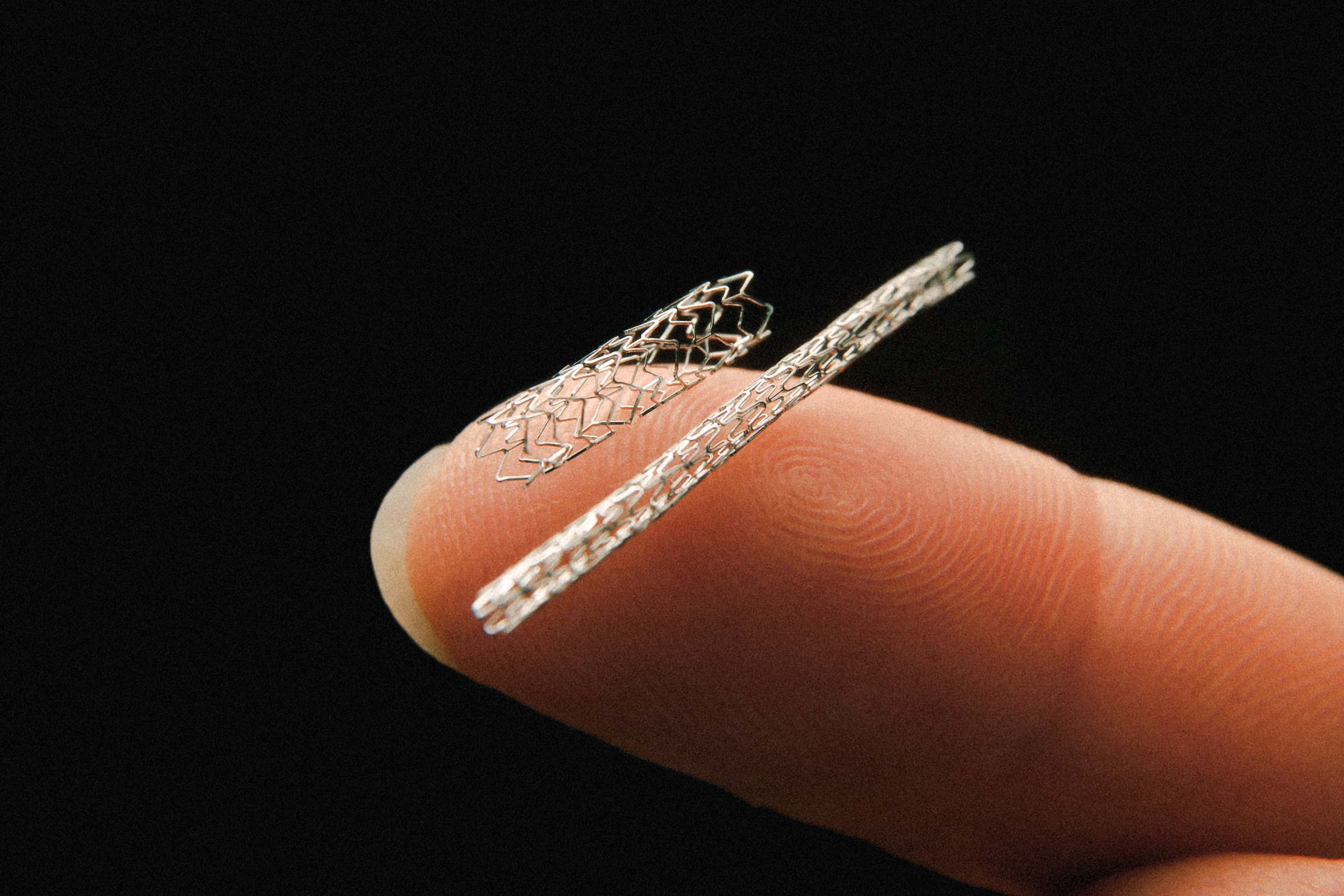 Stents are inserted in a long, narrow form and then expanded once in place to open a narrowed artery. (RickLeePhoto/Getty Images)
The cardiologists who place stents pushed back hard, Boden said. Some fiercely criticized the study’s methods, including its use of older, bare-metal stents. Others said the findings shouldn’t change how patients are treated.
“There were so many falsehoods propagated by the [interventional cardiology] community and so much disinformation spread early on that was both vicious and demeaning,” Boden said.
Most of the criticism came in the first six months to a year after COURAGE was published, he said. Then, other trials, notably ISCHEMIA, reached the same conclusion.
“There was a well-orchestrated initiative to discredit the study but, over time, we got traction in the scientific community, and the truth prevailed,” Boden said.
Nearly two decades later, two new JAMA studies, both of which Boden co-authored, have reinforced the original findings with years of additional follow-up.
One study followed 959 veterans from the original COURAGE trial for up to 25 years.The other, ISCHEMIA-EXTEND, followed more than 5,000 patients from ISCHEMIA, a later international trial that used newer stents. Early invasive treatment in that trial was defined as a catheterization followed in most cases by a stent and less often by bypass surgery. About a quarter of the patients had died after 11 years, whether they had early invasive treatment or medication first.
Doctors place about 600,000 stents in heart arteries across the United States each year. But they’re not all used to treat heart attacks. When researchers looked at patients who underwent procedures to open narrowed heart arteries between 2017 and 2019, about four in 10 had stable heart disease. In other words, they weren’t having a heart attack or another cardiac emergency.
Why a Stent May Not Prevent a Heart Attack
If a narrowed artery can cause a heart attack, why wouldn’t opening it prevent one? “While it clearly makes sense that opening up a blocked artery would prevent a heart attack, that is not the case,” Dr. John Spertus, a cardiologist and researcher involved in one of the new JAMA studies, told The Epoch Times.
NYU Langone Health cardiologist Dr. Gregory Katz, who wasn’t involved in the study, explains why with a donut. “Too many people think that the problem is the size of the hole, but the problem is actually with the donut,” he told The Epoch Times in an email. The hole is the channel the blood flows through. The donut is the artery wall where fatty plaque builds up. A stent widens the hole, but does nothing to fix the artery.
There’s a difference between a narrowed artery and a heart attack. When an artery is narrowed, it can limit the amount of oxygen-rich blood that reaches the heart muscle. When the heart is working harder than normal—say, climbing stairs or shoveling snow—that lack of oxygen can cause chest pain or shortness of breath. During these times of exertion, the heart needs more oxygen, but it’s restricted by the narrow artery.A heart attack is often different: A patch of plaque in the artery wall suddenly breaks open. In the body’s attempt to heal the injury, a blood clot forms over the crack. If the clot blocks blood flow, the heart muscle downstream is starved of oxygen and begins to die.
Whether a plaque ruptures depends on what it’s made of, not just how much it narrows the artery. Some have a soft, fatty center under a thin, fragile cap, and can rupture even when the artery isn’t severely narrowed. Those plaques may sit in places a stent never touches.
“You can’t put metal over the whole donut,” Katz said.
Why Stents Still Feel Like the Answer
Primary care physician Dr. Andy Lazris remembers a 78-year-old patient who had been active and feeling well until a routine stress test found an abnormality. More testing revealed a 70 percent narrowing. The man was told that unless it was opened right away, he could have a heart attack, Lazris told The Epoch Times.
He got a stent that same day, but complications followed, including an abnormal heart rhythm. He left the hospital days later on four new drugs, feeling weak and tired, and has stayed that way since, Lazris said. Yet the patient remained grateful. He told Lazris his life had been saved “just in the nick of time.”
The belief is common. In a survey of 350 patients who’d had elective stent procedures at a Kansas City health system, 42 percent said it saved their lives, and one-third thought it was an emergency. None had been, according to the researchers. All had undergone planned, nonemergency procedures.
Doctors feel the pull too. The instinct to open a blockage is powerful, thanks to old habits and how well doctors are paid to do it, Boden said.
Dr. Deepak Bhatt, an interventional cardiologist and director of Mount Sinai Fuster Heart Hospital in New York, who co-wrote a paper with Boden last year calling for medication first, agreed in part. “In the United States, financial incentives can encourage more stenting in cases where either medicine or stenting might do the trick compared with some other regions of the world,” he told The Epoch Times in an email.
Dr. Donald Cutlip places stents himself. An interventional cardiologist at Beth Israel Deaconess Medical Center in Boston, he co-wrote a JAMA editorial on the new research and doesn’t rule out that money sometimes sways a decision.
“However, I think most physicians make evidence-based decisions as much as possible,” he told The Epoch Times, pointing to a shift in practice toward medication first for most patients.
Boden sees less change. “Guidelines are recommendations, not commandments or rigid requirements—and practitioners are free to manage patients the way they see fit,” he said. In his experience, an initial stent “is still heavily utilized in routine practice.”
Whoever is right about practice today, some stents have gone to patients with little to gain. In a 2020 study co-authored by Spertus, about one in six stable patients who received a stent had no heart-related chest pain, which is the main symptom a stent can relieve. The researchers argued that, given the trial results, stents are rarely appropriate for such patients.
When a Stent Makes Sense
Stents still have a place. If chest pain hits often or stops you halfway up a flight of stairs, it may be worth considering whether a stent could help. The main benefit of opening an artery is relief from symptoms, not a longer life, and the worse the symptoms, the more someone stands to gain.
Spertus illustrates the choice with two 62-year-old women who have the same narrowed artery. The first has chest pain several times a week and can’t comfortably climb a flight of stairs. Opening her artery could stop the pain and get her up stairs again, which Spertus called “a marked improvement” in her quality of life.
The second has no chest pain and climbs stairs without trouble. She would not benefit, he said, even if her artery were severely narrowed. “How can you improve someone’s symptoms if they don’t have any symptoms?” Importantly, feeling fine doesn’t mean her risk of a heart attack is lower. A stent hasn’t been shown to lower the overall risk for either woman. It has been shown to relieve pain, and she has none.
Symptoms aren’t the only reason to consider a procedure. The trials left some people out. Those with a significant narrowing of the left main artery, a badly weakened heart, or someone who had a recent heart attack weren’t included. For situations like those, Shapiro said, a procedure “remains important.”
Cutlip doesn’t dismiss patients’ fears, like when someone tells him they can’t live knowing they have a blockage.
“I actually think that is important information,” he said.
That conversation will likely lead to an angiogram, in which a thin tube is threaded through an artery to the heart and dye is injected so the doctor can see the artery on an X-ray. Cutlip tries to set expectations up front for what he may recommend once the results are in.
The percentage of blockage doesn’t tell the whole story. A 70 percent narrowing often causes alarm, but the number alone isn’t enough to determine whether someone needs a stent, Boden said. Doctors can do further testing to see whether the narrowing is actually slowing blood flow.
 A surgeon shows a heart stent during an operation. (Chaideer Mahyuddin/AFP via Getty Images)
Will a Stent Stop the Pain?
Relief from pain isn’t guaranteed. Boden said that in his experience, 30 to 50 percent of patients have chest pain again within six months of getting a stent, even when the stent remains open.
“My experience is different,” Cutlip said. When a patient’s chest pain can be traced to a specific narrowing, “I find high success for stent placement to relieve symptoms.”
There is research to support both views. In one study in the New England Journal of Medicine, patients who received stents had less chest pain than those who had a placebo procedure. Yet 59 percent of the stent patients still reported some pain after 12 weeks.
A May analysis of the ISCHEMIA trial, which Boden and Spertus co-authored, found something similar. Of 436 patients who started with chest pain, 42 percent still reported at least some pain within six months, even though an independent review found all their significant blockages had been opened or bypassed. Their pain was less frequent on average than before, and the other 58 percent were pain-free.
That trial didn’t test what caused the lingering pain. The authors said spasms in the arteries and problems in the heart’s smallest vessels could contribute, and a stent treats neither.
Risks and Costs
Some risks come with putting a stent in the heart, Katz said. After placement, most patients need two drugs each day to prevent blood clots, often aspirin and a second antiplatelet drug, usually for about six months. After that, they typically stay on one indefinitely. Taking both increases the risk of bleeding. The National Heart, Lung, and Blood Institute also lists blood vessel injury, clots, and, rarely, a heart attack caused by the procedure itself.
The last risk showed up in the original ISCHEMIA study. Patients sent for procedures to open narrowed arteries had more heart attacks early on, caused by the procedures themselves, but fewer heart attacks later. A stent or bypass can injure heart muscle, possibly by breaking off a bit of plaque and blocking a smaller vessel downstream. Over a decade, patients in the two groups lived equally long.
There’s also a financial cost to consider. Original Medicare patients pay about $1,828 out of pocket for an outpatient stent procedure at a hospital, although the actual amount depends on their coverage.
All of this makes the decision to get a stent very personal. Someone who can barely walk to the mailbox without chest discomfort may gladly accept those risks to be active again. Starting with drugs doesn’t close the door to a stent later on if symptoms worsen. “These decisions are not static,” Dr. Alexander Razavi, a cardiology fellow at Emory University School of Medicine, told The Epoch Times in an email.
However, Cutlip said, “Despite education, many patients still consider receiving a stent as a curative procedure rather than a symptomatic treatment.”
The Work a Stent Can’t Do
A stent can open an artery in a matter of minutes. Treating the disease that caused the blockage in the first place takes considerably more effort and time. Much of that work happens outside the doctor’s office. “The choice is not a stent or nothing,” Dr. Michael Shapiro, a preventive cardiologist at Wake Forest University School of Medicine, told The Epoch Times.
Treatment means changing what you eat, becoming physically active, losing weight when needed, and quitting unhealthy habits like smoking. It can also mean medication to control blood pressure, blood sugar, and cholesterol.
Medication can serve two jobs. Drugs such as statins and aspirin lower the long-term risk of a heart attack. For people who already have coronary disease, “the best way to prevent a heart attack is by controlling cholesterol and blood pressure and taking a daily, low-dose aspirin,” Spertus said.
Those treatments work throughout the arteries by lowering cholesterol, reducing clotting, and “helping stabilize plaques,” Shapiro said.
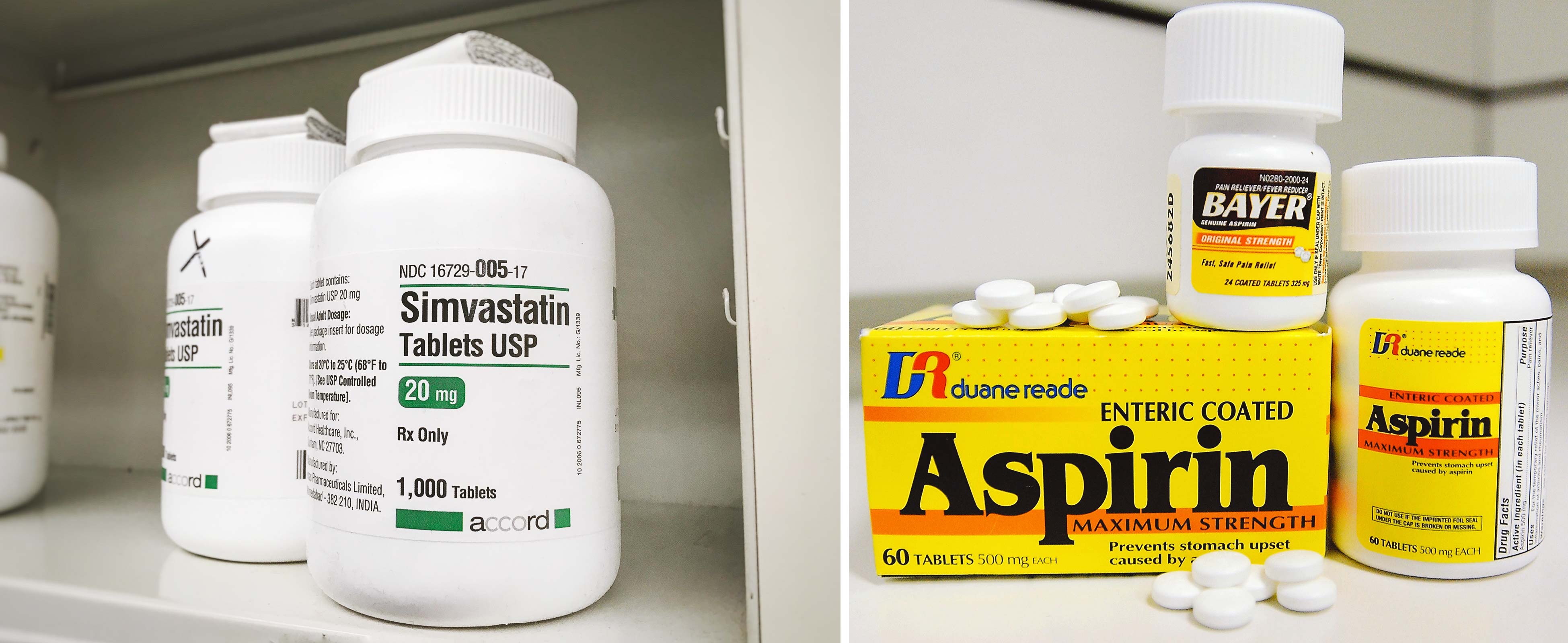 Patients treated with medication first often receive a statin, such as simvastatin, and an antiplatelet drug, such as aspirin, to prevent blood clots. (PureRadiancePhoto/Shutterstock and Stephen Chernin/Getty Images)
Lazris turns to nitroglycerin, a long-used drug that widens blood vessels, when his patients need it.
Unlike a stent that opens one narrow spot, medications and healthy habits work to protect the whole body. They can also do something a stent can’t: reduce plaque buildup and inflammation inside the artery wall, and over time the plaque itself can shrink, Razavi said. Studies of cholesterol drugs and intensive diet and exercise programs suggest that over six months to two years, plaques stabilize and sometimes shrink.
However, there’s a psychological hurdle. Doctors often show a picture of the artery with the blockage, then again once it’s cleared—which is satisfying for a patient. They can’t immediately see how their daily walk or home-cooked meals are working to prevent a heart attack. “The patient usually cannot feel LDL cholesterol falling or a plaque becoming more stable, and success means that something does not happen years from now,” Shapiro said.
Sticking with these changes isn’t easy. Even in the ISCHEMIA study, only one in four patients met all four key goals by their last study visit: controlled blood pressure, low LDL “bad” cholesterol, not smoking, and taking medication to prevent blood clots. Even with close medical care, most people struggled.
Shapiro points to drug costs and side effects, but also the difficulty of maintaining these healthy habits, especially when people lack the time or support to make lasting change. A stent doesn’t replace any of this work.
Before You Say Yes
If a doctor recommends a stent, the first question is whether you need one now.
For someone having a heart attack, that answer is nearly always yes. New chest pain at rest or discomfort that doesn’t go away means calling 911, Shapiro said. The American Heart Association lists cold sweats and nausea, among other warning signs. The advice to consider medication first doesn’t apply to a heart attack.
Otherwise, patients may have time to understand their options. Boden said he would encourage a friend to consider medications and get a second opinion before choosing an elective stent.
Here are some questions to ask:
Will this help me live longer, or mainly help me feel better? For most people, the benefit of a stent is relief from chest pain. Ask what improvement you can realistically expect.
Have we tried other ways to help me feel better? Exercise, dietary changes, and medications can all play a role. Ask whether your blood pressure, glucose, and other risk factors are under control, and whether cardiac rehabilitation could help.
Would you be placing a stent during my angiogram? Doctors sometimes place a stent during the same procedure they use to check for blockages. Before your procedure, ask your doctor what would prompt a stent to be placed and what the alternative options are. Waiting to decide until after the test gives you more time to make an informed decision, but it also means coming back for a second procedure, Bhatt said.
What happens if I wait? Ask whether anything about your particular blockage or health status makes getting a stent necessary sooner rather than later.
What are the risks? Talk to your doctor about any possible risks, including bleeding, blood clots, blood vessel injuries, and the potential side effects of blood-thinning drugs. Also ask about the risks of a heart attack from the procedure itself.
What could this cost me? Request a cost estimate from the hospital and your insurance company before getting a stent. Ask what you will owe out of pocket—including any deductible and copays—and the cost of medications you will need afterward.
Before making a decision, Shapiro recommends taking your home blood pressure readings and a list of medications to your next appointment. It’s important to share with your doctor any symptoms that have held you back from living your life. If you’re not spending time with friends or walking the dog because you have chest discomfort or shortness of breath, say so.
“I learn more from hearing what someone can do on an ordinary day than from asking whether they feel fine,” he said.