
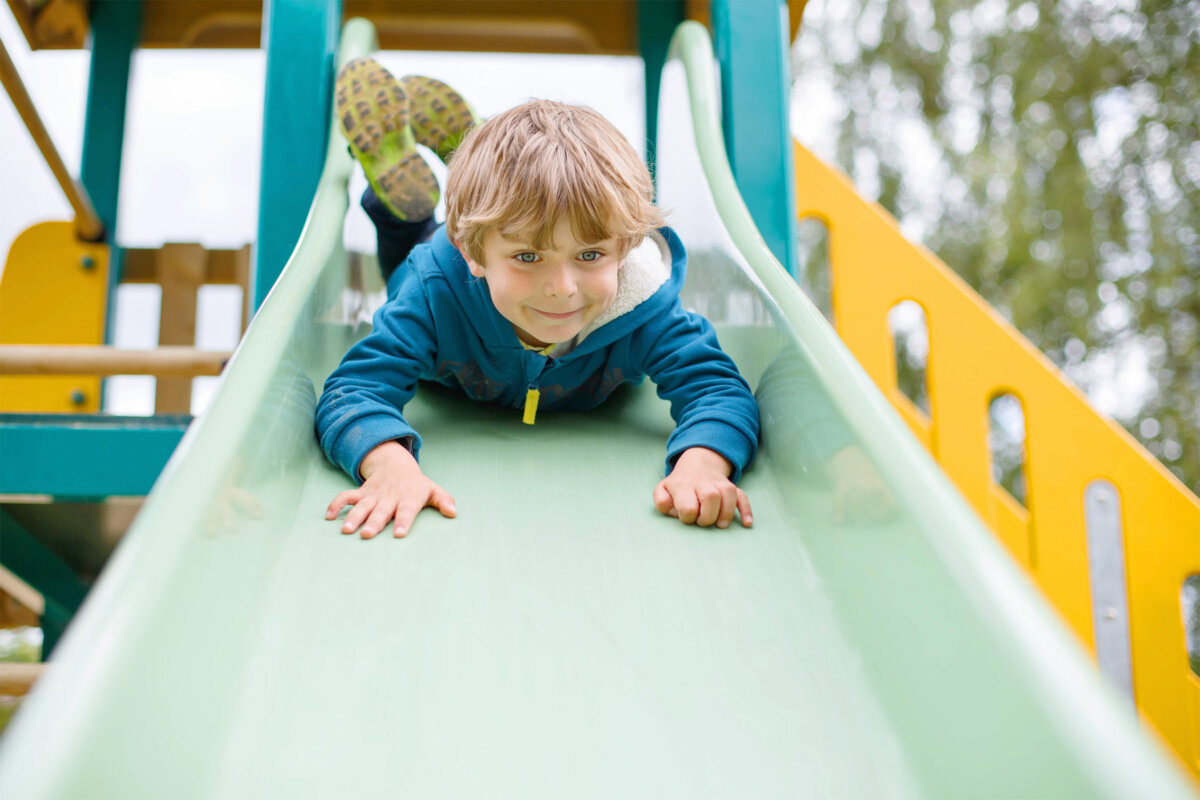
While 60 percent of American children regularly play outside, some stay indoors most of the time, according to the CS Mott Children’s Hospital National Poll on Children’s Health.
One out of 10 American children aged 1 to 5 rarely play outside—only once a week, according to the poll.
The consequences of insufficient outdoor time are showing up nationwide: skyrocketing obesity rates, rising anxiety and depression, and declining focus and fitness.
Outdoor play is far more than fun—it’s essential for healthy development. From stronger bones to sharper minds, time in nature shapes a child’s physical, emotional, and cognitive growth in ways that screens and indoor activities cannot match.
Outdoor Play Helps Growth
Outdoor play gets children moving—and movement drives growth.
Hard play—such as running and jumping until it’s difficult to talk, or activities that make kids stretch and lift their own body weight—helps strengthen bones and muscles and stimulates growth.
Children living in areas that encourage outdoor activity through green spaces tend to have higher bone mineral density, according to a 2024 study.
“When children are outdoors, they move more, sit less, play longer, and sleep better,” Eun-Young Lee, associate professor at Queen’s University School of Kinesiology and Health Studies, told The Epoch Times.
Outdoor Play Fine-Tunes Health
Over the past 17 years, children’s health in the United States has declined because of children increasingly staying indoors and increasing screen time, with rising rates of obesity and chronic disease.
Natural elements in the outdoors fine-tune children’s biology, strengthen their immune systems, and lift their moods.
Children who spend more time outdoors have better physical health. Teens who spend more time outdoors have better cardiorespiratory fitness. Preschoolers who spend more time outdoors have improved BMI scores and a reduced risk of obesity.
One Finnish study found that kids who played in natural outdoor areas developed more diverse skin and gut microbiota and showed stronger immune markers tied to a well-regulated, less allergy-prone immune system.
When children dig, climb, and make mud pies, they encounter beneficial microbes that help train their immune systems to recognize what to fight and what to tolerate. Without early exposure, the immune system can become oversensitive, raising the risk of allergies and autoimmune conditions later in life.
Sunlight, nature’s built-in clock, also helps set kids’ sleep-wake rhythms. Children who play outside tend to wake less at night and sleep longer.
The air outside is fresher. Although outdoor play can expose children to pollutants such as traffic fumes and allergens, being active outdoors often reduces total exposure to indoor air, which can be two to five times—and up to 100 times—more polluted than outdoor air. Pollutants from sources such as cleaning products, personal care products, and cooking fumes accumulate and are trapped indoors.
Outdoor Play Grows Developing Brains
Compared to indoor space, nature and the outdoors offer infinite possibilities. A tree stump might become a platform, a seat, or a table, depending on the child’s imagination.
When children are provided with nature-rich outdoor spaces, they spend more time actively exploring, building, and engaging in hands-on play, fostering creativity, and problem-solving—all critical building blocks for brain development.
Another study of preschoolers found that those who spent over three hours a day outdoors were more mature than their peers, having better focus, making friends more easily, and regulating their emotions more effectively.
“There’s a sense of expansiveness about being outside—different from the limitations of a closed room at home,” Sarah J. Clark, co-director of the Mott Poll, told The Epoch Times.
Outdoor play supports more child-driven, self-initiated play, as these environments give children the freedom to make choices, take the lead, and shape their own play experiences, unlike many indoor environments, which are often designed with specific activities or outcomes in mind.
The open outdoors fosters autonomy and self-efficacy, Dr. Andrea Diaz Stransky, a child and adolescent psychiatrist and advisor for Emora Health, told The Epoch Times. “You do not need to burden yourself with ideating fun outdoor activities—they will find them in time.”
Outdoor Play Creates Risks
There are many reasons why outdoor play has declined, from children’s full schedules, lack of dedicated spaces, and the rise of digital media. However, one major barrier to outdoor play that tops the list is parents’ growing concern for safety.
In the Mott Poll report, four in 10 parents said they feel anxious when their child climbs too high or wanders too far during play. While understandable, constantly limiting these experiences keeps kids from learning how to assess risk, a necessary rite of passage as they grow into adults.
Since outdoor environments are uneven and constantly changing—from slippery slopes to climbable trees and shifting ground—they naturally present challenges that children must learn to navigate.
“Risk is often seen as a bad word—by parents, neighbors, care providers, insurance providers, schools, and municipalities,” Lee said.
Risky play gives children the freedom to decide how high to climb, explore the woods, get dirty, and wander in their neighborhoods. “It’s letting kids be kids—healthier, more active kids,” she added.
Avoiding risk in play can have negative consequences. When children aren’t given opportunities to safely test their limits and manage challenges, their natural fear responses go untested, making them more vulnerable to anxiety and less confident in new situations.
Clark noted that risky play also creates moments when cognitive, emotional, and physical development happen all at once. For example, if a child goes up the slide instead of down, they are figuring out how to slide down, managing feelings of nervousness and pride, and exerting physical effort to climb. “That’s a trifecta of development, in just a few minutes!”
Through small adventures, children learn by trial and error, experiencing both failure and success. These situations teach them to navigate unpredictable environments and build the confidence to overcome challenges on their own.
However, parents today are often told to focus more on safety rather than exploring risks. “There are a lot of products focused on safety, and a lot of the anticipatory guidance in well-child visits for young kids is focused on safety,” Clark said.
“We don’t give an equal amount of time and focus to helping parents understand how play contributes to their child’s development, and how parents can facilitate all sorts of play.” The result, she added, is that many parents are heavily coached on how to keep kids safe, but hear far less about the kind of active, imaginative play children need to thrive.
A 2015 meta-study found that most parents restrict outdoor play due to fears of strangers, traffic, or bullying. It also showed that modern parenting ideals, such as the belief that “good parents” must always supervise, further limit children’s freedom to explore. Social factors such as fewer neighborhood playmates, a weaker sense of community, and privatized play spaces also contribute to making spontaneous outdoor play feel less safe or accessible.
What Parents Can Do
Stransky advised parents to let their children have unstructured, child-led play outdoors:
-
- Weave Outdoor Play Into Your Routine: Aim for 60 minutes of outdoor play each day through free play or family activities such as walks or park visits.
- Encourage Adventurous Play: Let kids take age-appropriate risks—climbing or exploring nature—to build confidence and resilience.
- Choose Safe Spaces: Seek out well-maintained green areas, including nearby parks, school playgrounds, or library gardens.
- Balance Screen Time: Help kids spend at least as much time outdoors as on screens, especially before bed.
Correction: A previous version of this article misstated the proportion of American children who play outside. The Epoch Times regrets the error.