
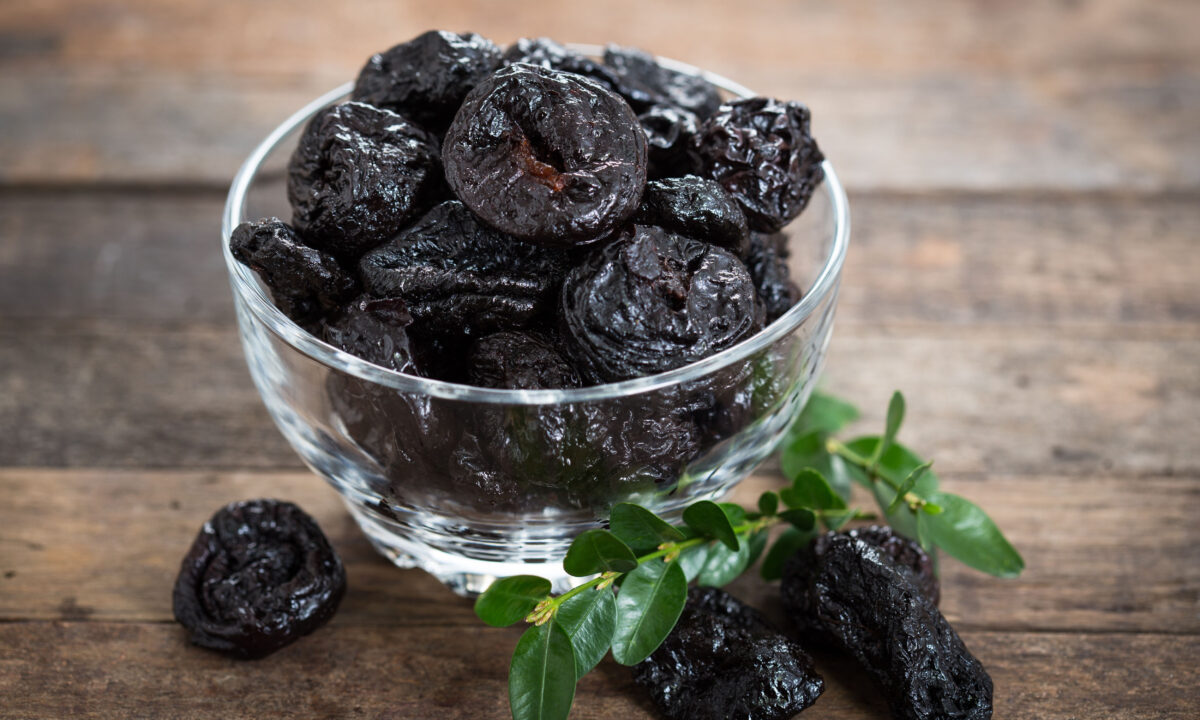
Menopausal and postmenopausal women looking for a non-pharmacological solution to symptoms such as loss of bone density and digestive distress might find support from prunes.
A recent study published in the American Journal of Clinical Nutrition found that eating a serving of prunes every day preserved bone mass in the hips of postmenopausal women, potentially lowering the risk of fracture.
“What’s compelling to me is there are so many women who try to obviate bone loss by non-pharmacological strategies,” Mary Jane De Souza, the principal investigator of the study and others focusing on prunes, told The Epoch Times. De Souza, who has a doctorate in exercise physiology, is a professor at Pennsylvania State University.
“It’s so nice to help those women who are averse to pharma therapy. We know there’s a problem out there with compliance to osteoporosis drugs.”
Bisphosphonates are the drugs commonly used to reduce fracture risk among patients with osteoporosis, which affects one in every two postmenopausal women. Prolonged use of bisphosphonates are associated with atypical femoral fracture and jaw osteonecrosis—disruption of blood flow to bone that can cause pain and collapse. Postmenopausal women have a 44 percent chance of having a fracture in their lifetime.
The pharmacological approach also has unappealing side effects that include gastrointestinal distress, musculoskeletal pain, low levels of calcium, and eye inflammation. Because of that—and evidence that indicates long-term use doesn’t actually lower a woman’s risk of hip fracture—women often seek alternatives, either full-time or when they take “holidays” from drug treatment.
Building Better Bones
More than a dozen rodent studies have revealed prune consumption can prevent and even reverse bone loss. In two clinical trials, dried plum consumption in postmenopausal women showed promising effects on bone mineral density and bone biomarkers.
Menopause is a phase marked by 12 consecutive months without menstruation. The average age of menopause is 51, and osteoporosis is the most common disease in postmenopausal women. By 2025, osteoporosis is expected to cause 3 million fractures and cost $25.3 billion annually. While hip fractures account for just 14 percent of all fractures, it represents 72 percent of fracture-related costs.
Participants in American Journal of Clinical Nutrition were divided into three groups—a control group, a group that consumed about six prunes a day for 12 months, and a group that ate 10-12 prunes a day. Several participants in the latter group dropped out due to the serving being hard to manage.
“We are super pleased that the women tolerated the six prunes a day very well for 12 months, and we were able to maintain bone density at a very important site, the hip, which is prone to fractures,” De Souza said.
Prunes, which are dried plums, are high in fiber and considered to be anti-inflammatory. Despite their sweetness, they are low glycemic—something that’s not true of all dried fruits. They didn’t raise the blood sugar levels of study participants, De Souza said. Studies indicate prunes can also aid in appetite control by helping you feel more full.
Prunes for Others
The benefits of prunes can extend to virtually any population. It’s possible that prunes could help women strengthen their bones and fight inflammation in the years leading up to menopause, further reducing the burden of osteoporosis. Prunes might also be good for older men.
One 2022 study in the Journal of Medicinal Food examining prune consumption for men found a modest bone protective effect. The study included 66 men assigned to a control group or a group that ate 10-12 prunes a day for a year. Two of three bone marker measurements showed improvement among prune eaters, but bone mineral density showed no change in either group.
De Souza said evidence shows menopausal women are losing bone density that’s typical for women who are postmenopausal—even while taking calcium and vitamin D. As more research accumulates connecting prune consumption with gut health and major body systems, she anticipates younger populations could reap the benefits.
“It might be really awesome to provide this prevention option,” she said. “Menopause physiology is extremely interesting. The gut is very important for bone health.”
Prunes May Boost Gut Health
Previous research has made a connection between the health benefits of eating prunes and the gut microbiome, which plays a role in how the body stores fat, metabolizes food, and takes up glucose from the blood. Microbial diversity may play a role in whether or not a person develops Type 2 diabetes. The gut microbiome is the symbiotic community of microbes made up primarily of trillions of bacteria.
Osteoporosis is a systemic bone degenerative disease, and a loss of estrogen is a major factor. Lower gut microbial species are also associated with less circulating estrogen. New evidence has also shown a relationship between the gut microbiome and bone metabolic function and bone diseases.
That relationship is of particular interest to De Souza as she dives deeper into the role of prunes for preventing and possibly reversing bone deterioration. Her newest study published in Food & Function has shown that daily prune consumption improves Lachnospiraceae, a gut bacteria that’s been found to have an immunomodulating role in maintaining the intestinal epithelial barrier, as well as having anti-inflammatory effects.
Organisms in the Lachnospiraceae family ferment fiber and produce short-chain fatty acids, which help reduce inflammation, maintain health, and promote weight loss. Lachnospiraceae exert an anti-inflammatory role against inflammatory bowel disease, but research has also positively correlated it with metabolic diseases such as diabetes and obesity.
Overall, the study pointed to the beneficial impact of prunes on the gut health of perimenopausal women, while noting that other factors such as exercise, age, weight, and host genetics among other influences can impact the microbiome.
“Consumers are becoming more concerned with their gut health, and this study supports prunes’ long-standing reputation as a gut-healthy food. Prunes are a natural, whole food that is easy and convenient for consumers to incorporate into their daily meals or snacks,” said Andrea N. Giancoli, nutrition adviser to the California Prune Board—which funded both of the studies led by De Souza—in a statement.