
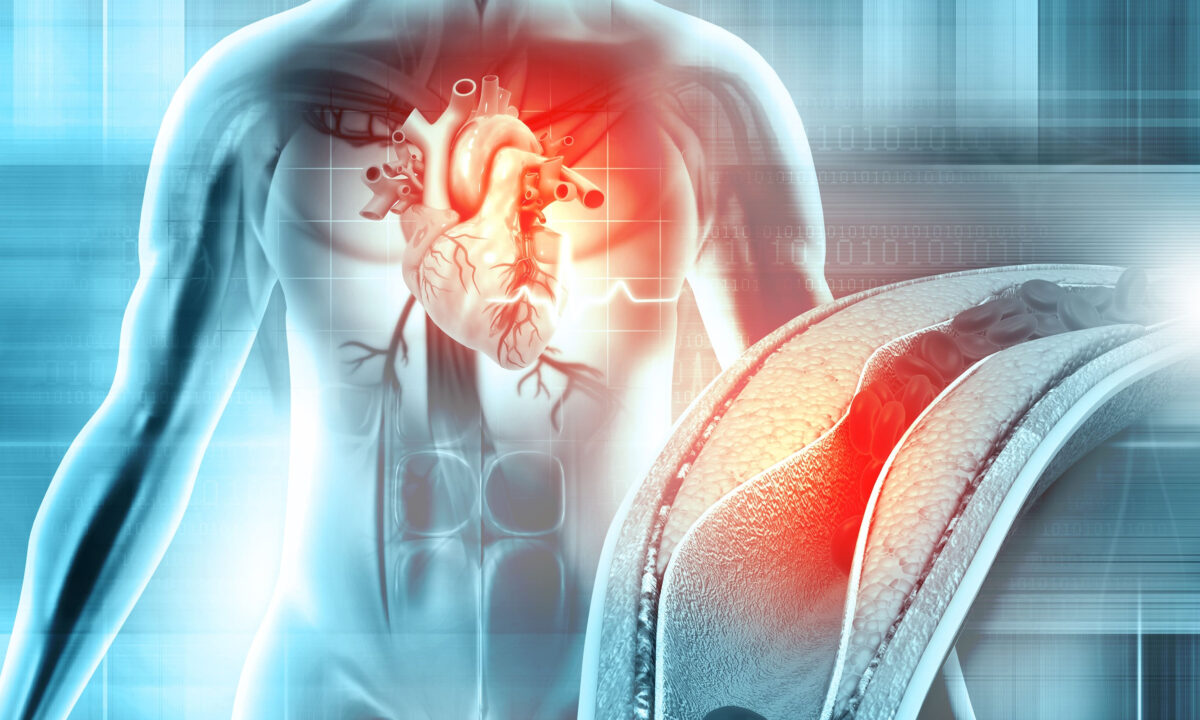
In 2020, approximately 19.1 million people died of cardiovascular diseases globally, which amounted to an increase of 18.7 percent from 2010. In the United States, someone has a heart attack (myocardial infarction) every 40 seconds, and one in five people dies from heart disease every year.
Among many cardiovascular diseases, myocardial infarction that is acute and intense is more likely to cause sudden death. Why does myocardial infarction occur suddenly? It is related to the “maintenance” of blood vessel walls, and one key to addressing this problem is to reduce bad cholesterol.
Myocardial Infarction—The Problem Lies in Blood Vessel Walls
You may have heard stories like this: Someone had a heart attack and died suddenly—but friends and family report the person was healthy and normal.
This phenomenon was noted by the Framingham Heart Study, initiated in 1948. As the subjects of this ongoing study, residents of the town of Framingham, Massachusetts, are given regular health checks and follow-ups.
Based on the long-term study, researchers found that almost half of myocardial infarction cases were completely silent (having few if any symptoms or not recognized as such).
Huei-Fong Hung, an authoritative expert in cardiology in Taiwan and attending physician of the Cardiology Division of Shin-Kong Wu Ho-Su Memorial Hospital, mentioned in his book “Why do heart attacks always happen suddenly?” that the Framingham Heart Study found that the first onset of heart disease in 62 percent of male patients and 46 percent of female patients was myocardial infarction or sudden death. These people did not experience any symptoms before the onset of the disease.
Huei-Fong Hung gave an example: A patient underwent cardiac catheterization in a hospital in the United States. He was told by doctors that his blood vessels were not blocked, and went home happily. However, a week later, the patient died suddenly at home. An autopsy showed that the patient had three coronary arteries with severe arteriosclerosis.
The doctor who performed the initial cardiac catheterization for the deceased later learned about the incident and called upon his colleagues to re-examine the initial examination film. In the end, they came to the same conclusion—the patient’s blood vessels were not blocked at the time the initial of examination.
Meanwhile, the pathologist also summoned his colleagues to re-examine the patient’s pathological specimen, who concurred that the deceased had severe arteriosclerosis.
Why did the cardiac catheterization show normal results while the pathological anatomy revealed severe arteriosclerosis?
Huei-Fong Hung said that cardiac catheterization mainly looks at the inner diameter of blood vessels, while pathological anatomy looks at the cross-section of blood vessels. The cause of myocardial infarction despite good blood vessel diameter condition is like “a landslide or a collapsed mountain wall.”
He explained that the inner diameter of the blood vessel has nothing to do with myocardial infarction—the problem lies in the blood vessel wall. Thickened and inflamed blood vessel walls lead to a series of activations, causing the plaques on the vessel wall to rupture and produce blood clots. These blood clots “collapse” into the blood vessels like a landslide, blocking blood flow and causing myocardial infarction.
Moments That Lead to Cardiovascular Disease Onset
Although myocardial infarction tends to occur without warning, there are some triggers that lead to its occurrence.
Landslides are more likely to occur on “typhoon days,” which lead to the onset of cardiovascular diseases. These “typhoon days” include the following: anger, overwork, staying up late, stress, infection (e.g., surgery and inflammation), air pollution, sudden changes in weather, and vaccinations.
One study found that the incidence rate of acute myocardial infarction was 2.43 times higher within two hours of an outburst of anger. In addition, the risk of acute myocardial infarction increased with the level of anger.
Overwork, insufficient sleep, and high stress are common problems in modern society. A Japanese study of overtime work indicated that people who worked 61 or more hours per week had a twofold increased risk of myocardial infarction compared with those who worked 40 or fewer hours per week; whereas people who sleep less than 5 hours per day and sleep less than 5 hours on two or more days per week have a two to threefold increased risk of myocardial infarction. People who worked overtime and were sleep-deprived had an extremely high risk of developing myocardial infarction.
Mental stress can induce cardiovascular diseases, while stress from work, financial problems, death of friends and relatives, and diseases are more likely to trigger the onset of myocardial infarction.
In addition, prolonged and sudden exposure to high levels of the respirable pollutant PM2.5 increases the risk of myocardial infarction. PM2.5-induced cardiovascular events may be related to different mechanisms, including inflammation, thrombogenesis, and endothelial dysfunction.
Many people are sent to the hospital for emergency treatment due to cardiovascular diseases as a result of rapid temperature drops during winter. Cold temperatures increase the chances of vasoconstriction, which narrows blood vessels and people with blood vessel problems are at high risk of heart attack or stroke.
Another reason for cardiac incidence in winter is that in response to cold temperatures, the body will activate the sympathetic nervous system responsible for accelerating the heart rate and raising blood pressure. As a result, heart rate will increase and blood pressure will rise, to protect the body from hypothermia. Such changes provide protection in the short term, but if sustained, can cause plaques to break off blood vessels eventually leading to myocardial infarction.
Arteriosclerosis Is Irreversible
The prevention of myocardial infarction not only involves avoiding “typhoon days,” but also slowing down the rate of hardening of the arteries.
In addition to the invariable factors of age and genetics, risks for arteriosclerosis include three highs: high blood pressure, high blood sugar, and high cholesterol—along with smoking, obesity, and lack of exercise. Unfortunately, the blood vessels of people with cardiovascular problems will not restore to their original good shape, despite making changes today.
Huei-Fong Hung pointed out that arteriosclerosis is a long-term buildup, beginning in adolescence. Reducing cardiovascular risk factors “can only slow the rate of buildup and deterioration.” This is because heart disease is a degenerative disease, and reducing risk factors can slow down the rate at which blood vessels deteriorate, “but what is already damaged will not rejuvenate or restore,” he emphasized.
The key to slowing the rate of hardening of the arteries is to control the LDL cholesterol level (bad cholesterol).
Cumulative LDL cholesterol is the main determinant for the initiation and progression of atherosclerotic cardiovascular disease. The concentration of plasma LDL is strongly associated with the risk of arteriosclerosis; lowering LDL cholesterol reduces the risk of atherosclerotic cardiovascular disease proportionally.
A study published in the medical journal The Lancet in 2020 observed more than 90,000 Copenhagen residents aged 20 to 100 and found that for every 1.0 mmol/L increase in LDL cholesterol in the blood, the risk of myocardial infarction increased by 34 percent, while the risk of atherosclerotic cardiovascular disease increased by 16 percent.
Furthermore, elevated LDL cholesterol is most harmful to people between the ages of 70 and 100, who have the highest absolute risk of both diseases. Among people with a 5.0 mmol/L or higher LDL cholesterol, those aged 80 to 100 were four times more likely to develop these diseases than those aged 20 to 69.
Ways to Lower Bad Cholesterol and Protect Cardiovascular System
In addition to quitting smoking, people can lower bad cholesterol and protect the cardiovascular system through diet, exercise, and medication.
- Diet
Reduce the intake of refined sugars and carbohydrates, saturated fats, and trans fats. The diet should be mainly composed of unprocessed natural foods, as well as foods containing soluble fiber and good fats.
Soluble fiber can reduce the duration of bad cholesterol staying in the blood, thereby lowering bad cholesterol in the body. Foods rich in soluble fiber include whole grains such as oats and barley, legumes (soybeans, edamame, lentils, and chickpeas), eggplant, okra, apples, grapes, strawberries, and citrus fruits.
Moderate consumption of foods containing high-quality fats such as nuts, avocados, olive oil, and oily fish (mackerel, sardines, and salmon) can help protect the heart.
Nuts are rich in unsaturated fatty acids, phytosterols, and various anti-inflammatory nutrients. Unsaturated fatty acids can reduce the total cholesterol level in the body, whereas plant sterols can reduce the body’s absorption of cholesterol and help lower blood lipid levels.
Foods containing mono- and poly-unsaturated fats such as avocados, olive oil, and oily fish help increase the HDL cholesterol (good cholesterol) in the blood.
- Moderate-to-high-intensity exercise
High-intensity aerobic exercise can effectively improve lipid levels and help remove bad cholesterol and triglycerides from the blood.
The American Heart Association recommends 150 minutes of aerobic exercise per week, such as brisk walking, jogging, swimming, and cycling, to enhance cardiopulmonary function.
Huei-Fong Hung said that to achieve the effect of maintaining the blood vessel wall, the intensity of exercise should be high, and the maximum heart rate should reach (220 minus age) x 0.7 or 0.8.
- Statins
Huei-Fong Hung pointed out that weight loss and regular exercise can reduce bad cholesterol by about 5 percent, a healthy diet can reduce bad cholesterol by 5 to 10 percent, and the combination of a healthy diet and exercise can reduce bad cholesterol by about 8 to 10 percent on average. In contrast, statins are more effective in lowering bad cholesterol. Some milder drugs can lower cholesterol by 30 percent, while stronger drugs can lower cholesterol by 50 percent; and some drugs can even lower cholesterol by 60 to 70 percent.