
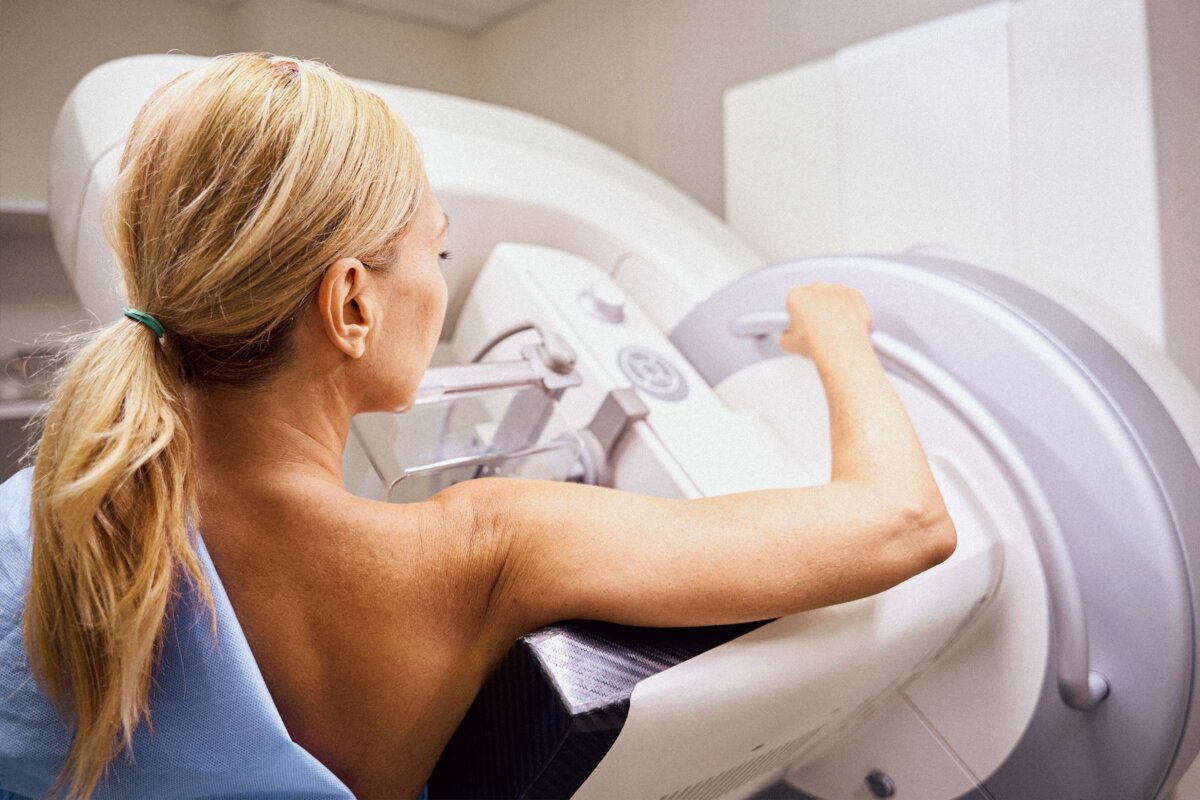
A mammogram is designed to answer one question: Is there breast cancer? But it can also reveal a possible warning sign of heart disease.
Breast arterial calcification (BAC) occurs when there is a buildup of calcium in the walls of the arteries in breast tissue.
On a mammogram, the calcium build-up appears as two bright white, parallel lines running alongside each other, which radiologists refer to as having a “tram-track” appearance.
BAC suggests heart risk because it’s a visible, early warning sign of systemic arterial stiffness and vascular aging throughout the body.
While historically viewed as a benign incidental finding, women’s health advocacy groups such as the Institute Advancing Women’s Health and cardiac groups such as the American College of Cardiology now recommend radiologists alert a woman to BAC and that cardiologists consider it a risk factor when evaluating a woman’s heart health.
Currently, there is no federal law requiring women to be notified of BAC on a mammogram. Maryland has passed its own law, and certain hospitals, such as Mount Sinai, and hospital networks, such as Northwell Health, have policies to notify women.
What Women Should Do With a BAC Result
In one study of postmenopausal women, the presence of BAC was linked to a 51 percent increased risk of heart attack, stroke, or cardiovascular death, and a 23 percent increased risk of any type of cardiovascular disease, including heart disease, stroke, heart failure, and diseases of the peripheral arteries.
Having BAC on a mammogram is not a diagnosis of heart disease, nor does it show how severe a person’s risk is. Additionally, those who don’t have BAC detected are not necessarily free of heart disease. It is one data point to consider alongside other cardiovascular risk factors.
Currently, there is no standardized way to grade or quantify BAC, Dr. Karishma Patwa, a cardiologist with Manhattan Cardiology in New York City and contributor to LabFinder.com, told The Epoch Times. While a radiologist can answer yes or no to whether BAC is present, translating that into a cardiovascular prediction depends on a patient’s broader health profile.
Patwa recommends that women with a BAC on their mammogram be assessed for a full cardiovascular risk profile. That includes checking for high cholesterol, hypertension, diabetes, obesity, smoking history, and family history of heart disease.
Women should also be evaluated for autoimmune conditions and prior cardiotoxic breast cancer therapy, she said. Cardiotoxic therapies are treatments, often for cancer, that can damage the heart. Autoimmune conditions and a history of prior cancer therapy act as accelerators for both BAC and overall cardiovascular disease risk.
Patwa also recommends further testing, such as an echocardiogram—an ultrasound of the heart—and a coronary artery calcium test—a CT scan that measures the amount of hardened, calcified plaque in the heart’s arteries.
Maryland Leading With Mammogram Law
Maryland has taken the lead in using mammography results to alert women to their cardiovascular risk.
Since Oct. 1, the state has required medical providers that do mammographies to notify patients when their images show signs of BAC. Providers must tell patients that the finding may be linked to a higher risk of cardiovascular disease, and that they should discuss the results with their health care provider.
The Maryland law is trying to address a gap in preventive care, since women may be more likely to seek breast cancer screening than heart-related screening.
Data also show that Maryland’s law could help.
A 2023 study of 47 women who were told they had BAC on their mammogram demonstrated that 57 percent discussed the results with their primary care physician or a cardiologist.
That’s significant because heart disease, one part of cardiovascular disease, is the leading cause of death for women in the United States.
Women’s risk of heart disease has long been underestimated because calculations used to gauge their risks were based mostly on male data, Patwa said. Women’s symptoms are different from men’s, which means women are often not flagged as being at risk or are not treated when they show symptoms. Adding BAC to the list of things that are factored into a risk score could improve the understanding of a woman’s true cardiovascular disease risk.
Despite the strong link between BAC and heart disease, significant systemic, financial, and procedural barriers prevent this information from being universally shared. For women outside Maryland, getting a BAC reading with a mammogram depends on the provider’s policy or on self-advocacy. If there is no policy in place to alert them automatically, women can request that BAC be reported to them after a mammogram.