
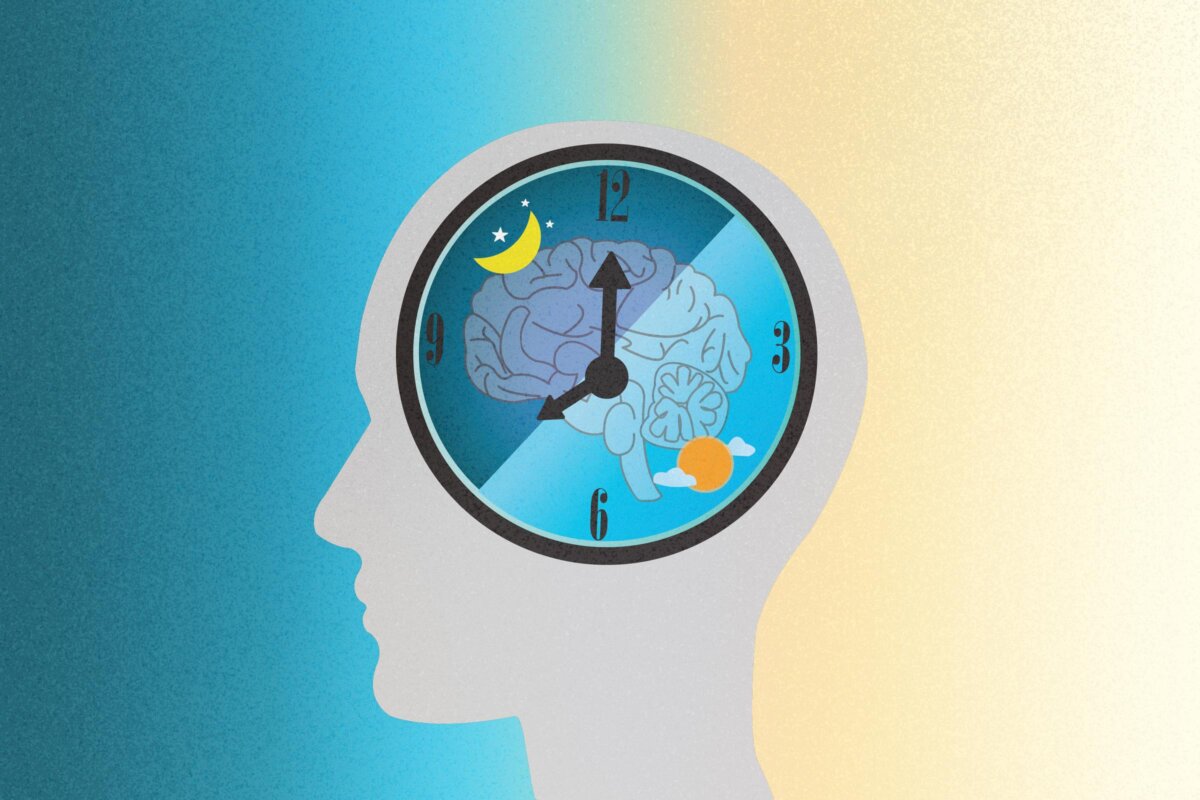
A December study suggested that disruptions in the body’s natural 24-hour cycle, known as circadian rhythm, may increase the risk of developing dementia.
The study, published in Neurology, tracked more than 2,000 adults, with a mean age of 79, using wearable heart monitors, and found that people with irregular sleep-wake patterns faced up to a 50 percent higher risk of developing dementia than those with consistent daily rhythms. Of the participants, 176 were later diagnosed with dementia.
“Changes in circadian rhythms happen with aging, and evidence suggests that circadian rhythm disturbances may be a risk factor for neurodegenerative diseases like dementia,” study author Wendy Wang, of the Peter O’Donnell Jr. School of Public Health at UT Southwestern Medical Center, said in a statement.
3 Types of Unhealthy Sleep Rhythms
Circadian rhythm helps regulate sleep, hormones, body temperature, and digestion. People with a strong, well-aligned circadian rhythm tend to follow consistent sleep and activity patterns, despite seasonal changes or schedule disruptions. Conversely, those with a weaker, fragmented, and delayed rhythm often experience irregular sleep and activity times.
A weaker circadian rhythm means that there is less of a difference between active daytime and restful nighttime. A person with a weaker circadian rhythm may not feel fully awake during the daytime and not sleepy at night.
People with fragmented circadian rhythms may have fragmented wakefulness and sleepiness. They may experience daytime wakefulness and fragmented sleep at night.
Beyond rhythm strength, the researchers found that timing also played a role.
Most people experience their peak circadian activity at midday, but those whose peak activity occurred later in the day—from 2:15 p.m. onward, faced a 45 percent higher risk of dementia than those whose activity peaked earlier, between 1:11 p.m. and 2:14 p.m.
A delayed circadian rhythm peak typically causes being most alert and active late at night, feeling sleepy or waking up late, and having difficulty aligning with conventional daytime schedules.
Seven percent of participants with early activity peaks developed dementia, compared to 10 percent of those with later peaks.
The researchers believe that a later activity peak may indicate a misalignment between the body’s internal clock and environmental cues such as exposure to darkness.
Why Circadian Rhythm Matters for Brain Health
The study found that certain changes in sleep or activity patterns were associated with increased risk of developing dementia. Disruptions and changes to circadian rhythm increased the risk of developing dementia by roughly 19 to 54 percent, according to the findings.
Circadian rhythm disruption can affect health in many ways that could impact cognition, and influences multiple organ systems simultaneously, not just the brain, Dr. Rebecca Spiegel, director of Sleep Neurology at Stony Brook Medicine in New York, and not involved in the study, told The Epoch Times.
“It has been linked to cardiovascular disease, metabolic disorders such as diabetes and obesity, mood disorders, poor immunity, and increased mortality risk,” she noted. “In the elderly, weaker circadian rhythms have also been linked to falls, reduced physical function, and poorer quality of life.”
Wang noted that disruptions in circadian rhythms may alter processes such as inflammation and interfere with sleep, possibly increasing amyloid plaques linked to dementia or reducing amyloid clearance from the brain.
However, it’s important to note that the study did not account for sleep disorders, which could influence the results, and the research shows correlation rather than direct causation.
What Disrupts Your Circadian Rhythm
Dr. William Lu, sleep medicine specialist and medical director at Dreem Health, and not involved in the study, told The Epoch Times that some common factors that can weaken or disrupt a person’s circadian rhythm include:
- Going to bed and waking up at different times each day
- Spending too much time on screens at night
- Not getting enough sunlight in the morning
- Being under consistent stress
- Late-night eating, or caffeine/alcohol intake
“Consistency matters most for maintaining a healthy circadian rhythm. That means going to bed and waking up around the same time every day, even on weekends.”
Limiting screen time and caffeine intake while increasing exposure to natural light is also important, he said. “Additionally, physical activity throughout the day can help.”
Dementia Cases Expected to Spike
Dementia cases are expected to increase sharply in the coming decades, with projections reaching 1 million new cases annually by 2060 if no significant interventions are made.
A “strong association” exists between reduced deep sleep and an increased risk of dementia. “Deep sleep is crucial for the clearing of toxins and memory consolidation, Lu said. “It is unsurprising that a disruption to the circadian rhythm can, in turn, disrupt both metabolic and neurological processes.”
While the connection between sleep and cognitive function is well understood, research into the role of circadian rhythm in dementia is still emerging. Earlier studies have linked sleep patterns and cognitive decline, such as one last year that found night owls may experience faster decline than early risers.
Other research suggests that sleep habits influence dementia risk, such as a 2022 study that found that seniors who nap more than an hour daily have a 40 percent higher risk of Alzheimer’s disease.
Hope for Prevention
Wang expressed optimism about the findings and said they could lead to new preventive strategies. “Future studies should examine the potential role of circadian rhythm interventions, such as light therapy or lifestyle changes, to determine if they may help lower a person’s risk of dementia.”
The UT Southwestern study is important because it linked real-world activity patterns, measured through wearable devices, to future dementia risk in a diverse group of older adults, Spiegel said.
“Although causality cannot be determined from this study, the findings encourage further research into circadian regulation as a potentially modifiable factor in brain health,” she said.