
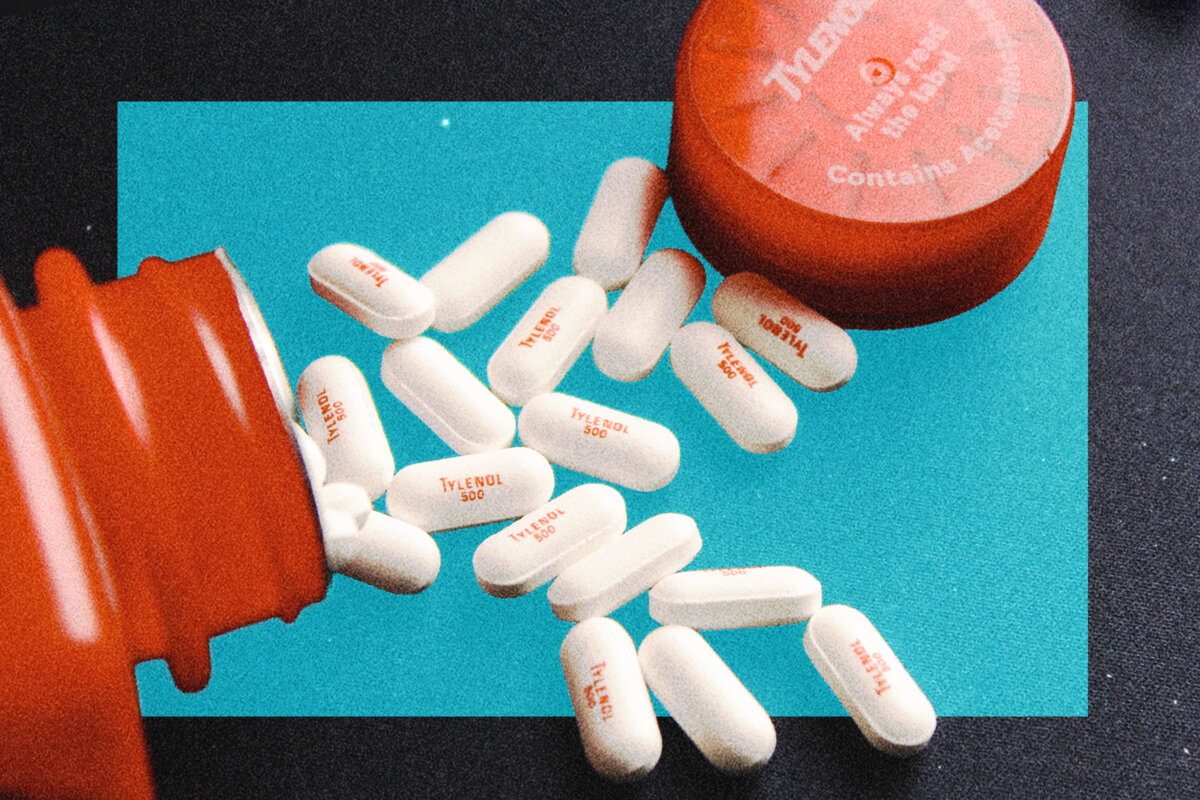
Baby boys whose mothers took acetaminophen during pregnancy had 8 percent smaller testes at 3 months than boys whose mothers did not, according to a Danish study of nearly 300 infant boys.
Acetaminophen, sold under the brand name Tylenol in the United States and known as paracetamol in Denmark and many other countries, is one of the most widely used drugs to treat pain and fever during pregnancy.
“The most important takeaway is that we observed a measurable association between prenatal paracetamol exposure and testicular development in infancy,” the study’s corresponding author, Gylli Mola, of Copenhagen University Hospital, Rigshospitalet, told The Epoch Times via email.
Although, she added, “An 8 percent difference does not mean that the individual boys had abnormally small testicles or impaired testicular function.”
The findings were published in Human Reproduction Open.
A Closer Look at Testicular Development
During the first few months after birth, boys experience a temporary surge in reproductive hormone activity known as minipuberty. This period offers researchers a window into early testicular development and hormone production.
The study included 287 healthy infant boys whose mothers enrolled during their first trimester of pregnancy. Of the infants, half had been exposed to acetaminophen at least once at any time during pregnancy.
At 3 months, researchers used ultrasound to measure testicular volume, a marker of testicular development. Boys exposed to acetaminophen had smaller than average testes, even after researchers accounted for factors including maternal weight, smoking, alcohol use, and other pain relievers.
Exposed boys had testicular volume about 25 cubic millimeters smaller than unexposed boys, though differences ranged from barely detectable to about 50 cubic millimeters. The largest estimated difference occurred among the 62 boys exposed in both early and late pregnancy: about 34 cubic millimeters, or about 8 percent of the average testicular volume in unexposed boys.
“Whether the reported difference in testicular volume in infancy would lead to a clinically important effect for individuals in adulthood is unclear,” Rod Mitchell, a professor of developmental endocrinology at the University of Edinburgh who wasn’t involved in the study, told The Epoch Times.
Mothers who took acetaminophen mostly used it to relieve headaches, which accounted for 68.5 percent of all episodes.
Median use of acetaminophen over the whole pregnancy totaled 4 grams. For perspective, one Extra Strength Tylenol tablet contains half a gram of acetaminophen, so 4 grams is the equivalent of eight tablets over nine months.
Taking higher doses wasn’t linked to progressively smaller testicle size or changes in the other major measures of reproductive development. The findings therefore could not establish a dose at which developmental changes might begin or identify a safe or harmful threshold.
Does Testicular Volume Predict Later Reproductive Health?
In adults, testicular volume is associated with sperm count and semen quality.
“We know from previous research that disturbances in fetal testicular development may be relevant to reproductive health later in life, including testicular function and fertility,” Mola said.
Mitchell’s prior research has found that prolonged exposure to paracetamol significantly reduces testosterone production in human fetal testis tissue.
However, the testes continue to develop through childhood and puberty, Mola said, and early differences may or may not persist.
Mixed Picture of Hormone Levels
Overall, there was no association between prenatal acetaminophen exposure and testosterone levels.
However, in secondary analysis, exposed boys had lower levels of several precursor molecules the body converts into hormones such as testosterone, which could be an area of concern. The concern rests on a chain of reasoning. Testosterone during fetal life helps build the male reproductive organs, and lower levels at key stages can affect how they grow and work later, Mitchell said.
Boys exposed in early pregnancy also had lower levels of inhibin B, a hormone made by Sertoli cells, which nurture the developing sperm-producing tissue in the testes. The researchers said the findings raise the possibility that prenatal acetaminophen could affect more than one process involved in the development of the testes.
What Pregnant Women Should Know
The findings are part of a broader pattern researchers are investigating. In a related analysis of infant girls, Mola and her colleagues found that prenatal acetaminophen exposure was linked to smaller ovaries and uteruses and fewer ovarian follicles, the structures that contain immature eggs.
The number of follicles matters because girls are born with all the eggs they will ever have, so the supply set before birth, called the ovarian reserve, is a critical stage of reproductive development, Dr. Margit Bistrup Fischer of Copenhagen University Hospital, who led the research, previously told The Epoch Times.
The studies cannot rule out other explanations for the findings. Pain, fever, or underlying maternal health conditions that prompted acetaminophen use could have contributed to the associations, Mola said.
The findings deserve further research, but they cannot predict whether an individual child will develop reproductive health problems, she said. “Although we cannot establish causality,” the result is noteworthy and adds to evidence that prenatal paracetamol exposure may be associated with aspects of reproductive development, she said.
Fischer advised pregnant women to follow current guidance and discuss medication use with their doctor. Acetaminophen may be appropriate when medically needed, she said, and leaving pain or fever untreated can also carry risks. Current acetaminophen dosage guidelines for pregnant women recommend staying under 3,000 mg daily.
“Our intention is not to alarm pregnant women, but to contribute to a better understanding of medication safety during pregnancy and, ultimately, to more informed recommendations,” Mola said.