
Dafne Wiswell knew that her junk food-loving dad wouldn’t be able to stick to his cardiologist’s advice to eat a Mediterranean diet. So she and her sister helped Fred start a diet he’d be more likely to enjoy: high in animal foods, with plenty of beef and cheese—and only the green vegetables he tolerates. When Fred follows it, his cardiovascular biomarkers are better.
“It’s pretty wild,” Wiswell told The Epoch Times, adding that her father’s energy improved and his weight returned to a healthier range when he adhered to the diet.
Fred’s plan contradicts decades of heart-healthy nutrition advice to eat less red meat and other sources of saturated fat. However, for Fred, who has had 10 stents, the diet is a nutritional upgrade from his regular habits.
While Fred’s diet isn’t ideal for everyone, it points to issues with the narrow approach to saturated fats that dietary guidelines have had for decades.
And a new Norwegian study suggests that the science behind diets like Fred’s is far messier than decades of heart-health advice has long implied.
A Departure From the Norm
The current U.S. dietary guidelines recommend that no more than 20 grams—or 10 percent of daily calories—should come from saturated fats. The advice we’ve heard for decades sounds like this: Swap butter for vegetable oil in cooking, eat chicken and fish instead of beef, and snack on nuts rather than cheese.
The trial went in the other direction. Participants with obesity more than doubled the saturated fat in their diets, eating more than 30 percent of their calories from saturated fat. They ate low-carbohydrate diets that amounted to less than 10 percent of their calories. For comparison, two other groups were assigned higher-carbohydrate diets. All three groups ate the same amount of protein, limited added sugar to no more than 2 percent of total calories, and ate about 17 ounces of vegetables daily.
Lipid measurements—cholesterol and triglycerides—were taken several times over two years.
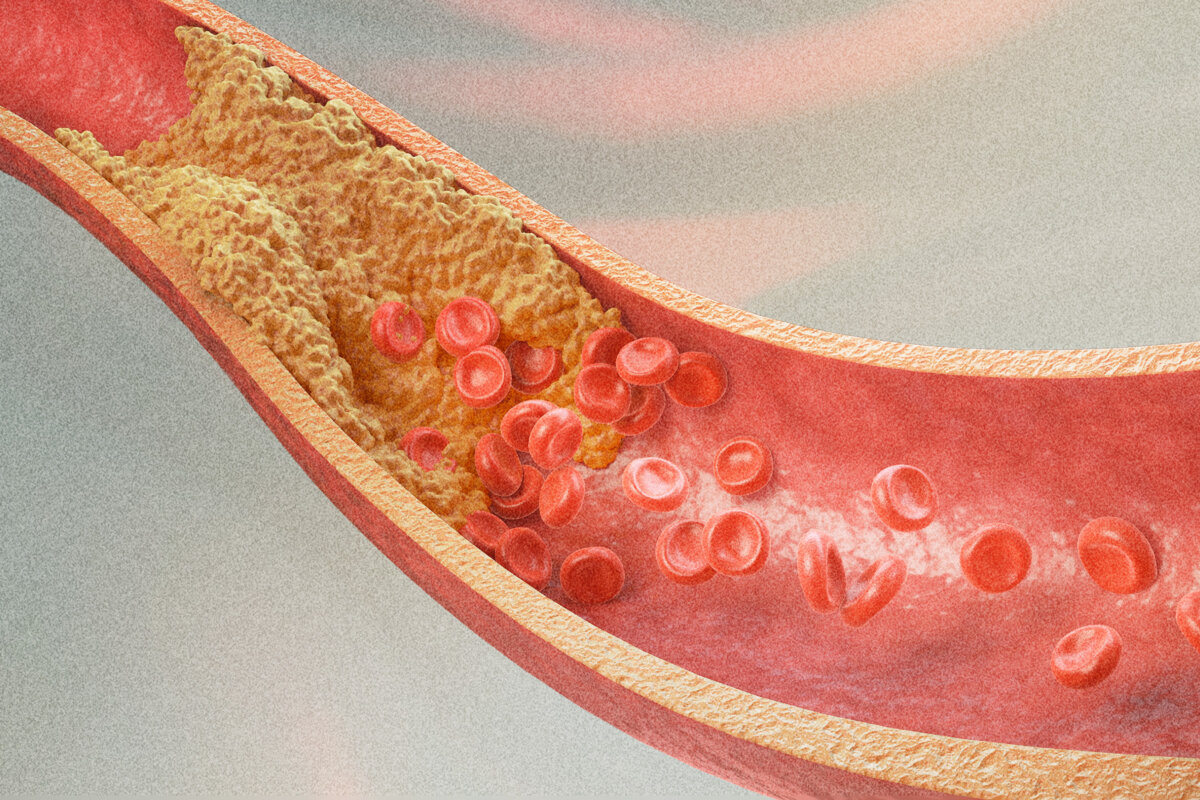
Those on the low-carbohydrate, high-fat diet saw triglycerides, a form of fat the body uses to store energy, fall by 20 percent to 35 percent and high-density lipoprotein cholesterol, or “good” cholesterol, rise by 5 percent to 18 percent. However, low-density lipoprotein (LDL) cholesterol, or “bad” cholesterol, increased by 5 percent to 10 percent in this group. That is the number that worries cardiologists. LDL particles are believed to slip into artery walls, trigger inflammation, and build plaque. If a plaque ruptures or erodes, it can block blood flow to the heart and cause a heart attack.
LDL Alone Is Not the Whole Story
LDL measures how much cholesterol these particles carry, by weight, not how many particles there are. Another marker, apolipoprotein B (apoB), helps estimate the number of potentially plaque-forming particles because each lipid particle carries exactly one apoB molecule. More particles mean more chances for plaque to form. The problem is that apoB isn’t part of a standard lipid panel; it’s a more advanced test that’s becoming more common.
In this study, apoB, which usually rises when LDL does, did not rise in the low-carbohydrate, high-fat group, even though LDL did. The authors say the LDL increase appears to come from larger particles.
“This pattern may reflect more efficient lipid handling, and warrants further investigation into the health implications of diet,” the authors wrote. An increase in LDL shouldn’t be considered a risk factor on its own without investigating other biomarkers, they noted in a statement.
“I think it’s really intriguing and it just sheds light on the fact that this science evolves and the more we learn about lipids, the more we uncover and have to continue learning,” Monika Jacobson, a dietitian who works to lower lipids with patients at the Prevention Center for Heart & Brain Health, told The Epoch Times.
Unanswered Heart Disease Questions
Cardiologist Dr. Jared Spitz and Jacobson both pointed to several limitations:
-
Heart Disease Outcomes: The study tracked blood markers, not heart attacks. “Until we have evidence in this type of population that this type of diet and the associated changes actually reduce the things we care about, heart attacks, I think still aggressively treating LDL cholesterol is still going to be our target of therapy,” Spitz said.
-
Dropout: Of the 193 adults who began the study, 30 percent remained at 12 months and 16 percent at two years, with each group losing a similar percentage by the end of the study. People who stay in a diet trial often differ from those who leave, which can skew the results.
-
Self-Reported Eating: Participants recorded their own food diaries for three days every two weeks.
-
Small Group of Finishers: “One, two, three people can really skew the data considerably,” Jacobson said, “and therefore make something more statistically significant.” She added that nutrition is hard to study because researchers cannot lock people in a home and monitor everything they eat for years.
Is Saturated Fat the Problem?
Whether saturated fats themselves increase heart disease risk is a long-running dispute. A review published in Advances in Nutrition that analyzed 31 publications covering 32 systematic reviews and meta-analyses found no consistent link between eating saturated fat and cardiovascular disease or death. Two reviews found harmful effects, three found beneficial effects on stroke, and most others reported no significant association or mixed results. The authors said the neutral findings raise questions about the evidence linking saturated fat to cardiovascular disease.
Cardiologist Dr. William Davis, author of the book “Wheat Belly,” which promotes a grain-free diet, goes further. He said no cause has ever been established, and LDL is a flawed measure of risk.
Davis told The Epoch Times that relying on increases in LDL cholesterol to link saturated fat to heart disease has led researchers down the wrong path for decades.
“This study adds to the wisdom to chip away at this idea,” he said.
He recommends cutting out grains and sugar and eating nutrient-rich carbohydrates that feed the gut microbiome, such as root vegetables, legumes, peas, and dandelion greens.
What This Means in Practice
Neither Spitz nor Jacobson plans to change their advice to keep saturated fat low.
Jacobson starts nearly everyone on a Mediterranean diet, then adjusts fat and carbohydrates using genetic testing (ApoE genotype), which can predict how someone responds to dietary fat. About 60 percent of her patients carry a genotype that she says responds best to the Mediterranean diet. Others may need to cut fat further.
Spitz said that the popularity of high-fat, low-carb diets is driving interest that doctors can’t ignore—even if they believe that it’s risky for heart health.
“It requires a lot of understanding about how different people respond and maybe understanding the motivation for the patients,” he said.
For Fred, swapping the fast food and ultra-processed snacks of his trucking years for whole foods has improved his biomarkers and overall health, his daughter said. The problem is what happens next: He feels better, goes back to junk food, and needs another stent. It’s frustrating to watch, his daughter said, because it’s clear that the diet helps.