
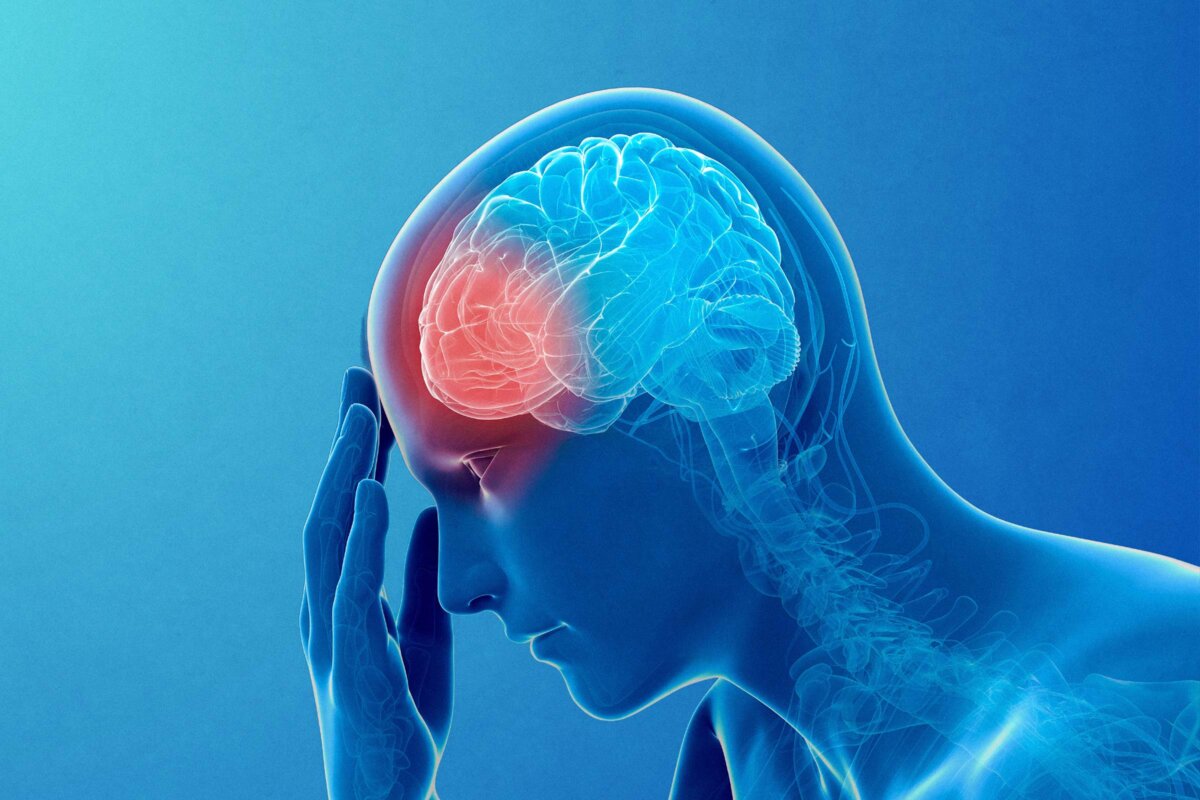
Stroke is traditionally viewed as a disease of old age, but a recent study found that stroke rates among adults ages 20 to 54 nearly doubled over 27 years in one U.S. region. In more than 4 in 10 cases of the most common type of stroke, doctors never identified a cause.
The study, published in Neurology, looked at hospitalized stroke cases in the Greater Cincinnati and Northern Kentucky region during six study periods between 1993 and 2020. Although it couldn’t establish what was behind the increase, it found that several cardiovascular and metabolic risk factors became more common among stroke patients, while many strokes had no identified cause.
The researchers found 2,076 first-ever strokes among young adults across the six study periods. The incidence of stroke among young adults nearly doubled, rising from 33.9 cases per 100,000 people per year in 1993–1994 to 62.2 in 2020.
In absolute terms, that is still a relatively low rate, roughly 6 in 10,000 people per year. However, it is a steep climb, and the increase was seen in both age groups the researchers examined separately: adults ages 20 to 39 and 40 to 54.
The increase came almost entirely from ischemic stroke, the most common type, which happens when a blood clot blocks blood flow to part of the brain. Its rate nearly doubled, from 23.8 to 47.3 cases per 100,000. The two types caused by bleeding in or around the brain did not change significantly.
Other population-based studies have similarly reported that stroke rates among younger adults have risen or declined more slowly than those among older adults.
What May Be Driving the Trend
The study can’t say for certain, but it offers some clues.
One is the heart. Among ischemic strokes, the share caused by a clot that forms in the heart and travels to the brain rose from 10.5 percent to 18.5 percent.
Several established stroke risk factors also became more common among young adults who had strokes over the study period, from 1993–1994 to 2020.
High blood pressure rose from 47.3 percent in 1993–1994 to 60.3 percent in 2020, diabetes from 19.1 percent to 25.5 percent, and atrial fibrillation from 1.4 percent to 5.9 percent. High blood pressure and diabetes can damage blood vessels over time, making them more prone to narrowing and blockage. Atrial fibrillation, an irregular heartbeat, can allow blood to pool in the heart and form clots that may travel to the brain.
The authors noted that the rise in atrial fibrillation could be real, or it could simply reflect better heart monitoring that catches more cases.
Documented substance use also rose substantially, with marijuana accounting for much of the increase. The authors noted that improved screening and documentation may partly explain the increase, although national data also show that marijuana use has become more common.
Dr. Oscar Mancera-Páez, a neurologist specializing in personalized neurology and clinical metabolomics who was not involved in the study, told The Epoch Times that several mechanisms could potentially link cannabis to stroke, including narrowing or spasms of brain blood vessels, sudden changes in blood pressure, increased blood clotting and, in some cases, abnormal heart rhythms.
Although MRI use increased substantially over the study period, the authors don’t think better detection explains the rise in stroke incidence. Previous research found that MRI had little effect on measured incidence because it can both detect strokes and rule out conditions that mimic them. Older adults, who also benefited from better imaging, did not see the same rise.
Many Factors Still Unknown
“At this point, there is much more that we don’t know than we do know about why ischemic stroke is increasing in younger adults,” Dr. Michelle Leppert, associate professor of neurology at Tufts Medical Center, who has studied stroke risk factors in young adults, told The Epoch Times.
She said it is tempting to attribute the rise to worsening heart health, but national trends paint a mixed picture. Obesity and diabetes have increased, while cholesterol levels have improved and smoking has declined. Hypertension also has not increased enough to fully explain the rise in stroke, she said.
Leppert pointed to another clue: Among adults younger than about 45, her research has found ischemic stroke is more common in women, even though young men tend to have more traditional risk factors. “It suggests that other factors may be particularly important at younger ages,” she said.
Known nontraditional risk factors include migraine with aura, which causes temporary visual disturbances such as flashing lights or blind spots. It is linked to about twice the risk of ischemic stroke, although Leppert stressed that the absolute risk remains low. The connection is not fully understood, but researchers suspect changes in brain activity and blood flow may play a role.
Other nontraditional factors include patent foramen ovale, a small opening between the heart’s upper chambers, as well as pregnancy-related conditions, hormonal exposures, autoimmune diseases and blood-clotting disorders.
Mancera-Páez pointed to another condition the study did not assess: obstructive sleep apnea, particularly in younger adults with obesity, difficult-to-control high blood pressure, or atrial fibrillation. Repeated drops in oxygen and changes in blood pressure during apnea may contribute to cardiovascular and stroke risk.
Still, more than 40 percent of ischemic strokes in young adults had no identified cause.
Mancera-Páez said that, in effect, stroke in young adults has many different causes, and that some patients may benefit from a broader search for cardiac, metabolic, nutritional, inflammatory, infectious or genetic explanations.
Short-Term Survival Has Improved
Even as stroke incidence increased, the proportion of younger patients who died within 30 days declined modestly, from 11.7 percent in 1993–1994 to 9.4 percent in 2020.
The improvement was clearest after bleeding within the brain. Deaths after ischemic stroke—the main driver of the increase in cases—did not decline significantly.
Advances in specialized neurological intensive care and treatment for some bleeding strokes may have contributed to improved survival. However, surviving a stroke does not necessarily mean recovering fully.
With more younger adults experiencing strokes, the researchers warned that the burden of long-term disability could grow, affecting patients and their families for years.
What Younger Adults Can Do
While researchers work to understand the increase, addressing established risk factors remains essential. Leppert recommended managing high blood pressure, diabetes, and cholesterol levels, as well as avoiding smoking.
Women who have migraine with aura should also discuss contraceptive options with their clinician. U.S. guidance advises against combined estrogen-containing contraceptives in this group because of stroke risk.
Recognizing symptoms is just as important. Sudden weakness or numbness on one side of the body, trouble speaking or understanding speech, vision changes, loss of balance, or a severe headache with no known cause can signal a stroke.