
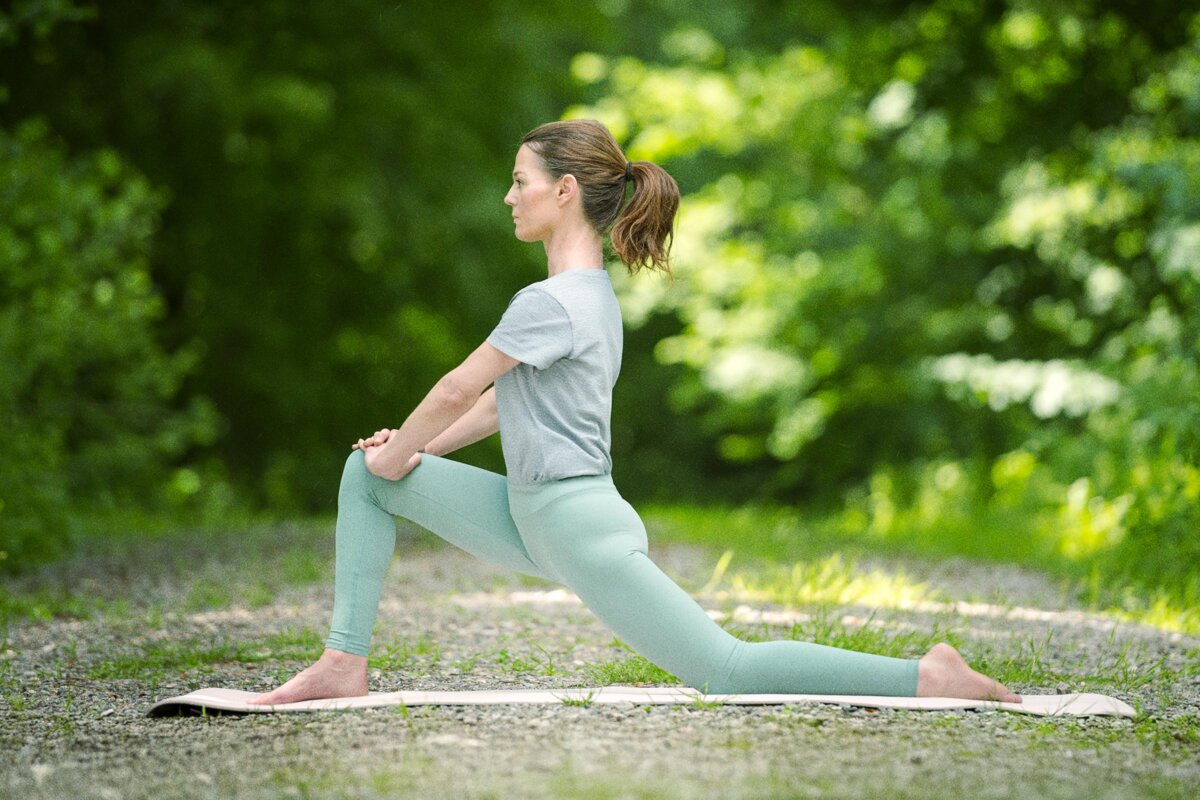
Lower back soreness or stiffness may be linked to tightness in the iliopsoas muscle. Targeted stretching of the iliopsoas can help relieve muscle tension and reduce discomfort.
A simple way to check for iliopsoas tightness is the Thomas Test:
- Lie flat on your back and pull one knee toward your chest. If the opposite leg—kept extended—lifts off the ground or bends at the knee, this may indicate tightness in the iliopsoas muscle.
Iliopsoas Tightness and Lower Back Pain
The iliopsoas muscle group is made up of the psoas major and the iliacus, and in some people, also includes the psoas minor, which lies in front of the psoas major.
[epoch_component type=”related_posts” position=”column-right” section_title=”” width=”” items=””][/epoch_component]
The psoas major originates from the bodies and transverse processes of the T12 to L5 vertebrae, while the iliacus originates from the inner surface of the iliac fossa. The two muscles merge to form a common tendon that inserts at the lesser trochanter of the femur.
The iliopsoas is considered one of the strongest muscles linking the upper and lower body. When this muscle group becomes overly tight or weakened, hip flexion can cause discomfort in the lower back. In some cases, it may also lead to anterior pelvic tilt, creating a noticeable gap beneath the lower back when lying flat—often resulting in soreness upon waking.
A study published in March showed that iliopsoas tightness was associated with an increased risk of lower extremity injuries during physical activity.
Exercises to Release Iliopsoas Muscle Tension
Exercise 1: Kneeling Hip Flexor Stretch
Steps:
- Begin in a kneeling position with one leg forward and the knee bent. Extend the other leg behind you, resting the back knee on the floor, positioned behind the hip joint.
- Keep your upper body upright and gently shift your weight forward and downward toward the front leg. You should feel a noticeable stretch in the front of the hip and upper thigh of the back leg.
- Raise both arms overhead to deepen the stretch in the iliopsoas.
Exercise 2: Lizard Pose Stretch
Steps:
- Start on all fours, then take a large step forward with one foot, placing it just outside the hand on the same side. Slightly turn the front foot outward, and keep the back knee resting on the floor.
- Slowly lower your elbows toward the ground to deepen the stretch in the iliopsoas.
Exercise 3: Dead Bug Variation
Steps:
- Before starting the stretch, perform a bridge to lift your hips off the ground. Then lower yourself back down so that your lower back and glutes are fully in contact with the floor. Bend your knees and lift your legs, forming a 90-degree angle between your thighs and calves.
- Extend one leg downward toward the floor in a slow and controlled manner. As you lower the leg, press your lower back firmly into the ground to engage both your abdominal muscles and the iliopsoas. Lower the leg until the heel gently touches the floor, then repeat with the other leg.
If your leg feels stuck at a certain angle or suddenly drops during the movement, it suggests a weak point in the range that needs targeted strengthening.
Summary
The first two exercises help relax the iliopsoas muscle, while the third focuses on building strength.
To effectively address iliopsoas tightness, it is important to avoid prolonged sitting. Try to stand up and stretch the iliopsoas every 30 to 40 minutes. Regular stretching, along with strength training, helps relieve tightness and improves long-term productivity.