

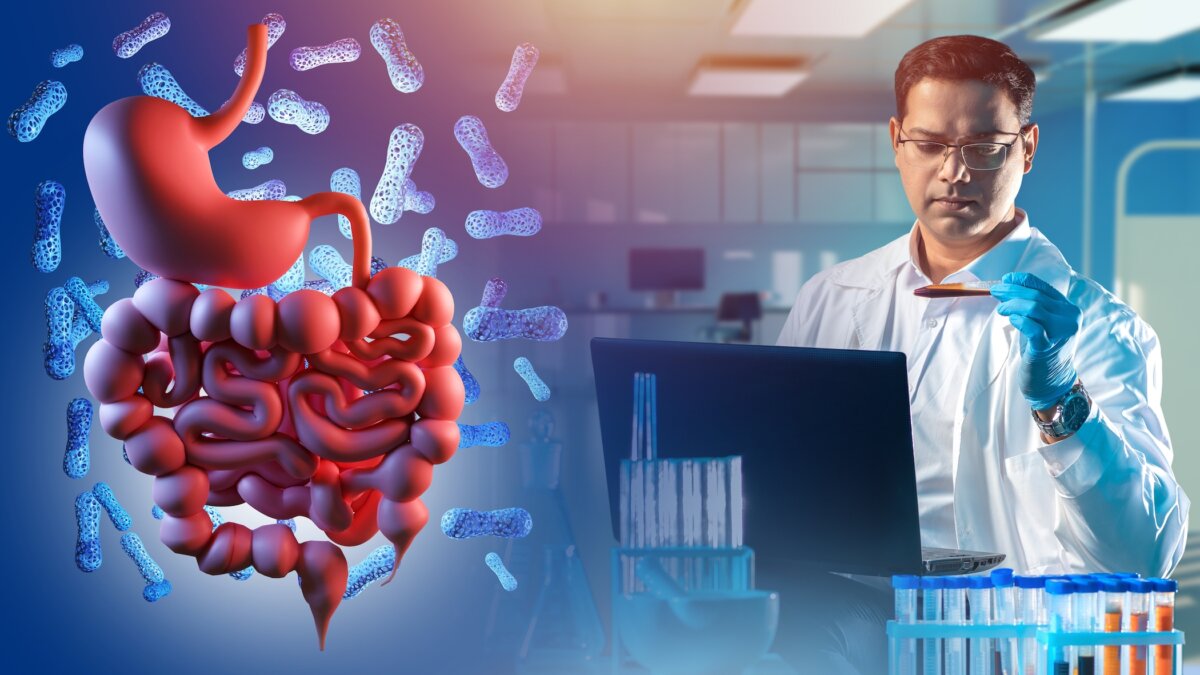
Many people who get infected with COVID-19 experience persistent post-illness conditions known as long COVID. However, because of the wide range of long COVID symptoms, an effective treatment hasn’t yet been found. However, a clinical trial published in The Lancet Infectious Diseases on Dec. 7, 2023, suggests that an oral gut microbiome formula, SIM01, can effectively alleviate various long COVID symptoms.
Long COVID is marked by symptoms lasting for weeks or even years after contracting COVID-19. It’s estimated that at least 65 million people worldwide suffer from long COVID, and the number of cases continues to rise. Long COVID usually affects the respiratory, gastrointestinal, and neuropsychiatric systems, often accompanied by fatigue.
Research into the causes and treatments of long COVID is currently in the exploratory stage. The Department of Medicine and Therapeutics at the Chinese University of Hong Kong, along with its affiliated Hong Kong Microbiota I-Center, recently discovered a distinctive imbalance in the gut microbiome of long COVID patients. This finding suggested that it may be a key factor in the development of long COVID.
The Hong Kong research team recently conducted a large-scale, double-blind, randomized, placebo-controlled trial, confirming that the consumption of a synbiotic (synergistic probiotics and prebiotics) preparation, SIM01, can effectively alleviate post-COVID symptoms and improve gut microbiome imbalance.
SIM01 is an oral microbiome microencapsulated formulation developed by the Chinese University of Hong Kong using big data and machine learning. SIM01 is a micro-encapsulated freeze-dried powder containing three strains (Bifidobacterium adolescentis, Bifidobacterium bifidum, and Bifidobacterium longum) forming 20 billion colony-forming units, along with three prebiotic compounds (xylo-oligosaccharides, galacto-oligosaccharides, and resistant dextrin) that promote the growth of these strains.
Significant Improvement in Long COVID Symptoms With SIM01 Formula
This study recruited 463 long COVID patients who had contracted COVID-19 at least four weeks prior and were experiencing at least one of 14 long COVID symptoms. The researchers assessed patients’ condition using a questionnaire covering common symptoms such as fatigue, memory loss, difficulty in concentration, insomnia, mood disturbance, hair loss, shortness of breath, coughing, inability to exercise, chest pain, muscle pain, joint pain, gastrointestinal upset, and “general unwellness.”
Participants were randomly assigned in a 1:1 ratio to either the SIM01 treatment group or the control group with vitamin C for six months. The results revealed that the SIM01 group showed more effective relief for various long COVID symptoms than the control group. Particularly notable improvements were observed in gastrointestinal upset, fatigue, difficulty in concentration, memory loss, and general unwellness, with improvement rates of 70 percent, 63 percent, 62 percent, 42 percent, and 77 percent, respectively.
In addition to clinical assessments, researchers conducted metagenomic analysis of fecal samples to study the changes in participants’ gut microbiome. The results revealed a significant increase in the richness and diversity of beneficial bacteria in the SIM01 group and a reduction in harmful bacteria. This suggests that SIM01 improves gut microbiome.
The study results revealed a significant correlation between the alleviation of different long COVID symptoms and distinct changes in the composition and functionality of the microbiome. For example, an increase in the bacteria Bifidobacterium adolescentis was linked with less fatigue, gastrointestinal upset, and memory loss. An increase in Bifidobacterium bifidum, meanwhile, was linked with reduced fatigue and overall unwellness. Bifidobacterium longum was linked with improvements in concentration.
However, the study had some limitations, such as being conducted in a single region. Further confirmation of the findings in multicenter and ethnically diverse trials is needed.
Influence of Gut Health on COVID-19 Development and Prognosis
Siew Ng, Croucher professor of medical sciences at the Faculty of Medicine, The Chinese University of Hong Kong, who participated in the study, stated that this is the world’s first clinical trial directly targeting long COVID symptoms and offering a comprehensive explanation of the scientific principles behind SIM01’s alleviation of these symptoms. This includes improvements in the diversity, richness, and functionality of the gut microbiome, as well as the stimulation of beneficial bacteria in the gut to produce metabolites (such as short-chain fatty acids) circulated to the brain.
“These findings supported the importance of the gut-brain axis, and that modulation of the gut microbiota represents a novel approach to improving neurological symptoms,” she said.
Francis KL Chan, the dean of medicine and director of the Centre for Gut Microbiota Research at the Chinese University of Hong Kong and one of the authors of the paper, urged the public to recognize the importance of gut microbiome health as a means to reduce the risk of infections and the occurrence of post-infection symptoms.
“Maintaining balanced gut microbiota is key in preventing emerging infectious diseases and persistent symptoms after recovery from the acute infection,” he said. That is especially important now amid the heightened risk of respiratory infections due to the winter flu and pathogenic bacteria.
A study published in the International Journal of Molecular Sciences in July 2023 found that high concentrations of the SARS-CoV-2 virus are frequently observed in the guts of COVID-19 patients. SARS-CoV-2 infection may induce an imbalance in the gut microbiome, and the virus can disrupt the physical barrier of the intestines, leading to increased intestinal permeability. This could result in the virus’s leaking into systemic circulation, contributing to multi-organ complications.
The study also noted significant differences in the gut microbiome of COVID-19 patients compared with the healthy control group. The more severe the level of gut microbiome imbalance, the greater the severity of COVID-19 infection and “the concentrations of pro-inflammatory and pro-oxidative markers in the plasma.” Furthermore, COVID-19 patients who consistently took probiotics since their confirmed infection, compared with those who didn’t take probiotics, exhibited milder symptoms, a shorter clinical course, and fewer digestive issues.
Another study published in 2022 indicated that the use of the synbiotic formula SIM01 can hasten the formation of antibodies against SARS-CoV-2, decrease pro-inflammatory immune markers, reduce nasopharyngeal virus loads, and restore the gut microbiota imbalance in hospitalized COVID-19 patients.
