
Slowed walking, weakened limbs, unintended weight loss, and frequent falls—might be an indication of sarcopenia. After 65, falling becomes more dangerous, with muscle loss being a primary cause of falls, fractures, and higher mortality rates.
Why Calf Muscles Matter
Calf muscles do more than power your step—they are essential for walking stability, posture, and balance. In older adults, loss of muscle mass in the calves is closely associated with frailty and higher fall risk. Because the calves are relatively easy to measure, they serve as a practical, visible indicator of overall muscle health and sarcopenia risk.
Calf muscle circumference is now widely used in both clinical and public health settings to help identify sarcopenia. Studies show that smaller calf size correlates with lower muscle mass and poorer outcomes in seniors, such as reduced mobility and higher mortality.
By strengthening the calves, we not only improve balance and walking speed but also potentially reduce the progression of sarcopenia and its related risks.
Quick At-Home Tests for Sarcopenia
You can self-assess for sarcopenia using these two simple methods:
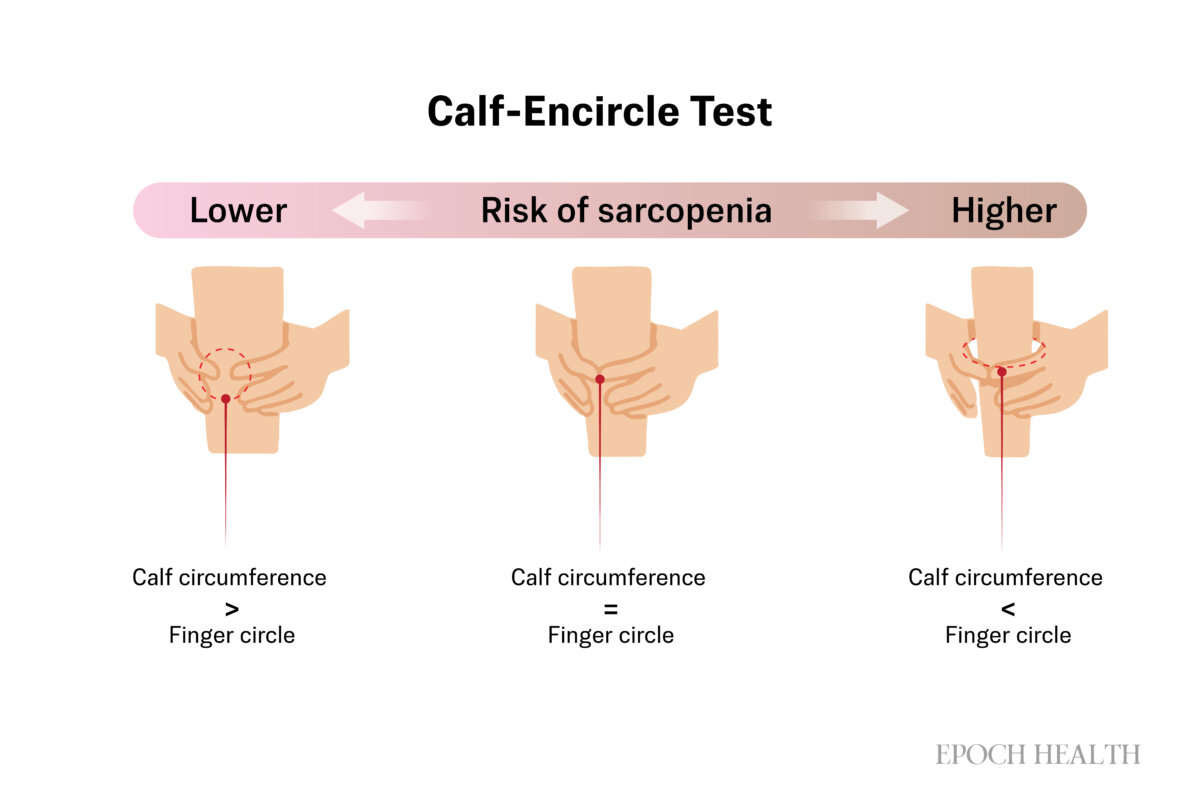
1. Calf-Encircle Test
Method: Use both hands to form a “C” shape and wrap them around the thickest part of your calf.
Evaluation:
- If your fingers touch or overlap, or if your calf is thicker than the circle formed by your fingers, your muscle mass is likely sufficient.
- If there is a visible gap between your fingers and your calf—meaning your fingers don’t reach the calf at all—it may indicate reduced calf muscle mass, a potential early sign of sarcopenia. In this case, focus on exercises that strengthen your muscles.
2. Sit-to-Stand Test
Method: Sit on a chair, cross your arms over your chest without holding the armrests, and perform five consecutive stand-up and sit-down movements.
Evaluation: Completing the test in 12 seconds or less suggests adequate muscle mass. Taking longer than 12 seconds may indicate reduced muscle function, signaling the need for strength training or a consultation with a doctor for a comprehensive evaluation of muscle strength.
Strengthen Your Calves: A Simple, Powerful Exercise
The good news? You can fight back against sarcopenia starting today—with one simple move.
Single-Leg Toe Raises
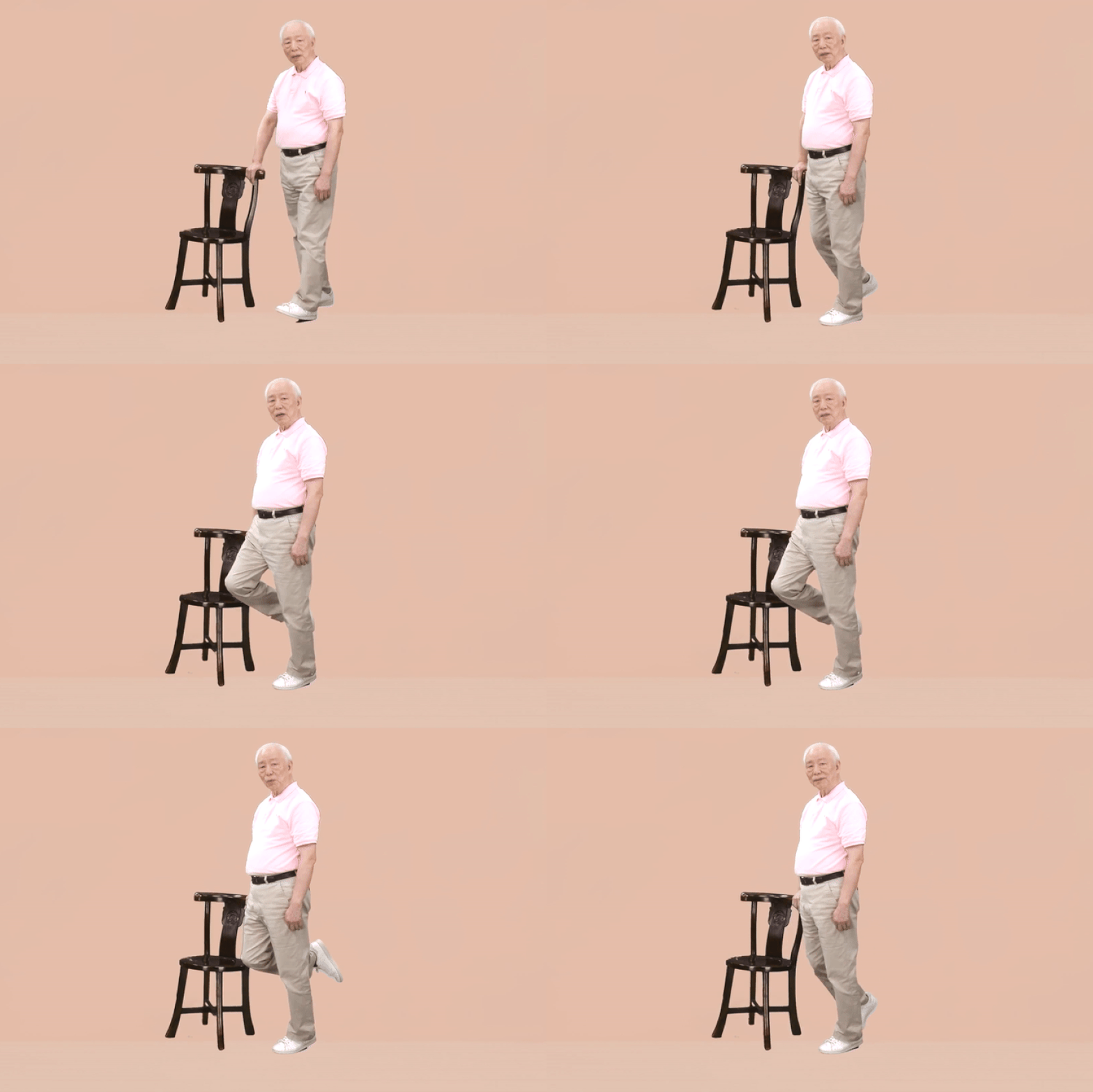
- Step 1: Stand upright, holding onto a chair or wall for support.
- Step 2: Lift your left foot off the ground, raise your right heel to stand on your toes, hold for 5 seconds, then switch to the other foot.
- Step 3: Perform 10 repetitions per leg for 1 set. Do 3 sets daily, aiming for 2 to 3 sessions per week.
Benefits:
- Boosts ankle and leg strength
- Improves balance and prevents falls
- Increases blood circulation to the lower extremities
- Easy to do at home, no equipment needed
Safety Tips:
- Always use a sturdy support, such as a chair or wall to prevent slipping.
- Avoid if you feel dizzy or have poor balance—try seated leg lifts instead.
- Wear supportive shoes with a good grip.
Beyond exercise, traditional Chinese medicine (TCM) offers a different perspective on sarcopenia. In TCM, this condition is known as “flaccidity syndrome” and is believed to stem from deficiencies in the spleen and stomach. These organs are thought to govern digestion and the transformation of food into the nutrients that nourish the muscles.
Strengthening Muscles by Supporting Digestion
TCM views the spleen as the “foundation of acquired constitution,” encompassing the entire digestive system, not just the anatomical spleen. The spleen functions as the body’s nutrient-processing hub, transforming food into vital nutrients that nourish limb muscles.
When the spleen and stomach are weak, even a nutrient-rich diet may not be effectively absorbed.
To support spleen and stomach function, avoid overeating, maintain a balanced diet with easily digestible foods, and limit raw, cold, spicy, or greasy foods. A consistent routine, sufficient sleep, and a positive mindset further promote spleen and stomach health, thereby enhancing nutrient absorption and supporting muscle maintenance.
We can also view these as gut-friendly practices that complement muscle-building nutrition strategies.
Protein: The Cornerstone of Muscle Maintenance
Some older adults, due to poor dental health, eat less meat or eggs, leading to insufficient protein intake and increased muscle loss. For those over 65, each meal should include a palm-sized portion of high-quality protein, such as meat, fish, beans, or eggs.
For older people with limited chewing ability, opt for soft proteins such as mashed tofu, steamed eggs, or steamed cod. Alternatively, mince chicken or shred it into thin strips for easier intake. During cooking, natural pineapple enzymes can be used to tenderize meat, making it more manageable. For those with severe dental issues, protein powder provides a practical solution.
Why Dietary Variety Builds Muscle
A balanced and varied diet is key to protecting muscle health, helping to maintain and even enhance physical abilities.
A study published in The Journal of Nutrition, Health and Aging surveyed 1,184 Japanese seniors about their dietary habits. The questionnaire covered 10 major food categories: meat, fish/shellfish, eggs, milk, soy products, green/yellow vegetables, potatoes, fruits, seaweed, and fats/oils. Researchers assigned a “dietary diversity score” based on the number of these food groups consumed daily, with a maximum score of 10 reflecting inclusion of all categories.
The findings showed that, after adjusting for other factors, seniors with higher dietary diversity scores exhibited greater lean mass (non-fat body weight), stronger grip strength, and faster walking speeds, demonstrating a clear positive correlation. Higher lean mass typically reflects increased muscle mass, leading to enhanced physical function and mobility.
The more diverse your diet, the better your muscle health and resilience. Think of food as medicine—not only for strength but also for independence and vitality as you age.
A Hidden Connection to Chronic Illness
Sarcopenia is more than a mobility issue—it’s linked to a range of chronic diseases that are common in aging populations:
- Diabetes: A study published in The Lancet Diabetes & Endocrinology revealed that reduced muscle mass impairs glucose transport and increases insulin resistance, which further worsens sarcopenia. Women with diabetes are nearly twice as likely to develop sarcopenia compared to those without it.
- Hypertension: Older adults with sarcopenia have a 29 percent higher risk of high blood pressure than their healthier peers.
- Obesity: The combination of excess weight and low muscle mass is known as sarcopenic obesity. Visceral fat fuels inflammation that breaks down muscle, worsening frailty and reducing physical independence.
Together, these connections illustrate that sarcopenia is not an isolated problem—it’s a key piece of the puzzle in managing aging and preventing multiple chronic diseases.
Views expressed in this article are the opinions of the author and do not necessarily reflect the views of The Epoch Times. Epoch Health welcomes professional discussion and friendly debate. To submit an opinion piece, please follow these guidelines and submit through our form here.