
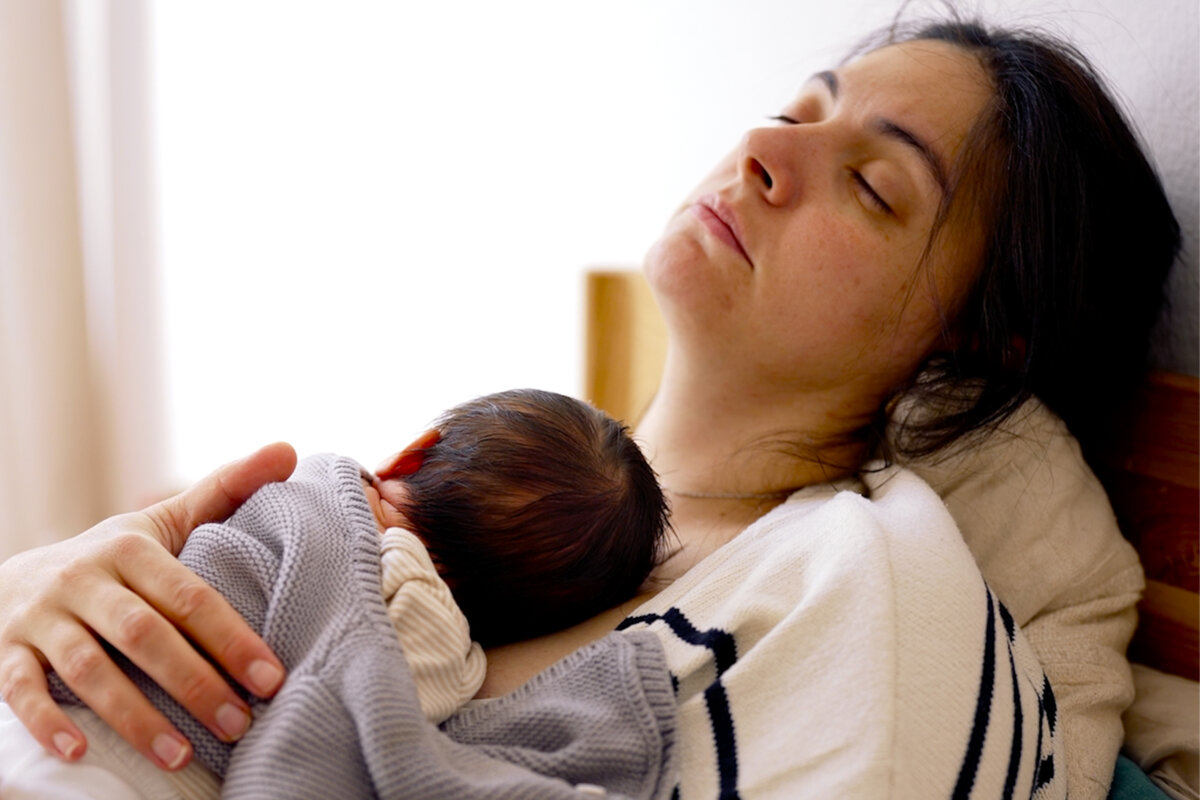
Rates of postpartum depression have doubled in the past decade.
Today, about one in five women experiences PPD or another perinatal mental health condition. Many women are in such a depressive mental state that they think of suicide or even harming their children.
I am a board-certified psychiatrist and a fifth-generation Chinese medicine doctor. In my practice, I use a whole-person care model that integrates multiple dimensions, combining modern science and technology with traditional wisdom and common sense to help patients with mental health issues.
One question has stayed with me since my residency. Why do we keep missing PPD in women who need care and who are, in many cases, already under medical care?
In June of 2001, I was a psychiatry resident at Thomas Jefferson University in Philadelphia, rotating through an inpatient unit in Delaware. I was caring for a woman who suffered from postpartum depression with intrusive thoughts of harming her baby. She had admitted herself voluntarily. She knew the thoughts weren’t hers or what she wanted, and she asked for help. I was glad she was in the hospital. She was being treated, and the baby was safe.
She did everything right, and the system did right by her. But in 25 years of practice, I’ve learned how many pieces have to fall into place for that to happen—and how easily any one of them can fall out.
2 Ways to Fail the Same Patient
In my experience, postpartum mental healthcare tends to fail in one of two directions.
The first is undertreatment. A mother with a mental illness, or a strong family history of it, is not watched closely enough. A medication that was working is stopped. A warning that another pregnancy could bring another episode is forgotten. Nobody pulls the old chart.
The second is overtreatment without coherence. A mother is moved through one psychotropic medication after another—antidepressants, mood stabilizers, antipsychotics, benzodiazepines—over a few months, by more than one prescriber, with no single doctor holding the whole list.
These may look like opposite problems, but they share a cause. In both, the information needed to care for the mother exists somewhere—in a prior record, in a family member’s observation, in a program she already went through—but it never reaches the person treating her now.
One clinician relies on what the patient says in the office. Another has no records from the hospital or the perinatal program. The physicians never speak to one another. These scenarios can happen so easily in today’s clinical practice, where physicians find it harder and harder to reach each other. That is what frightens me.
Thoughts Mothers Do Not Say Out Loud
It must sound wild to most people that a new mother would have thoughts of harming her own baby. But those thoughts are far more common than most people realize.
Nearly all new mothers have intrusive thoughts that the baby will be hurt by an accident, a fall, or an illness. Almost half have thoughts of harming the baby themselves. Anyone who has lived through weeks of broken sleep, erratic hormones, and a baby who will not stop screaming knows that dark thoughts can cross a mother’s mind. However, a mother acting on them is extremely rare.
For most mothers, these thoughts are horrifying. They feel alien, unwanted, arriving against her will. That distress is a good sign because distressing intrusive thoughts are not associated with an increased risk of harming the baby. She will tell people. She will ask for help. Such as the mother I cared for in Delaware.
If you are a new mother and these types of thoughts horrify you, that reaction is reassuring. Don’t hesitate to tell your doctor or your family out of fear or shame. Saying them out loud is how you get help, and the help works.
But there is another, more dangerous presentation. Some mothers, usually in postpartum psychosis—a rare and dangerous psychiatric emergency that involves a complete break from reality, beyond a severe form of depression—have made peace with these thoughts. The thoughts have become part of their own beliefs.
Women with PPP do not feel distressed. They believe what they feel is something they should be doing. They don’t tell anyone. They do not appear stressed or disturbed. A mother gripped by a delusion may not want to share it; she may know how it would sound, and she may believe the doctor would stop her from doing what she believes she must do.
While PPP is rare, it can happen, and a clinician who relies on self-reporting will miss it. If a mother in danger cannot tell us, someone else has to notice.
Let me describe what I think should be on record for every mother with postpartum depression, and what cannot be found in any record at all.
What Should Be Assembled
Imagine one trained professional sat down with a mother and reviewed everything about her. I find it useful to organize that picture across several dimensions of a human being. Anything that affects one dimension eventually affects the others.
1. The Body
The delivery itself. How did it go? Were there difficulties or complications—a cesarean section, tearing, bleeding? How long was the labor, and how physically exhausted was the mother afterward? What happened to the baby—a healthy delivery, or was the baby taken away to a special care or intensive care unit? All of that affects a mother’s physical and mental well-being.
2. Biochemistry
Hormones drive much of the measurable work. The hormonal drop after delivery is drastic, and it happens to every mother. The question is why some respond to it differently than others. Part of the answer may be epigenetic: In replicated studies, blood drawn before delivery distinguished women who went on to develop postpartum depression from those who did not with about 80 to 87 percent accuracy. In other words, the vulnerability is detectable before delivery—if anyone is looking.
3. Thyroid
Autoimmune thyroid disease appears far more often in women with postpartum psychosis than in controls. The evidence could be stronger, and it deserves that caveat. However, thyroid function regulates both body and mind, and the standard panel is often insufficient.
Normal ranges are built from large populations. A specific patient—one with depression and preexisting epigenetic vulnerability—may need a far more optimal thyroid range to function. The panel should be wider: thyroid antibodies, ferritin, vitamin D—all of which cost very little.
4. Sleep
Sleep deprivation for a new mother is almost inevitable, and it disrupts sleep architecture completely. Deep sleep isn’t just when the body recovers and restores itself—it is when the brain clears metabolic waste through the glymphatic system.
As a research fellow at Oxford, I used sleep as a biomarker to study how mood stabilizers work. Carbamazepine—an anticonvulsant later found to stabilize mood—increased deep sleep in the healthy volunteers we studied. So sleep problems in a new mother are not a lifestyle issue. They are a real biochemical disruption and should be treated as such.
5. Medications
Psychiatric medication management is both an art and a science.
The science is that each medication was designed around an assumption about a particular neurotransmitter—too much or too little—in the hope that the hypothesis fits the individual patient. When it fits, the medication helps. When it does not, it can be ineffective, produce the opposite effect, or cause severe side effects.
Because choice is largely trial and error, it demands coherent management—either by one clinician, or by clinicians who communicate with each other and with those who treated the patient before. Finding the right medications and dosages requires close observation—writing down the reason for every switch, and giving every drug long enough to work before calling it a failure.
When a patient keeps “failing” medications, we call it treatment-resistant—but the label does not tell us why. One explanation that deserves more attention is metabolism. A patient who metabolizes a drug rapidly may never reach a therapeutic level at a standard dose—and the medication will look like a treatment failure when it was never actually in her system.
6. Genetic Testing
A genetic test can assess the liver enzymes that metabolize medications and help identify possible interactions when several drugs are used together. Genetic testing is not standard or routine—but when a patient keeps failing treatments that have had enough time to work, it can help.
Most of the time, though, a mother on many medications needs something simpler first: a reconciled medication list and a thorough review of how each drug is being used—why it was added or switched and whether it was given long enough to work.
7. Energy
Chinese medicine offers its own insights. Conceiving and developing a baby consumes what we call kidney essence and blood, and pregnancy and delivery deplete both. Blood loss weakens what supports the heart, which in Chinese medicine governs consciousness and the mind. Depleted essence can also bring loss of motivation and increased fear, which can look very much like postpartum depression.
A Chinese medicine doctor would treat this with acupuncture and herbs. The clinical evidence for acupuncture in postpartum depression is inconclusive, and I am not claiming it treats the illness. However, it nourishes the body and helps restore the flow of energy, which is worth having.
7. The Soul
This is the dimension most critical to postpartum psychiatric illness, because it holds our beliefs and values and shapes our thoughts, emotions, behavior, and relationships. A mother who has come to believe that harming her child is right is suffering here, and no laboratory test will find it. It surfaces only in what she says and does, which is why someone must be watching.
What Tradition Understood
In Chinese culture, the month after birth was probably the best month of care a woman could expect. The family organized itself around her. She was protected from cold, wind, and heat, and from standing too long or doing any labor, for at least thirty days and sometimes a hundred.
Her own mother or mother-in-law usually managed her care. She drank nourishing soups made with herbs including ginseng, dang gui, and astragalus, and fish soups believed to support milk production. This care is called “sitting the month,” and some facilities recreate it today.
There are, of course, drawbacks to such an arrangement—mostly conflict between a new mother and her mother-in-law, which in some studies raises the risk of depression rather than lowering it. The evidence on whether the practice protects against depression is mixed.
But one thing is certain: The new mother was watched constantly and supported enormously. Any change in her behavior would be noticed right away, and the woman watching her had been through it herself, which can be very helpful.
So the tradition served three functions: It protected the new mother’s sleep, restored the energy and blood she lost in delivery, and meant that any emotional or behavioral change was seen.
What the tradition offered, more than an herb or a needle, was someone paying attention. Most American families do not live that way anymore. That means the people closest to a new mother have to notice—and know what to look for.
What to Watch For
The responsibility of watching for symptoms of PPD belongs to both the family and the clinicians.
For Families
-
Watch for any sudden change in character or personality, and for any strange behavior that appears alarming.
-
Watch especially for a mother who doesn’t respond to her baby with the emotion a new mother normally shows. Some may seem almost indifferent. Some may seem tired of having a baby or handle the baby in a flat, distant manner.
-
Pay attention to what she says and does, and write down anything unusual—behavior or things she says—so you can report it. If she tells you she is having thoughts of harming the baby or herself, that is not a secret to keep for her. Her clinician needs to hear it from you if she will not say it herself.
-
Note a lack of self-care, aggression or hatred toward the baby, loss of sleep and appetite, or seeming to respond to something inside her own mind—absent or disconnected from what is in front of her. Note: These signs need professional help the same day, not at the next scheduled visit.
For Clinicians
These behaviors will surface more with an obstetrician or pediatrician than with a psychiatrist. Clinicians should be trained to give astute attention to mental and behavioral health—not only the physical checkup.
A mother is more likely to reveal something to the doctor caring for her body or her baby than to a psychiatrist. As a psychiatrist, I don’t think our profession derives the greatest trust among patients.
Every mental health provider should take a full history—particularly a family history. A family history of bipolar disorder or psychosis, or a prior postpartum episode, changes everything about how closely a pregnancy should be followed. Every provider should talk to the family. The most alarming facts about a mother in danger are very often known to the people who love her. Someone has to ask them.
The Composer and the Conductor
Human life and human health are like a beautiful symphony. It requires someone to compose it, and someone to conduct it.
In modern medicine, we have all kinds of wonderful “musicians,” each a specialist on their own instrument. But there is no composer, no conductor. Each musician may be excellent, but they are not playing as an orchestra.
The conductor does not have to be a physician or a psychiatrist. It could be a registered nurse, a physician assistant, a nurse practitioner, or a trained health management specialist. What matters most is that they can evaluate a person across all dimensions and gather what is already known before deciding what to do next.
Some states have begun to build the coordinating layers. Massachusetts has operated a perinatal psychiatry access program since 2014, giving obstetric and primary care providers same-day psychiatric consultation and help with care coordination, at modest cost per mother. That is wonderful, and every state should have such a program.
A Time for Change
Looking back over my 25 years in psychiatry, what has changed is that we have more medications to choose from. What has not changed is that care remains fragmented. As advanced as our science is, and as much as we have invested, these mothers don’t need more medicine or technology—they need coordinated care.
Hormones, thyroid, sleep, nutrition, environmental exposures, and a woman’s preexisting epigenetic and biochemical makeup—it’s all biochemistry, and we can measure and manage it. Her delivery and her physical recovery are anatomy. Her depletion after childbirth is energy. What she believes about herself and her baby is soul.
We do not fully control disease, but we are responsible for creating health—as a country, a government, a medical and health care system, health care professionals, husbands, wives, and citizens.
When a new mother becomes ill, blaming her, the medicine, or the clinicians who cared for her is not going to help anyone. Building care that sees the whole person, and making sure one person is always watching, is the better answer, and the better medicine.
If you or someone you know is struggling, Postpartum Support International and the 988 Suicide and Crisis Lifeline offer confidential help.
Views expressed in this article are the opinions of the author and do not necessarily reflect the views of The Epoch Times. Epoch Health welcomes professional discussion and friendly debate. To submit an opinion piece, please follow these guidelines and submit through our form here.