
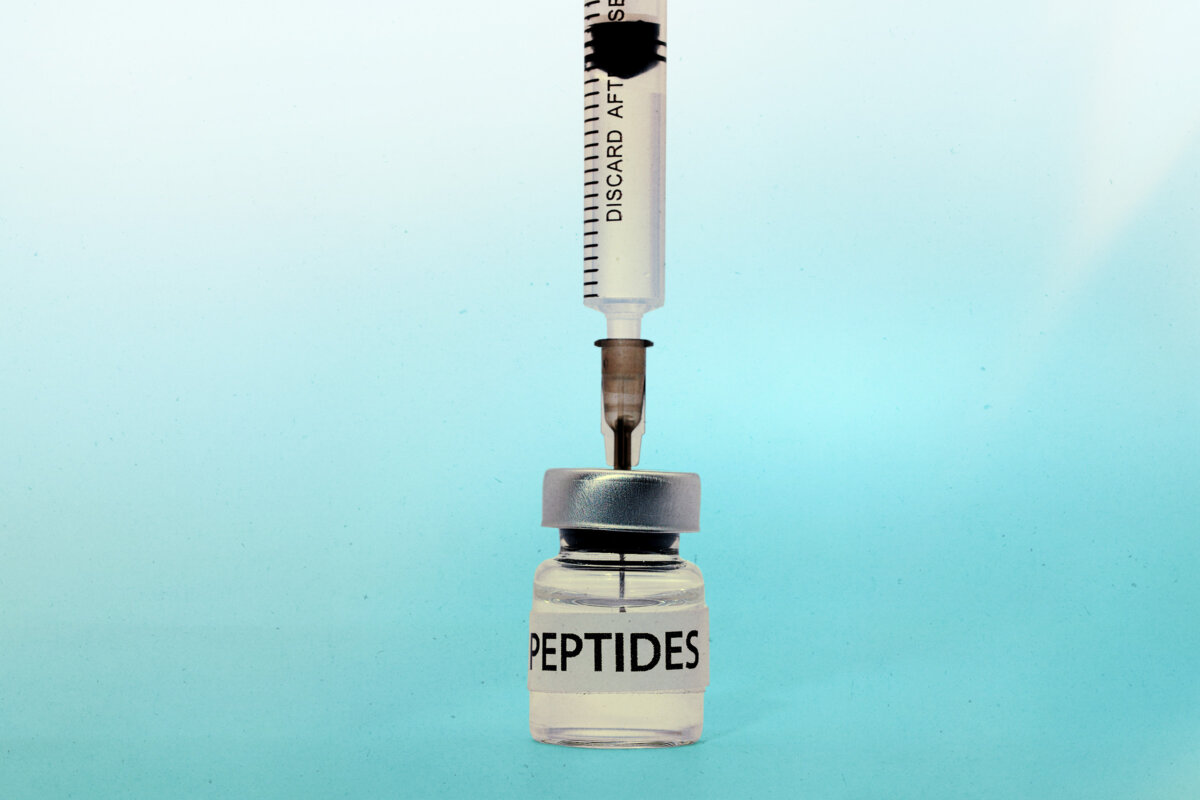
For three years, patients who relied on BPC-157, TB-500, and four other popular peptides had two choices: Stop treatment or buy from illicit online suppliers. Recently, the Food and Drug Administration changed that by lifting restrictions on six peptides, allowing licensed compounding pharmacies to dispense them again. However, the agency’s own reviewers urged against it, and the human research needed to determine whether these compounds are safe still doesn’t exist.
The six peptides are BPC-157, Epitalon, TB-500, MOTS-c, Semax, and KPV. Their return puts a lightly studied class of drugs back in licensed pharmacies. The problem is that patients may not realize that the peptides are on a new regulatory path—one that doesn’t include the same scrutiny earlier peptides such as insulin and glucagon-like peptide-1 (GLP-1) drugs faced.
What the FDA Decision Changes
Three years ago, the FDA restricted 19 peptides, citing a lack of safety evidence and human trials. Doctors who had prescribed them for years, including Dr. Matt Cook, who prescribed peptides for a decade for pain, complex diseases, and anti-aging protocols, had to stop. Many patients bought them from illicit suppliers.
On Oct. 28, the agency reversed course for six of the 19. The peptides were expected to be available again at licensed compounding pharmacies within days.
The decision was not unanimous. When the FDA revisited restrictions on peptides earlier this year, agency reviewers noted a lack of safety data and human trials, as well as the potential for products to degrade or become contaminated, and recommended against releasing all six. The pharmacy compounding advisory committee that made the final decision set that recommendation aside and lifted the restrictions.
The six peptides have not undergone the rigorous safety and human trials that GLP-1 drugs—among the most recognized peptide medications—underwent.
What to Know About the Newly Released Peptides
Peptides are short chains of amino acids—the building blocks of protein. They occur naturally in the body and in foods such as meat, seafood, grains, and beans. Amino acids each have specific functions: Glycine helps make collagen, for example, and tryptophan helps make serotonin and melatonin.
Strung together as peptides, they act as codes that help the body make neurotransmitters and hormones, support the immune system, build tissue, and clear dangerous microbes. Insulin, one of the first peptides developed into a drug, is a familiar example.
Much of the appeal comes from how peptides work. Traditional drugs typically follow a lock-and-key design that enhances or blocks a single pathway.
“A lot of times if you try to block a pathway, the body finds another way around it,” Cook told The Epoch Times. “Peptides have multiple mechanisms.” They have broad applications for gut and immune problems, largely because they resemble the body’s own peptides, he said.
GLP-1, a natural hormone that helps regulate appetite, shows how this can play out. It appears to act not only on metabolism but also on the nervous, immune, and cardiovascular systems, with a body-wide anti-inflammatory effect. The newly released peptides may offer similar multi-mechanism actions.
However, there is an important difference. Unlike insulin and GLP-1, the body does not naturally produce these six peptides. Most are fragments of larger amino acid chains, and one, MOTS-c, is encoded by the mitochondrial genome.
What the Research Shows, Peptide by Peptide
The evidence behind the six peptides varies, but it shares a common gap: Few studies come from humans. Here is what is known about each.
BPC-157
BPC-157, short for “body protection compound,” is a 15-amino acid chain derived from gastric juice and used to protect and regenerate tissue, including the gut lining in inflammatory bowel disease, as well as musculoskeletal and other systems. It’s been given the nickname “Wolverine” peptide to reflect claims that it can heal torn ligaments, tendons, muscles, and wounds.
It is thought to speed healing by growing new blood vessels to injured areas, activating repair and collagen-making genes, calming inflammation through nitric oxide, and boosting growth hormone receptors.
A review published in Acta Orthopaedica Belgica found only three small human studies of BPC-157. In one case, 11 of 12 participants using BPC-157 for knee pain experienced improvements. In another trial, all 12 participants improved in interstitial cystitis, chronic bladder pain, and pelvic pressure. A third study found modest improvements in blood pressure and heart rate with no significant change in biomarkers.
The only randomized, double-blind, placebo-controlled trial involved 53 people with ulcerative colitis who took the peptide as an enema. A 2005 brief meeting abstract reports improved symptoms, but according to John G. Rizk, a pharmacoepidemiologist at Johns Hopkins Bloomberg School of Public Health, the study was seriously flawed.
“It wasn’t peer-reviewed. Its details can’t be independently checked, and almost nobody uses it the way it was studied in that abstract,” Rizk told The Epoch Times. “People actually inject it, swallow it, or spray it [intranasally], and there’s no human data for those routes.”
A second randomized controlled trial for BPC-157 with 42 participants was withdrawn without explanation, while another on hamstring pain is expected to be completed in 2028.
The FDA review notes reports of three adverse events. A 28-year-old man went to the emergency room with shortness of breath after an injection. A 55-year-old woman had nine days of redness and swelling at the injection site (she was also injecting another peptide). A 40-year-old woman developed skin and gum darkening while injecting BPC-157 and TB-500 under the skin twice daily.
There’s also a theoretical concern about how it promotes new blood vessel growth. While new blood vessel growth is necessary for healing, cancer uses the same process to spread and grow.
“Nobody has shown it causes cancer, and nobody has shown it doesn’t either because the long-term human studies don’t exist,” Rizk said.
Epitalon
Epitalon is a short synthetic peptide modeled on Epithalamin, an extract from the bovine pineal glands (a small brain gland involved in sleep). It is used for insomnia and, off-label, as an anti-aging therapy.
Most of the evidence on Epitalon comes from animal studies showing extended lifespan. A review in the International Journal of Molecular Sciences covered 28 studies—only four in humans. The mechanism appears to involve lengthening telomeres, the protective structures at the end of chromosomes that wear down with aging.
Another potential pathway being explored is circadian function through restoration of more youthful levels of the sleep hormone melatonin and the stress hormone cortisol.
While animal studies found that Epitalon shrank tumors, telomere pathways are heavily involved in cancer cell replication, raising concerns that more studies are needed to fully characterize its long-term safety.
TB-500
TB-500 is a fragment of Thymosin Beta-4 (TB4), a 43-amino acid chain present in nearly all human cells. It is marketed for tissue repair, including healing of tendons, muscles, ligaments, and wounds, as well as reducing inflammation and improving flexibility and mobility.
Most research involves TB4; it’s unclear whether that evidence applies to TB-500. The FDA found no human studies on the fragment to treat any disease or condition. Of 80 studies in a review published in Applied Sciences, 79 were on TB4, and most concerned wounds in the eyes, blood vessels, and skin. Evidence for tendons, ligaments, muscles, cartilage, and the spine was sparse.
TB4 appears to work by promoting new blood vessel growth, drawing repair cells to damaged tissue, and switching on inflammatory pathways that signal the body to heal. While the native peptide modulates inflammation—amping it up for early healing and dialing it down if it becomes excessive—it’s unclear whether the TB-500 fragment can mimic the same effects in humans.
MOTS-c
MOTS-c is a 16-amino acid peptide encoded by mitochondrial DNA. Mitochondria produce the cell’s energy, and the body’s own MOTS-c levels rise with stress and exercise.
The peptide has been used to improve insulin sensitivity, exercise capacity, and for general anti-aging. Global anti-doping organizations have banned it for athlete use.
MOTS-c may influence cellular energy metabolism through AMP-activated protein kinase signaling, the body’s master switch for processing sugar and fatty acids. However, the FDA has noted that the peptide’s molecular targets are unknown, making it hard to understand its effect on organs.
A meta-analysis published in Diabetology & Metabolic Syndrome examined six studies and found no conclusive evidence that endogenous MOTS-c increases fat burning or causes weight loss. No human studies have identified the safety or effectiveness of the synthetic peptide.
Semax
Semax is a synthetic peptide developed in Russia, available as a nasal spray and an injection. It is a fragment of adrenocorticotropic hormone, which tells the adrenal gland to make cortisol and other hormones. It has been used to improve attention, learning, and memory, particularly in stroke patients.
A Russian study found that using Semax alongside early rehabilitation in stroke patients was associated with improved motor skills, faster ability to return to daily living tasks, and higher plasma levels of brain-derived neurotrophic factor—a protein that helps the brain repair itself and grow.
In migraine, four of 12 patients in a study published in the Bulletin of Experimental Biology and Medicine experienced pain relief, and the other eight had some reduction that wasn’t well quantified. Sixteen patients with trigeminal neuralgia, a condition causing severe episodes of facial pain, had similar unquantified pain reduction. In dental plexalgia, a form of facial pain not related to dental problems, pain resolved in six of nine patients.
Semax may work by turning genes on and off to help brain cells survive, working as an antioxidant to sweep away damage from brain injury, and blocking pain by boosting serotonin.
FDA reviewers noted that taking Semax with amphetamine—a common ingredient in many attention-deficit/hyperactivity disorder drugs—may amplify activity in brain regions associated with addiction.
KPV
KPV is a three-amino acid fragment of alpha-melanocyte-stimulating hormone, which is made in the hypothalamus, the pituitary gland, and immune cells. It is believed to calm inflammation by turning off the master switch that activates proinflammatory cytokines and blocking cytokines from triggering swelling, redness, and pain.
It is used mainly for gut and immune health, as well as wound healing, stroke, and nerve damage. It is sold as an injectable (alone or combined with other peptides), oral medication, topical medication, and nasal spray.
In one animal study, KPV reduced inflammatory bowel disease in mice by decreasing cytokines, the proteins that drive inflammation.
A study published in the Journal of Pharmaceutical Sciences found that KPV doesn’t penetrate the skin well on its own, though absorption improved when combined with microneedles and a mild electric current. FDA reviewers cited a lack of human studies as a safety concern.
The Safety Questions That Remain
For all six, the main concern is the same: too little human data to know the risks, especially over the long term.
A second, practical concern remains. All six come in two chemical forms, free base and acetate. The forms dissolve differently in water and are not interchangeable under FDA standards, yet the research often doesn’t distinguish between them.
“Inconsistent naming conventions can contribute to a potential safety risk for patients,” FDA reviewers stated in their report.
Cook, who has seen many patients on peptides, is confident the safety record will hold up.
“There [have] been millions of doses of these six peptides collectively that have been given to huge numbers of patients,” he said. “Yet the complication rates, which represent orders of magnitude more patients than would go through a clinical trial … are staggeringly low.” He agreed that more clinical trials are needed.
The Institute for Safe Medication Practices, a nonprofit working to reduce medication injuries, said in a statement that the research hasn’t changed significantly since the peptides were restricted and that “the risks that have been identified remain unresolved.”
The speed of the FDA’s process is itself a concern. GLP-1 drugs went through a slow approval process, Rizk said, “but the slowness is where the scrutiny happens.”
Will This End the Gray Market?
During the FDA’s peptide ban, the market shifted from pharmacies to unregulated labs where the peptides were sold online as “research grade” compounds, the so-called gray market.
“Right now, far too many patients are obtaining peptides from illicit suppliers with little assurance about what’s actually in the vial,” Scott Brunner, CEO of the Alliance for Pharmacy Compounding, said in a statement. “That’s an existing public health threat.”
Rizk isn’t sure the FDA’s decision will eliminate the gray market. If people do get a doctor’s prescription for peptides, he said, it’s not a safety guarantee because the compounds themselves have little evidence tied to them.
Patients considering peptides can protect themselves by never ordering medication without a prescription, getting drugs only from licensed pharmacies, talking to their doctor and pharmacist, and reporting any side effects. The FDA has a website for patients and doctors to report adverse events from any medication.
Research for the therapeutic uses of peptides is growing, with work underway on Type 2 diabetes, obesity, skin rejuvenation, Alzheimer’s, Parkinson’s, and inflammatory bowel disease, as well as performance and longevity. Cook expects it to accelerate.
“I think we will see an explosion of research in the next two years,” he said.