
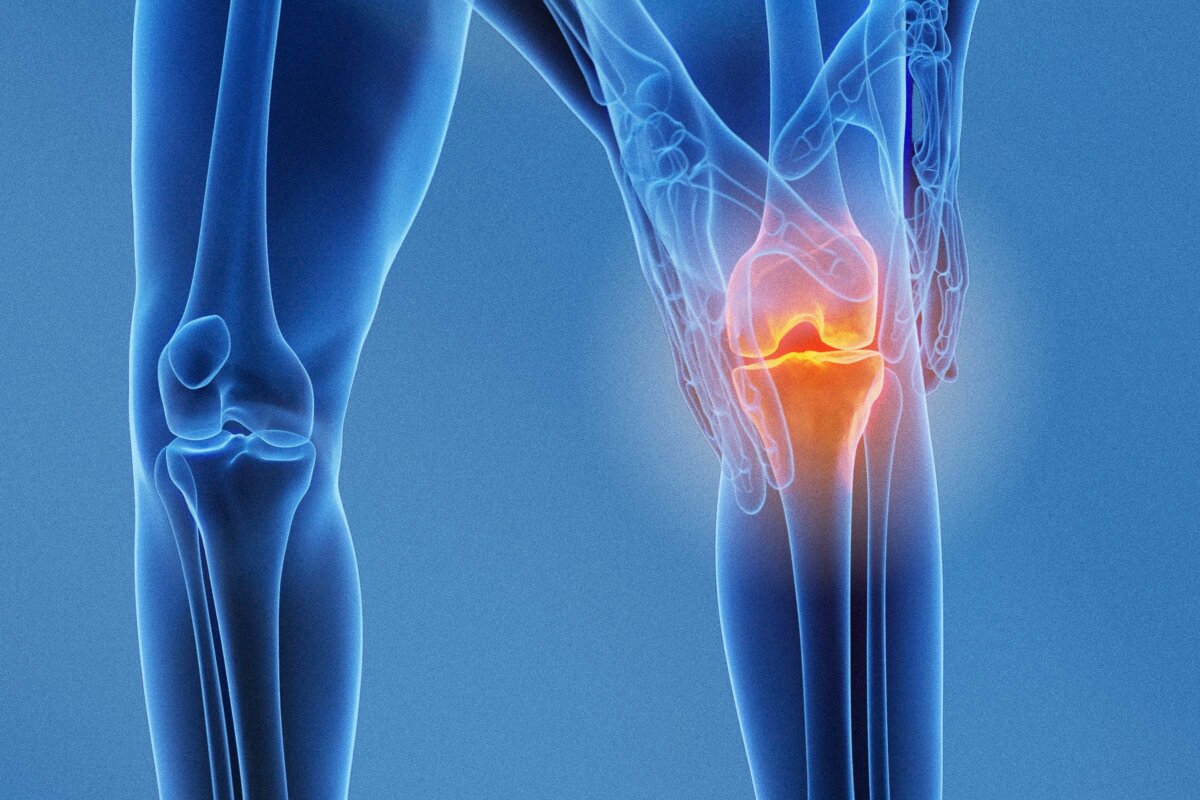
Patients with knee arthritis who hadn’t found relief with standard treatments reported steadily decreasing pain after undergoing genicular artery embolization (GAE), a minimally invasive procedure that blocks tiny blood vessels around the knee.
The study published in Radiology tracked 194 patients over 12 months, measuring changes in their pain and knee function.
About 33 million Americans live with osteoarthritis, and for many, physical therapy, medication, and injections don’t provide enough relief. Joint replacement is the usual next step. But many patients spend years in between: injections no longer help, yet surgery is not an option, either because they are not ready or because they can’t have it.
GAE is meant for those patients, Dr. Florian Fleckenstein, deputy head of interventional radiology at Campus Charité Mitte in Berlin and lead author of the study, told The Epoch Times. It is not intended to replace joint replacement, he said, but to complement existing treatments.
How the Procedure Works
During GAE, an interventional radiologist threads a thin catheter into an artery in the groin, under local anesthesia. Using real-time X-ray imaging, the radiologist guides the catheter to the knee and injects tiny, gelatin-based particles that temporarily block abnormal blood vessels. The target is areas where the X-ray shows a darker, blush-like patch, a sign of increased blood flow.
The procedure doesn’t require opening the knee, typically takes one to two hours, and can be done on an outpatient basis. “Recovery [is] measured in days,” Fleckenstein said.
By comparison, knee arthroscopy requires inserting instruments through small cuts into the joint, and knee replacement, which swaps damaged joint surfaces for artificial parts, typically takes much longer to recover from.
The gelatin particles are what set this study apart. Earlier GAE procedures used an antibiotic called imipenem-cilastatin—which raises concerns about antibiotic resistance and yields particles of varying sizes—or permanent plastic beads, which can accidentally block healthy vessels or cause lingering inflammation. The gelatin particles are uniform in size, allowing more precise delivery, and dissolve within hours.
Manufactured by South Korea-based NEXTBIOMEDICAL, the particles are approved for arthritis embolization in Europe but not yet by the U.S. Food and Drug Administration for treating knee osteoarthritis. The study’s authors declared no funding for the research.
What the Study Found
The study followed 194 people with a median age of 69, all of whom had knee pain that had not improved with standard treatment. Forty-five were treated in both knees, for a total of 239 procedures. In about 23 percent of the treated knees, osteoarthritis was moderate. In 58 percent, it was moderate to severe, and in 19 percent, it was severe.
All 239 procedures were technically successful, meaning the radiologists successfully blocked the targeted vessels. That indicates that the procedure can be done reliably, not that it helped patients. To measure its effectiveness, researchers checked in at six weeks and at three, six, and 12 months after treatment.
Pain was assessed using a zero-to-10 numeric rating scale (NRS), with higher scores indicating worse pain. They also used the Knee Injury and Osteoarthritis Outcome Score (KOOS), a questionnaire covering symptoms, pain, daily activities, sports and recreation, and quality of life, each scored zero to 100 (higher is better). Typical scores improved in every area: symptoms from 51 to 68, pain from 44 to 65, daily activities from 53 to 71.5, sports and recreation from 15 to 36, and quality of life from 19 to 40.
To determine whether these improvements were meaningful in everyday life, researchers used common thresholds: at least a 2-point reduction in NRS pain scores and a 10-point gain on each KOOS subscale. After 12 months, 80 percent of the 154 participants who completed follow-up reported clinically meaningful pain relief.
“That is substantial, but it is not the same as a new joint, and we do not yet have data beyond twelve months,” Fleckenstein said.
Why GAE Might Work
Arthritis pain doesn’t come from worn-down cartilage alone. Cartilage, the cushioning tissue at the ends of bones, gradually breaks down in knee osteoarthritis. But ongoing inflammation also plays a role, and inflammation can trigger the growth of new, abnormal blood vessels in the joint lining. The same chemical signals that encourage those vessels to grow can also spur the growth of pain-sensing nerves alongside them. GAE aims to break that cycle by temporarily blocking the abnormal vessels.
Fleckenstein described the treatment as targeting “a driver of the pain itself” rather than masking symptoms. By reducing blood flow, the procedure may ease inflammation and interfere with the growth of pain-sensing nerves.
His theory is that the fragile new vessels collapse and stay closed once starved of blood, while healthy vessels reopen as the gelatin particles dissolve within hours. That, he said, makes the procedure both selective and safe.
Although imaging confirmed that the procedure successfully blocked the targeted abnormal blood vessels, the study did not assess whether they remained closed after the particles dissolved or whether GAE can prevent further joint damage.
That mechanism remains unproven, however. The idea that abnormal blood vessel and nerve growth contributes to osteoarthritis pain remains largely a proposed mechanism, Dr. Robert Brophy, a professor of orthopedic surgery and chief of sports medicine at Washington University School of Medicine who was not involved in the study, told The Epoch Times.
Studies of human joint tissues have confirmed the growth of abnormal blood vessels and accompanying sensory nerves in people with osteoarthritis, said Teppo Järvinen, an orthopedic researcher and co-author of the Finnish Degenerative Meniscal Lesion Study trial, which showed that a common knee procedure for degenerative meniscus tears was no better than sham surgery.
“However, demonstrating that these changes exist is not the same as demonstrating that they cause the patient’s pain,” Järvinen told The Epoch Times. “The proposed pain mechanism is plausible, but its causal importance in humans—and the clinical benefit of targeting it through embolization—remain uncertain.”
Why Experts Urge Caution
The key limitation of the study is that it had no control group. Every participant received GAE, so there was nothing to compare their improvement against. People may feel better after a procedure if the treatment itself isn’t responsible, in part because of the placebo effect, and in part because knee arthritis pain naturally rises and falls. Patients who seek treatment when their pain is at its worst may improve over time regardless of what is done.
A trial involving 58 patients found no significant difference in pain relief between GAE and a sham procedure that mimicked treatment without blocking blood vessels.
“We have seen this story before with arthroscopic meniscectomy and shoulder decompression surgery,” Järvinen said. “The fundamental question is not whether patients improve after an intervention, but whether they improve more than they would have without its specific therapeutic component.”
GAE appears to provide reasonable short-term pain relief for many patients, but questions remain about its longer-term benefits, Brophy said. “More study is needed to better understand which patients are likely to respond well to this intervention, as well as the longer-term outcomes and impact on knee structure and function.”
What Happens Next
Despite the open questions, GAE is already available. In a position statement, the Society of Interventional Radiology supported offering GAE to selected patients whose knee osteoarthritis symptoms persist despite conventional treatment, particularly those who cannot undergo or wish to delay knee replacement surgery.
However, the society and the study’s researchers emphasized the need for more controlled trials and longer follow-up to establish its benefits and long-term safety.