
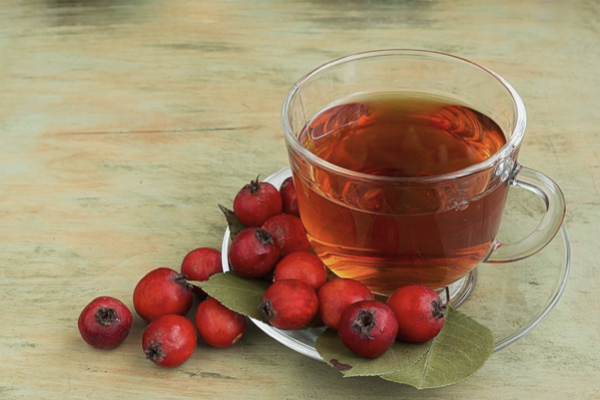
On the outside, hawthorn looks like your average, slightly scruffy hedgerow resident. It’s the sort of plant that wouldn’t be caught dead trending on TikTok, let alone headlining a health summit.
But inside?
Inside, hawthorn is doing pilates for your heart, journaling about its feelings, and quietly being the underrated cardiologist of the botanical world.
Hawthorn Deserves a Nobel Prize
Known to her friends as May, thornapple, or “that scratchy bush by the lane,” hawthorn (Crataegus monogyna) has been tending to tickers since the medieval days when leeching was still considered a viable treatment plan and people thought bathing annually was overkill.
While everyone else was waving herbs around to banish spirits, hawthorn was already working on nitric oxide pathways.
Honestly, she deserves a Nobel Prize.
Has Improved Symptoms of Mild Heart Failure
Let’s start with her clinical resumé. According to a rather serious and impressive paper in the Journal of Evidence-Based Complementary & Alternative Medicine, hawthorn extract, particularly in doses of 160–1200 mg per day for 8–16 weeks, has been shown to improve symptoms of mild heart failure.
It works by dilating coronary arteries, enhancing blood flow, and improving oxygen use. No drama, just good science.
Apparently, hawthorn increases nitric oxide (not to be confused with the stuff that gives you a squeaky laugh at the dentist) and prostacyclin, a compound that relaxes blood vessels with the poise of a seasoned yoga instructor.
But hawthorn is more than a glorified plant-based beta-blocker.
She’s got myth. She’s got folklore. She’s got feelings.
Hawthorn Was a Centrepiece of Beltane
For starters, hawthorn blooms around May 1st, hence the nickname “May,” and was the star of Beltane celebrations.
Maypoles? Yep, made from hawthorn.
Nothing says “joyous fertility festival” like dancing around a stick cut from a tree that might also lower your LDL cholesterol. (Multitasking queen.)
Now, here’s where it gets juicy.
According to lore, bringing hawthorn blossoms indoors is a one-way ticket to bad luck, or worse, a fairy-fuelled catastrophe.
People used to say it smelt like the Great Plague (it contains trimethylamine, the same compound released during tissue decomposition, which is not exactly Chanel No. 5).
Paradoxically, leaving hawthorn cuttings outside was said to protect your home from witches. So, it’s essentially the medieval equivalent of a Ring security system.
Just plant some hawthorn and sleep easy.
Symbol of Love, Loyalty—and Boundaries
And before you assume hawthorn was only into warding off hexes and handling hypertension, let me introduce you to her softer side.
The Mayflower, the ship, was named after hawthorn, symbolising hope and new beginnings.
In Roman times, the tree was associated with love, marriage, and fidelity. It’s appeared in wedding garlands, fertility charms, and, slightly less sexily, as boundary hedges.
Speaking of boundaries, hawthorn’s thorns are sharp. She doesn’t mess around.
She’s the plant equivalent of a woman who gives warm hugs but also owns a taser.
That’s probably why she’s so good for heartbreak, literal and emotional.
Herbalists like Easley and Horne (2016) describe hawthorn as both a cardiovascular tonic and an emotional ally.
Feeling frayed after a breakup or a bout of grief? Hawthorn is your girl.
She’s been called the plant that “hugs your heart,” not a bear hug, mind you, but a comforting, slightly sassy squeeze of a good friend who also makes a mean gin and tonic.
Filled with Flavonoids and Antioxidants
She’s loaded with flavonoids and antioxidants (Tilgner, 2009), making her not just medicinal but, dare I say, glow-inducing.
Her berries are full of vitamin C. Use the berries, flowers, and leaves in a tea, and you’ve basically got a brew that says “there, there” to your arteries while gently patting your nervous system on the back.
Chinese medicine, Native American remedies, and European herbalists have all praised hawthorn for its cardiovascular gifts.
The Germans, never ones to hand out praise lightly, even had their own approved hawthorn for stages I and II heart failure. (That’s like getting five stars from a Michelin inspector wearing a lab coat.)
Modern studies support all this with real data.
For instance, hawthorn’s bioactive compounds, like proanthocyanidins and flavonoids, support blood pressure regulation and reduce oxidative stress.
In one study, hawthorn extract caused early vasodilation in rat hearts. It even outperformed some vasoactive drugs, which, frankly, is the plant equivalent of showing up at a cardiology conference and mic-dropping a bunch of berries.
Also Eases Digestion
And if that wasn’t enough, it’s also a mild digestive aid. Taken as a cordial after meals, hawthorn helps with bloating and indigestion, proving once again that she’s the friend who brings a hot water bottle, tissues, and snacks when you’re PMS-ing and emotional over literally nothing.
But a quick note of caution, if you’re on heart medications or have congestive heart failure, hawthorn might clash with your prescription drama. Always check with your GP or cardiologist. Preferably one who’s not suspicious of nature and thinks parsley is just for garnish.
In conclusion, hawthorn might not have the star power of ginseng or the influencer swagger of ashwagandha, but she’s been quietly healing hearts, both physical and emotional, for centuries.
Hawthorn is the quiet cardiologist you never knew you needed, but who’s been watching over your heart all along.
Views expressed in this article are the opinions of the author and do not necessarily reflect the views of The Epoch Times. Epoch Health welcomes professional discussion and friendly debate. To submit an opinion piece, please follow these guidelines and submit through our form here.