
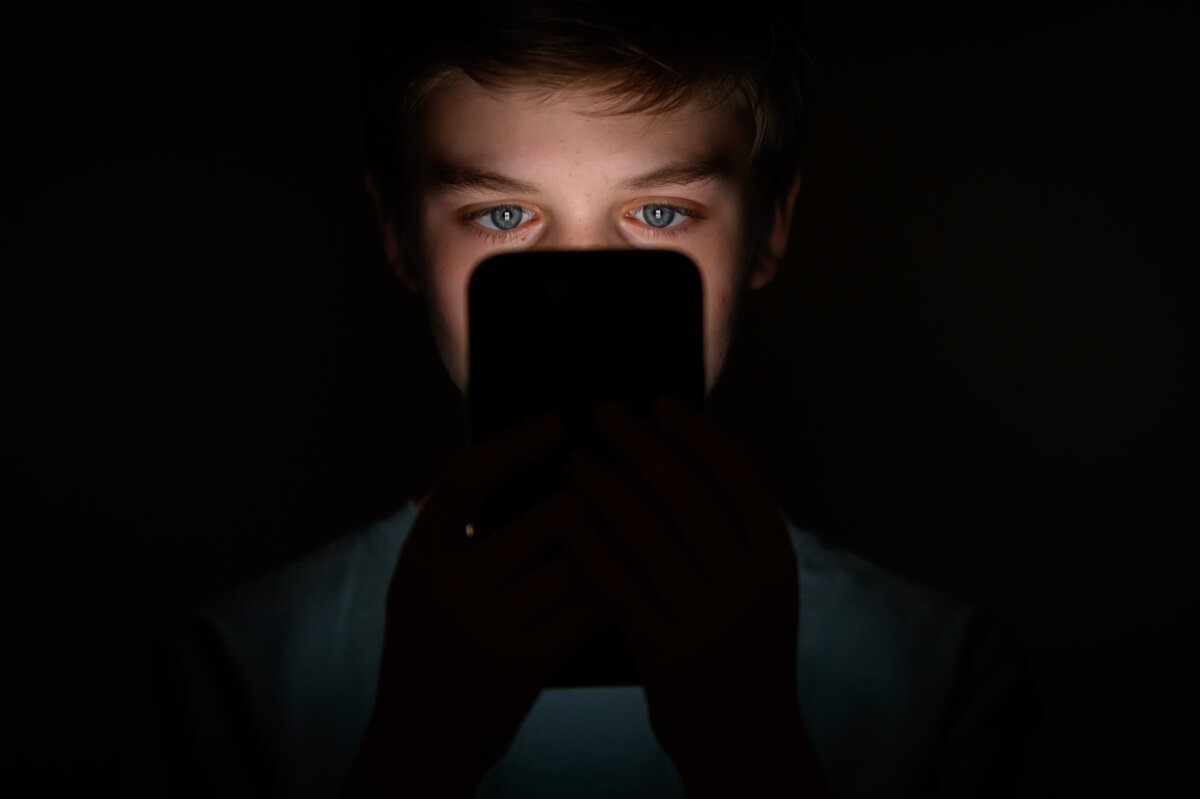
Imagine a world where a distressed teen wakes up in the middle of the night and opens an app on her phone to talk about the pain of not fitting in at school or missing her friends after moving to a new city.
This is the new Big Tech solution for the youth mental health crisis: therapy with a chatbot available at every child’s fingertips via a smartphone. With artificial intelligence (AI) infiltrating mental health care, all it takes is a simple Google search to yield the illusion of connection.
“Small chats for big feelings,” advertises Woebot for Adolescents, an AI chatbot that is “always ready to listen” and available “anytime, day or night.” Yet some experts argue that the promise of having a therapist in every teen’s pocket is the opposite of what kids really need: genuine human connection.
“They’re longing to feel like they belong,” licensed therapist Pamela Garfield-Jaeger, author of “A Practical Response to Gender Distress,” told The Epoch Times. “That’s what teenagers want more than anything.”
Endless Connections, No True Belonging
Silicon Valley is often accused of exacerbating the youth mental health crisis with addictive social media and gaming apps.
Last year, the U.S. Surgeon General issued an advisory stating that the risk of depression and anxiety is doubled for children and adolescents who spend more than three hours a day on social media.
While clinicians also cite other contributing factors, including social isolation and lack of independence, many agree that screen-addled teens struggle the most with loneliness and mental health.
“Kids these days need to learn how to unplug and be outside and away from their devices,” Ms. Garfield-Jaeger said.
Many people come to therapy because of issues with relationships, and “they need an empathetic relationship with another human,” she said.
According to Woebot Health’s website, more than 80 percent of the messages from teens to Woebot are received outside of typical provider hours “when no other care is available.” Many of these texts come in between 3 a.m. and 5 a.m.
Psychologist Alison Darcy, founder and president of Woebot Health, created the AI chatbot in 2017 with youth in mind. She recently told “60 Minutes” that Woebot employs cognitive behavioral therapy techniques to help users reframe thoughts.
According to Ms. Darcy, the app delivers the same statements that a real therapist would and can have therapeutic conversations. However, it cannot feel empathy or understand a person’s unique situation.
After the COVID-19 pandemic hit, school districts across the country began recommending the free Woebot app to help teens cope. At the same time, Wysa, another AI-powered mental health therapy app, developed a “COVID Anxiety” chatbot to help teens cope with the unprecedented stress.
Overhasty Diagnoses Pathologize Normal Growing Pains
Wysa CEO and founder Jo Aggarwal presented the company’s AI-based mental health platform at the 2023 World Economic Forum summit in Davos, Switzerland.
“Teenagers have been our first cohort,” Ms. Aggarwal said. About 30 percent of Wysa’s users are between the ages of 13 and 25, she said.
Wysa’s research found that more than 80 percent of teenagers are experiencing mental health challenges, with one in three needing professional support. These findings are comparable to the National Health Interview Survey–Teen, which directly interviewed U.S. adolescents ages 12 to 17 and found that nearly one in five experienced symptoms of anxiety or depression.
“But most worryingly,” according to Wysa’s website, “young people aren’t getting the help that they need. More than half (55%) who scored 3 or more on GAD2 and PHQ2 screening questionnaires for anxiety and depression haven’t spoken to a relevant professional about it.”
The two-item generalized anxiety disorder questionnaire (GAD-2) and the two-item patient health questionnaire (PHQ-2) are brief screening tools used to quickly assess anxiety and depression, respectively.
“Depending on how the person interprets those questions, everybody could be depressed,” Ms. Garfield-Jaeger said. “Real depression assessment used to take a couple of sessions with a mental health professional or at least several hours.
“I think a lot of people are being diagnosed with depression, anxiety, who do not have it.
“I do think that more people are anxious and depressed because of social isolation and other reasons.”
Author Abigail Shrier examined this issue in her book “Bad Therapy” and concluded that diagnoses are being made carelessly and treatments that “affirm all feelings” are also being dispensed freely.
“We used to call that validating,” Ms. Garfield-Jaeger, who worked for more than a decade at a partial hospitalization program with young people struggling with severe mental illness, said.
“So we would say, we validate your feeling, but that doesn’t mean your feeling is reality. It means you feel it, and now we need to investigate and do some—what they call—reality testing.”
Ms. Shrier’s investigation also concluded that kids are often treated for what was once considered “normal growing pains.”
This invites parents to ask questions about the therapeutic assessments and the language used to train the AI algorithms. Further, there are other risks and limitations for parents to consider.
AI Chatbots as Teen Therapists: The Issues
Emotional Dependence
When chatbots give advice that would otherwise come from a caring parent or empathetic counselor, teens are more likely to humanize the chatbot and establish an emotional bond.
“We anthropomorphize because we do not want to be alone,” technology and culture writer L.M. Sacasas writes in his newsletter “The Convivial Society.” “Now we have powerful technologies, which appear to be finely calibrated to exploit this core human desire.”
Ms. Garfield-Jaeger said she sees this as creating a wedge between the people in one’s life.
“Now they want to talk to their ‘therapist’ as opposed to talking to friends, and their parents and their cousins and their aunts and uncles and their grandma, the way we used to do,” she said.
Harmful Responses
Earlier in 2024, a concerned user with an eating disorder contacted the National Eating Disorders Association (NEDA) after receiving harmful dieting advice.
The chatbot “may have given information that was harmful and unrelated to the program,” NEDA posted on its Instagram page.
NEDA removed the AI chatbot that had already replaced its human counselors on its helpline.
Exploiting Private Data
Therapeutic wellness apps do not fall under federal privacy rules and, in some cases, share data with third parties such as Facebook. However, some companies, such as Wysa and Woebot Health, follow “hospital-grade” security protocols and do not share or sell data with third parties.
The 2023 Pew research report “How Americans View Data Privacy” found that among those familiar with AI, about 70 percent have little to no confidence in companies’ ability to make responsible decisions regarding its use in their products. The research suggests that patients may worry that it’s used for targeted ads, tracking, or other nefarious purposes.
Understanding Limitations
In the context of self-help, simple self-soothing exercises and stress management tips similar to those available on most mindfulness apps can be useful in a moment of stress.
But for those who are lonely, hungry for connection, and struggling—the very people who the creators of the chatbots believe can get the most use out of them—AI can be a dangerous substitute for a human, Ms. Garfield-Jaeger said.
“I think it is bad to not have humans involved,” she said, “because once you start dealing with feelings, there needs to be a human to de-escalate you, or help if you do start having suicidal ideations. That’s dangerous.”