
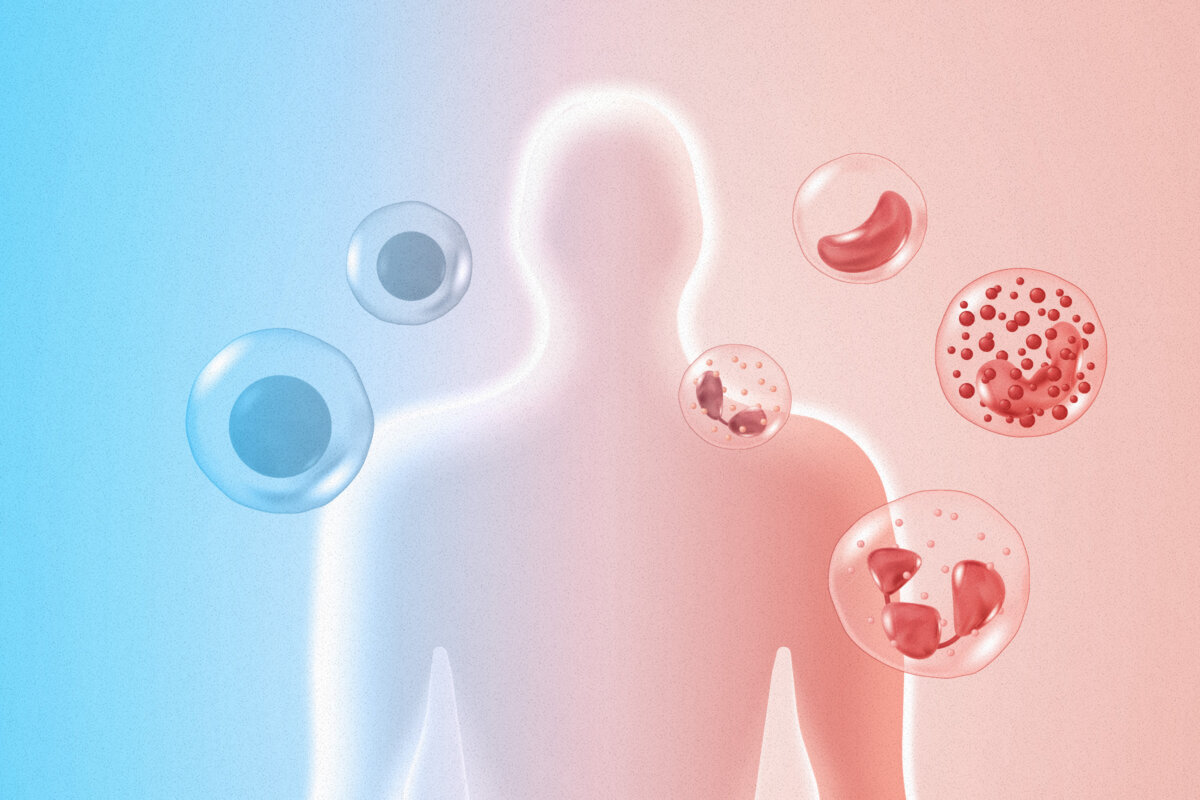
For most of the 20th century, scientists pictured the immune system as the body’s ever-vigilant army—standing guard against germs, viruses, and rogue cells. Yet one question remained: What keeps this army from mistakenly attacking the body itself?
For millions with autoimmune and inflammatory diseases such as Type 1 diabetes or lupus, the question is personal—these life-long illnesses bring painful symptoms and harsh immune-suppressing treatments.
This year’s Nobel Prize in physiology or medicine honored the discoveries that transformed that understanding. Researchers Mary E. Brunkow, Fred Ramsdell, and Shimon Sakaguchi identified a rare class of immune cells—regulatory T cells, or Tregs. These cells help prevent our immune systems from going out of control through a specialized gene called FOXP3. Often called peacekeepers, these Tregs changed how scientists think about autoimmunity, inflammation, and balance in the immune system itself.
“It [the Nobel award announcement] gave me goosebumps,” immunologist Anuradha Ray, remembering a recent conference in which she sat beside Sakaguchi, told The Epoch Times. “This discovery has shaped the way we think about immune balance—and what happens when that balance breaks down.”
The path to this breakthrough wound through decades of controversy—and nearly disappeared amid skepticism.
The Paper That Changed Everything
Thirty years ago, Sakaguchi published a paper that challenged long-standing beliefs about the immune system. For decades, many scientists had dismissed the idea that certain immune cells could actively stop the immune system from attacking the body. Some early studies in the 1970s hinted at this, but the results were inconsistent—and the idea of “suppressor” T cells fell out of favor.
“There was a lot of skepticism in the 1990s,” Dr. Ethan Shevach, an immunologist and scientist emeritus at the National Institutes of Health who helped validate Sakaguchi’s findings, told The Epoch Times. “The whole concept of suppressor T cells had been under a cloud.”
What made Sakaguchi’s findings different was that he pinpointed a way to identify these mysterious cells. He found they carried a specific marker on their surface called CD25—a kind of biological flag that made the cells easier to detect and study. Shevach, intrigued, repeated the experiments in his own lab at the NIH.
“The data was solid,” he said. “It helped convince a lot of people, including me, that this was real.”
Sakaguchi’s findings nudged the field forward. Many still questioned whether these were truly a unique class of cells—or just ordinary T cells behaving differently under certain conditions.
Researchers had to prove these cells weren’t just active—they were specialized. The search turned to what made them work.
Mice, Mutation, and a Missing Gene
In the years that followed, researchers began investigating a number of conditions linked to regulatory T cells gone wrong. One early clue came from a strain of lab mice known as “scurfy mice,” which developed severe, often fatal inflammation. The mice had scaly skin, pink eyes, muscle wasting, and organ damage.
At the same time, a similar condition was observed in children, called IPEX syndrome—short for immune dysregulation, polyendocrinopathy, enteropathy, X-linked. Like the mice, these children experienced severe autoimmune reactions, with their own immune systems attacking healthy organs throughout the body.
As it turned out, in both the mice and the children, their Treg cells had a defective FOXP3 gene. Active only in Treg cells, FOXP3 acts like a master gene—the gene at the top of the command chain.
In 2001, Brunkow, one of the 2025 Nobel laureates, then working at Immunex Corporation, pinpointed FOXP3 as the defect in the sick mice. Soon after, Ramsdell, the other laureate, working independently at Celltech, connected the gene to identical symptoms in children with IPEX.
In healthy Treg cells, FOXP3 acts like a master switch, increasing the production of more Treg cells. When this gene becomes defective, Treg cells fail to form or function properly—and the immune system spins out of control.
Identifying this FOXP3 did more than explain these two rare but deadly diseases—it also proved that Tregs form their own class of cells.
“What convinced people most—and what the people who got the Nobel Prize did,” Shevach said, “is they defined a transcription factor called FOXP3, which is basically specific for these [Treg] cells.”
By 2003, Sakaguchi’s group had confirmed that FOXP3 was the key to the suppressive function of regulatory T cells, cementing its role as the genetic and functional signature of these long-suspected peacekeepers.
That revelation delivered the missing link. With FOXP3, these cells know how to do their job and when to stand down. Without it, these peacekeepers never form, and the immune system can spiral out of control—“friendly fire” goes unchecked.
Twenty years later, the three researchers’ discoveries have stood the test of time.
The 2025 Nobel Prize marked this shift—recognizing discoveries that moved Tregs from controversy to the heart of promising therapies for autoimmunity, cancer, and transplants.
The Balancing Act
Most immune cells act like soldiers, attacking germs, viruses, or anything the body sees as foreign or dangerous. However, regulatory T cells, or Tregs, turn off the immune response.
Although tiny in number, Tregs sit at the helm of the immune cell hierarchy.
When Tregs fail or go missing, chaos follows. The immune system attacks healthy tissue, triggering autoimmune diseases such as Type 1 diabetes, colitis, psoriasis, or rheumatoid arthritis. Transplant patients risk rejecting donor organs. In rare cases such as IPEX syndrome, children face life-threatening inflammation within their first two years.
However, the flip side is just as serious. Tumors sometimes exploit Tregs, co-opting these peacekeepers to hide from an immune attack.
“The same cells that protect us from autoimmunity can also protect cancer,” said Shevach, who is widely recognized for his pioneering work on regulatory T cells and immune tolerance.
“Therapeutic targeting really is a balancing act,” he said. “You want to adjust the system, not break it.”
Retraining the Immune System
In autoimmune conditions, in which the immune system attacks healthy tissues, early clinical trials are testing ways to expand Tregs in the body.
In mouse models, boosting the number or function of Treg cells has led to reduced autoimmune inflammation and better control of disease symptoms.
“We’ve shown how powerful Tregs can be in mouse models,” said Ray, a professor of immunology at the University of Pittsburgh whose lab is pioneering Treg-based therapies for asthma and chronic inflammation. “But taking that to actual human treatment is quite another thing.”
Clinical trials for Type 1 diabetes and graft-versus-host disease have shown early promise, with some patients seeing more immune peacekeeper cells and milder symptoms, though these treatments are still being studied and are not a cure.
Ray’s lab and others continue to push for more targeted therapies—engineering cells designed to target only the specific proteins driving a patient’s disease. This precision could help suppress harmful immune responses without weakening the entire immune system.
“The goal is to make Tregs smarter—more directed, more effective,” Ray said.
Additionally, emerging tools such as CAR-Treg therapy—which involves taking a patient’s own Tregs, modifying them, and then infusing them back into the body—work similarly to retrain the immune system with more precision.
“Most people diagnosed with autoimmunity are teenagers or young adults, and their treatments often last a lifetime,” Shevach said. “So you have to be very careful testing new therapies—you don’t want to cause more harm than good.”
In cancer, researchers take the opposite tack, developing strategies to reduce or disable Tregs that shield tumors, sometimes combining new approaches with checkpoint inhibitors to boost immune attack.
“This is the era of precision medicine,” Ray said. “I do have hope, we’re getting closer to treating the problem—without trading one burden for another.”
Outside of precision medicine and drug-based therapies, clinical trials suggest that certain lifestyle factors may also help support Treg health.
Supplementing with vitamin D has been shown to increase Treg percentages in healthy people as well as increase suppressive activity in patients with Type 1 diabetes. Similarly, an animal study has found that aerobic exercise increases Treg levels. In another animal cancer study, caloric restriction reduced Treg activity in tumors—a change that may help prevent tumor growth.
For patients weary of broad immunosuppression, that promise is a beacon: Real healing may come not from fighting harder, but from teaching the immune system when to stand down.
The discovery of Tregs opened the door to a new understanding. Now, medicine is learning how to walk through it.