

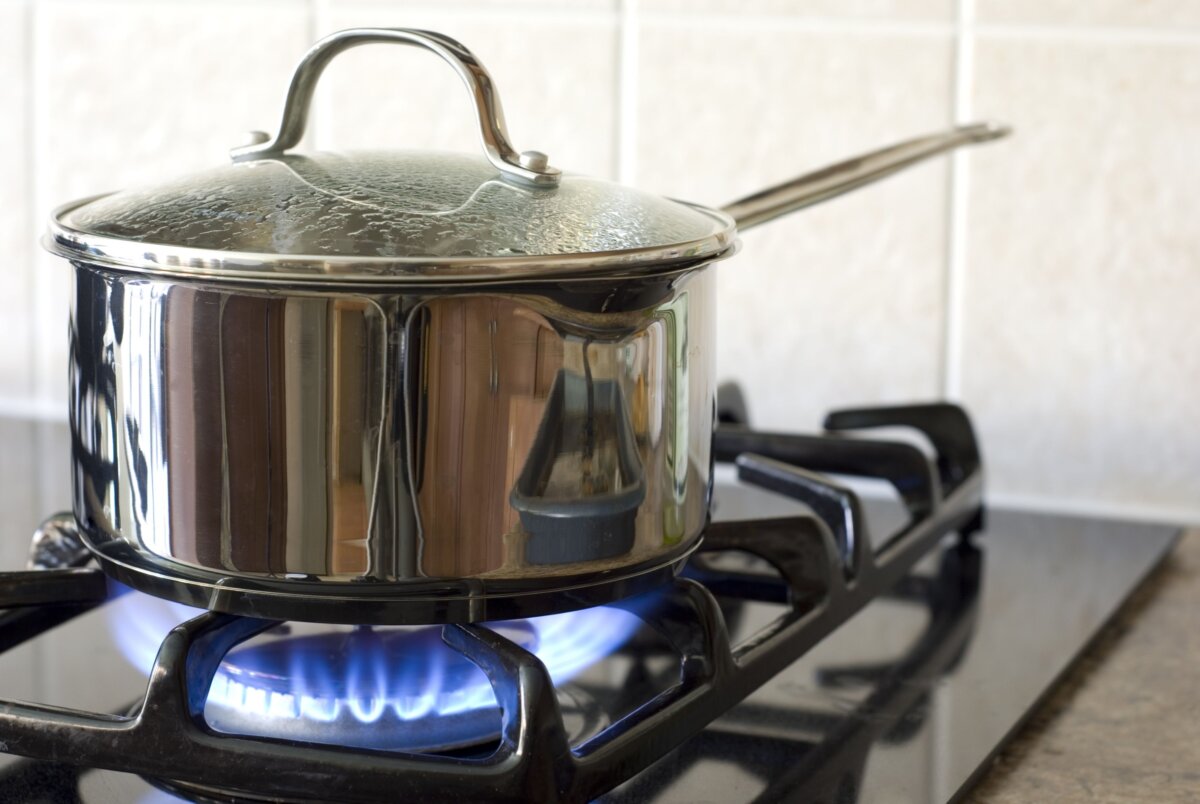
A study published in Science Advances (SA) in May found that households with gas or propane stoves have unhealthy levels of the pollutant nitrogen dioxide (NO2), which can intensify asthma attacks. The concentrations may extend to distant bedrooms and linger for hours even after turning off the stove.
“I didn’t expect to see pollutant concentrations breach health benchmarks in bedrooms within an hour of gas stove use, and stay there for hours after the stove is turned off,” senior author Rob Jackson, a professor at the Stanford Doerr School of Sustainability said in a press release. “Pollution from gas and propane stoves isn’t just an issue for cooks or people in the kitchen. It’s the whole family’s problem.”
Exposure Is Cause for Concern
The level of exposure appears quite significant and a cause for concern, according to the SA study authors. “Short-term NO2 exposure from typical gas stove use frequently exceeds both World Health Organization and U.S. Environmental Protection Agency [EPA] benchmarks,” they said.
Data analysis indicated that typical use of a gas or propane stove raises NO2 exposure to 4 parts per billion each year. This is 75 percent of the concentration that the World Health Organization has deemed unsafe in outdoor air.
“That’s excluding all outdoor sources combined, so it makes it much more likely you’re going to exceed the limit,” said lead study author Yannai Kashtan in the press release. (Since road traffic is a source of outdoor NO2, the addition of indoor concentrations from stoves may result in people receiving unsafe levels of exposure.)
The authors estimated that high NO2 levels from gas stoves underlie 50,000 current cases of childhood asthma and contribute to up to 19,000 adult deaths per year. However, because the stoves emit harmful chemicals in addition to NO2, the number of current childhood cases of asthma due to the emissions is likely closer to 200,000.
The SA study concurs with earlier research, which indicates that gas stoves emit high NO2 levels. A 2022 policy statement by the American Public Health Association noted that multiple high-quality scientific studies have found that NO2 concentrations are elevated in homes with gas stoves and that use of them without ventilation can result in NO2 levels that exceed Environmental Protection Agency (EPA) standards.
“Furthermore, epidemiological studies have shown that gas stoves are associated with an increased risk of asthma in children as well as more severe asthma symptoms,” added the statement.
Health Effects of NO2
In addition to intensifying asthma, exposure to high NO2 levels has been associated with reduced lung development in children, noted the press release.
NO2 is an irritant that affects the mucosa of the eye, throat, nose, and respiratory tract. Continued exposure to high levels contributes to chronic bronchitis.
Exposure to low NO2 levels can reduce lung function in people who have chronic obstructive pulmonary disease (COPD). It may also increase the risk of respiratory infections, particularly in children.
Other Pollutants From Gas Stoves
Gas and propane stoves also emit benzene, carbon monoxide, formaldehyde, and ultrafine particles, all of which are associated with health conditions beyond asthma. Because of these additional pollutants, the SA study stated that “estimates of disease burden and societal cost almost certainly underestimate the full health consequences of gas and propane stoves.”
The investigation focused on NO2 because all gas stoves consistently emit high levels, whereas emissions of the other chemicals vary.
“NO2 is dangerous because of its health effects and because it forms predictably in gas flames—as a direct proportion of the amount of gas burned,” Jackson told The Epoch Times in an email.
“Benzene is a carcinogen, and in a 2023 study we found dangerous levels of benzene in kitchens and bedrooms. However, benzene forms less predictably than NO2. If you have a high-emitting stove for benzene, it will be more dangerous to your health than NO2. That said, everyone has a high-emitting stove for NO2 if they burn a lot of gas,” he said.
Factors Affecting Exposure
The SA study found the following factors influence exposure:
1. Behaviors
The biggest exposure determinator is duration and intensity of use, which includes total burner minutes and total oven minutes. Exposure was directly proportional to duration, as the longer the use, the greater the NO2 concentrations.
Secondly, an outside venting hood lowered NO2 levels in some homes, but it was ineffective in others. Such hoods reduced NO2 concentrations between 10 and 70 percent. This finding is consistent with prior research, such as a 2012 study, that discovered most outside venting hoods in homes have a capture efficiency well below 70 percent.
Additionally, people who do not have an outside venting hood or do not use them have 25 percent more long-term exposure to NO2 than average. In contrast, those with a 75 percent capture efficiency outside-venting hood and who use it every time they cook have a 70 percent reduced long-term exposure than average.
Natural ventilation also plays a role. Individuals who leave their windows closed have nine times the long-term exposure of those who keep their windows open. Conversely, opening a window was much less beneficial for lowering short-term exposure.
2. Residence Size
The smaller the residence, the greater the exposure. People living in residences smaller than 800 square feet had four times the long-term NO2 exposure as those living in residences larger than 3000 square feet. A small, two-bedroom apartment is about 800 square feet.
3. Race
American Indian/Alaskan native households had 60 percent more exposure, while Hispanic/Latino and black households had 20 percent more. White households had the lowest exposure. The ethnic disparities primarily stem from differences in residence sizes.
“People in poorer communities can’t always afford to change their appliances, or perhaps they rent and can’t replace appliances because they don’t own them,” Jackson said in the press release. “People in smaller homes are also breathing more pollution for the same stove use.”
Gas Industry Response and Rebuttal From SA Study
The American Gas Association (AGA) responded to the SA study on their website.
“Despite the impressive names on this study, the data presented here clearly does not support any linkages between gas stoves and childhood asthma or adult mortality,” said AGA President and chief executive officer Karen Harber.
“The two major cited studies used to underpin the Stanford analysis directly contradict the conclusions they have presented. In short, the interpretation of results by Kashtan et al. is misleading and unsupported.”
In rebuttal to this statement, Jackson pointed out that 50 years of research have established that NO2 causes asthma, so it should not be controversial that NO2 coming from gas stoves causes asthma, too.
He noted the stance on NO2 from two oversight agencies. The EPA states that NO2 from gas appliances is linked to asthma and other health harms, while the American Lung Association warns that it causes an array of harmful effects on the lungs, including increased asthma attacks.
“We used three meta-analyses in our research, all three of which support our findings,” said Jackson. “The two studies we cite to support our estimates of pediatric asthma are meta-analyses from 2013 and 2024.”
The 2013 research determined that children who grow up with gas stoves are 32 percent more likely to develop asthma than those who do not, he continued. The 2024 investigation found a positive association between gas stoves and pediatric asthma, although it was a smaller increase of 9 percent on average. “We note that a 9 percent increase would affect millions of people in the United States,” said Jackson.
How to Reduce Risk
The EPA recommends installing and using an exhaust fan vented outdoors for gas stoves to reduce the NO2 exposure. However, the SA study noted that the capture efficiency of these devices is unreliable.
While the authors found that keeping the windows open all the time can reduce exposure, this measure is unfeasible in many parts of the country during hot and cold weather.
Can air purifiers help? Jackson explained that most air purifiers do not work for molecular pollutants, such as benzene, carbon monoxide, and NO2. They are designed to remove physical particles rather than individual gases.
Since the above measures have drawbacks that include unreliability, unfeasibility, and ineffectiveness, Jackson recommended replacing a gas stove with an electric one. This is the best solution because it eliminates the primary source of exposure.
“For people who have children with asthma or for an adult with COPD, I would unquestionably replace a gas stove with an electric one—assuming they can afford to do so,” he said.
“My son had asthma. I’ll never know whether his asthma was caused by our gas stove. Based on what I know now, I would never own a gas stove today.”
