

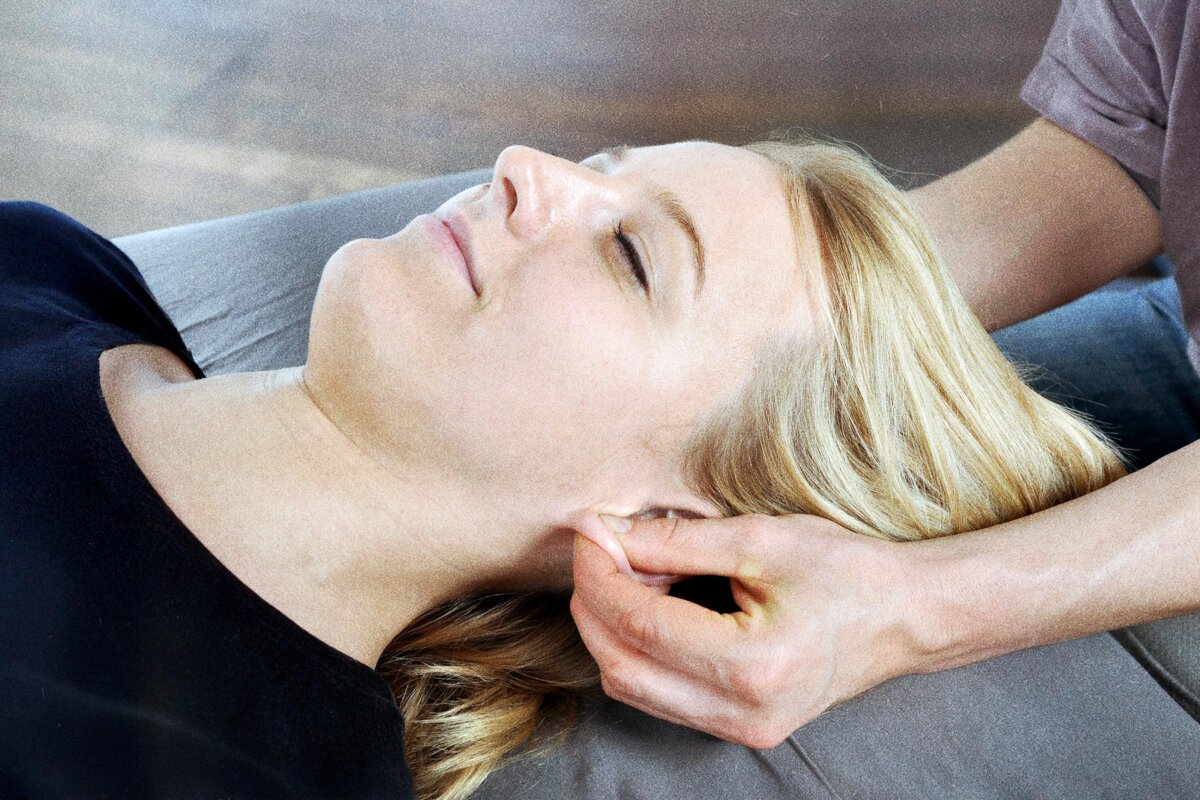
In traditional Chinese medicine (TCM), the ear is considered a microcosm of the human body, where each part corresponds to specific internal organs and bodily functions. Regular ear massage can help regulate internal organs and promote the smooth flow of vital energy, or “qi,” throughout the body.
In an episode of “Health 1+1,” Hung-Chien Wu, director of the E Sheng Chinese Medicine Clinic in Taiwan, shared the proper technique for ear massage. He suggested that practicing it for just three to five minutes a day can help support internal balance and overall well-being.
Wu said that the body’s energy pathways, called meridians, are closely connected to the ears. As such, massaging the ears is believed to stimulate them, improving blood circulation and enhancing immune function.
TCM also holds that “the kidneys open into the ears,” meaning that an ear massage is closely linked to kidney health. Wu said that the concept of the kidneys in TCM differs from the anatomical kidneys recognized in conventional medicine. In TCM, the kidneys represent a broader energy system that includes the bones, bone marrow, ears, pupils, and urinary and reproductive systems—including the bladder, urethra, ureters, and kidneys—as well as sexual function.
The Ear as an Indicator of Health
Since the ears are closely connected to the body’s internal organs, changes in their appearance may reflect underlying health conditions. Examples include:
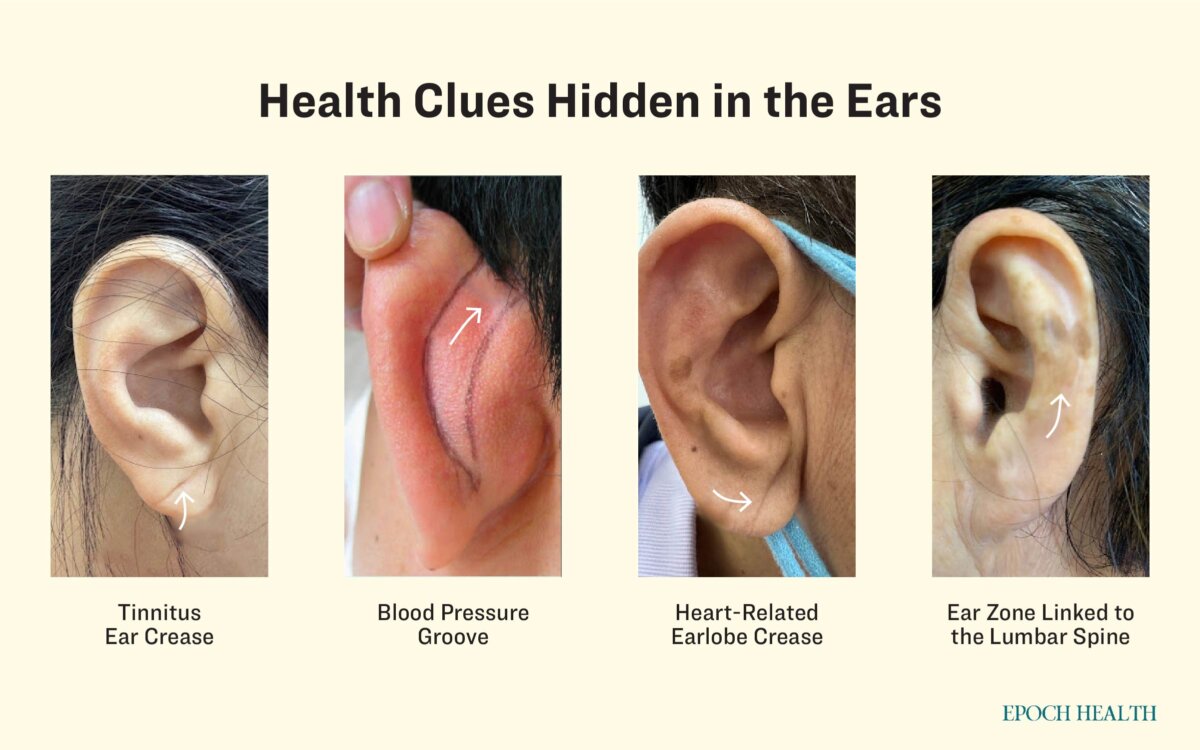
- Tinnitus Ear Crease: A horizontal line just below the earlobe, often seen in people with tinnitus or age-related hearing decline.
- Blood Pressure Groove: A groove behind the ear with two or three darkened blood vessels, often present in people with high blood pressure. Pressing this area is believed to help manage hypertension.
- Heart Groove/Stress Groove: A vertical or diagonal crease on the earlobe sometimes associated with heart rhythm disorders, coronary heart disease, or chronic stress.
- Discolored or Uneven Ear Region: A change in color or texture in the middle to upper part of the outer ear, which corresponds to the lumbar spine, often seen in people with lower back problems.
The Body’s Connection to the Ear in TCM
In TCM, the ear is considered a microcosm of the human body, with its structure resembling an inverted fetus. According to Wu, specific parts of the ear are believed to correspond to different regions of the body.
The earlobe is associated with the head and face, while the concha (the central hollow) relates to the chest cavity, including the heart and lungs. The cymba conchae, located just above the concha, corresponds to the abdominal cavity, and the triangular fossa, a small depression, is linked to the pelvic cavity.
The inner curved ridge of the ear, known as the antihelix, corresponds to the spine. The scapha, the groove between the outer rim (helix) and the antihelix, is associated with the hands, while the superior and inferior crura of the antihelix (the upper and lower legs of the ridge) correspond to the feet. This mapping forms the basis for various ear-based therapies in TCM, as stimulating these points is believed to influence the corresponding body parts and internal organs.
Ear Acupressure for Common Health Conditions
Ear acupressure is a widely used TCM technique that involves stimulating specific points on the ear to address various health concerns.
Insomnia
In TCM, specific points on the ear are often stimulated to help manage insomnia. Key areas include the liver zone (located on the cymba conchae), the heart zone (on the cavum conchae), and the “shenmen” acupoint (in the triangular fossa).
A randomized controlled trial found that breast cancer patients with insomnia experienced significant improvements in sleep quality, anxiety, and fatigue after five weeks of ear acupuncture. These effects were sustained for more than four months.
Wu emphasized that ear acupuncture should be performed by a licensed physician or acupuncturist. For those looking to support their health at home, he recommends consulting a professional to apply cowherb seeds to the ear acupoints associated with sleep. Gently massaging the seeds before bedtime may help promote relaxation and improve sleep quality.
Cowherb seeds, also known as Vaccaria seeds, are commonly used in ear acupressure because of their ideal size and nonirritating properties, making them safe for prolonged contact with the skin.
Obesity
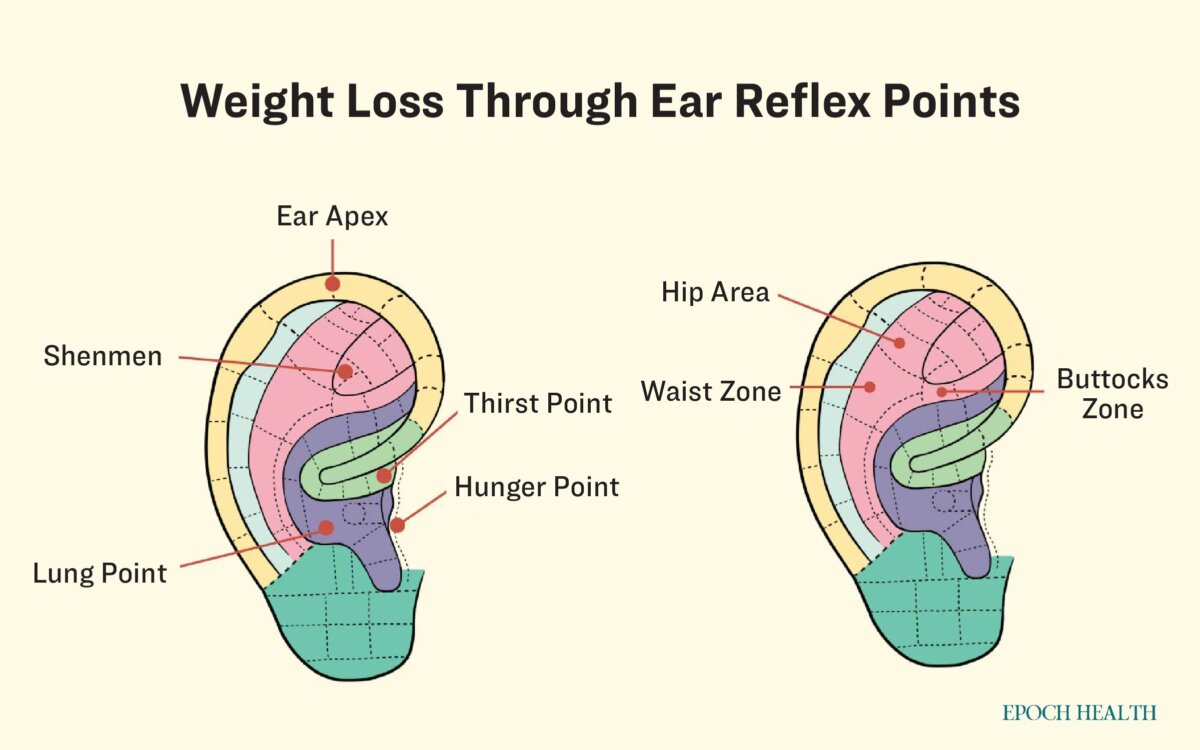
In TCM, ear acupressure is often used to help suppress appetite.
Practitioners commonly target the “hunger point” and “thirst point” on the ear. Additionally, the “lung point,” associated with the vagus nerve, is believed to help reduce cravings and addictive behaviors. The Shenmen acupoint is also used to calm the mind and regulate emotional stress.
Massaging these points, along with the “buttocks zone” and “waist zone” on the ear, can enhance results.
Ear massage is a simple and accessible method to curb appetite, Wu said. One easy technique involves placing the index finger inside the ear, gently pushing the tragus outward, and using the thumb to rub back and forth—stimulating the hunger and thirst points.
A 2024 systematic review showed that acupuncture and ear acupressure can support weight loss. Using plant seeds for self-acupressure was found to be even more effective than acupuncture. This may be because daily massage provides more consistent stimulation, leading to more sustained benefits over time.
Menstrual Pain
According to TCM, the liver meridian runs through the reproductive system. As such, stimulating the liver zone on the ear is considered particularly effective for relieving menstrual pain. Regular massage of this area supports overall well-being and helps reduce discomfort.
Simple and Effective Ear Massage Routine
Emperor Qianlong, the longest-living ruler in Chinese history, reigned for 60 years in the 1700s and lived to the age of 87. One of his daily wellness practices was ear massage.
For those looking to integrate this practice, Wu shared a daily self-care routine called the Eight Methods of Ear Massage. The steps are as follows:
- Front and Back: Rub your hands together to warm them, then place your palms on the front of your ears. Warm the area by moving your hands from front to back, then fold your ears forward and backward.
- Glide: Lightly glide your hands from the top of the ears down to the bottom. Use your palm to cover the ear and slowly slide downward.
- Knead: Use your thumb and index finger (or middle finger and thumb) to gently knead the ear without applying excessive pressure. Wu considers this the most effective technique.
- Pull: Gently pull on various parts of the ear, taking care not to apply too much force to prevent injury.
- Press Depressions: Press and massage the recessed areas of the ear, such as the concha, cymba conchae, and triangular fossa.
- Press Ridges: Press and massage the raised areas, including the earlobe, antihelix, and tragus.
- Back of Ear: Massage the back of the ear gently to finish the routine.
Wu also recommended a simple daily practice: Gently massage the entire ear using your index finger or thumb for three to five minutes, once in the morning and again at night.
After the massage, the ears often feel warm and relaxed, and it may even lead to drowsiness. Since several acupressure points on the ear are associated with sleep, ear massage is particularly beneficial before bedtime.
“Always remember—do not poke or pull your ears forcefully,” Wu said. “Treat your ears like a beloved pet: massage them gently and take good care of them.”
He also emphasized the need for caution when performing ear massage. If the ear is injured, it may lead to bacterial infection or swelling of nearby lymph nodes, and it might even affect the entire head. In such cases, urgent medical attention may be necessary. Since the ear is believed to correspond to internal organs, an ear injury may also affect internal health.