



For years, neuro-ophthalmologist Dr. Rani Banik woke up every morning to a stabbing pain behind her eye.
“Every single day felt like starting with an icepick in my head,” she said.
She had visited top headache specialists and tried every migraine drug available, but nothing worked. Then, in her early 40s, she discovered the power of nutrition and lifestyle changes. By altering her diet, taking targeted supplements, and managing stress, she finally regained control of her headaches.
Her professional and personal experience now shape how she treats patients. Migraines, dry eyes, and age-related vision problems might seem unrelated, but as Banik noted, they are often connected through shared pathways—and small everyday habits can make a big difference.
1 Nerve, Many Symptoms
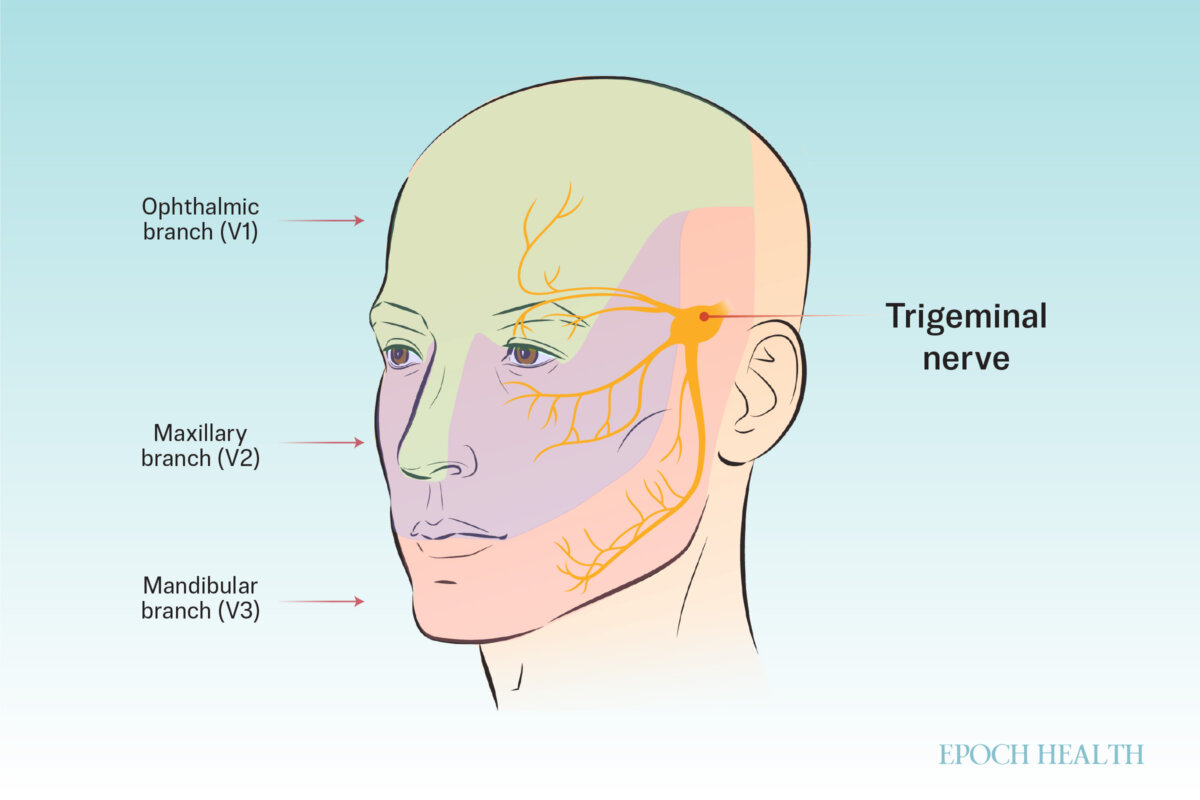
The key link between migraines, dry eye, and light sensitivity lies in the trigeminal nerve.
“They all link back to the same nerve that is somehow irritated,” Banik said.
When the trigeminal nerve becomes irritated, it can trigger pain, she added.
This nerve has three main branches—ophthalmic (V1), maxillary (V2), and mandibular (V3)—that extend across the face. These branches provide sensation to the forehead and eyes, cheeks, and jaw, respectively. When the corneal surface becomes dry, it irritates the nerve endings and sends signals to the brainstem. This not only causes discomfort but can also activate pain pathways linked to migraine and light sensitivity.
The Gut–Brain and Gut–Eye Connection
Beyond nerve pathways, the gut microbiome also plays a crucial role in migraine and dry eye susceptibility.
Banik said that when stress or other risk factors damage or increase intestinal permeability, microbial pathogens can enter the bloodstream and trigger systemic inflammation. This inflammation can exacerbate migraines through oxidative stress and neurogenic inflammation.
Systemic inflammation triggered by gut dysbiosis can influence immune responses that affect both the brain and the eye. At the ocular surface, this inflammation may disrupt tear film production or alter the local microbiota, contributing to dry eye disease.
To support gut health, she recommends incorporating probiotic-rich foods such as yogurt, kimchi, or sauerkraut into the diet. For a more potent boost, high-CFU, unsweetened probiotic supplements can help restore microbial balance and reduce inflammation—benefiting both eye and brain health.
Dry Eye Erosions
Dry eye is extremely widespread, and about 86 percent of cases are due to tears evaporating too quickly—a condition called evaporative dry eye. Tiny meibomian glands in the eyelids secrete a protective oil layer on top of the tear film. When they don’t function well, tears evaporate, leaving the cornea exposed and irritated.
The exposed cornea can cause microscopic erosions on the surface of the eye—small, pinpoint lesions invisible to the naked eye. These erosions can lead to serious eye problems if left untreated.
“When we examine patients under the microscope, we put a fluorescent dye in,” Banik said. “We can see these erosions; they look like tiny little dots on the surface of the cornea.”
These cells can regenerate, much like a small scrape on the skin, she added.
The Digital Screen Factor
Today’s heavy screen use intensifies dry eye. Clinical reviews indicate that up to 87.5 percent of office workers experience evaporative dry eye.
Banik said that prolonged screen time reduces blinking rates from a healthy 15 to 20 blinks per minute to as few as three, exacerbating disruption in tear film stability and dryness. Prolonged screen exposure can worsen both migraines and dry eyes by increasing sensitivity to blue light and reducing the frequency of blinking.
Inflammation is another factor tied to prolonged screen use.
“The glands can get inflamed, the cornea itself can get inflamed, and the eyelid margins can get inflamed as well,” she said.
Protect Against Ultraviolet Light
Compared with blue light, ultraviolet (UV) rays can cause more serious damage to the eyes. While blue light from digital screens mainly contributes to eye strain and discomfort, UV rays penetrate deeper into ocular tissues.
Prolonged sun exposure can cause oxidative stress, contributing to surface burns, growths on the white part of the eye, cataracts, and possibly macular degeneration. Macular degeneration affects the macula—or the central part of the retina—which provides sharp, central vision.
Macular degeneration often develops insidiously. Early signs include:
- Difficulty seeing in low light or at night
- Reduced contrast sensitivity
- Wavy or distorted lines
Anyone experiencing these symptoms should get an eye exam promptly.
“Once there’s scarring in advanced AMD [age-related macular degeneration], we can’t reverse it,” Banik said. “But in early stages, there’s a lot we can do.”
She likens the slow degeneration of eye tissues to “biological rusting.”
“It doesn’t matter how expensive the sunglasses are,” she said. “As long as it has the sticker that says 100 percent UV blocking, it’s doing the job.”
She recommends:
- Wearing UV400 sunglasses (blocking wavelengths less than or equal to 400 nanometers)
- Prioritizing UV labeling over price
- Wearing sunglasses between 10 a.m. and 2 p.m. on bright days
Everyday Strategies for Dry Eye Relief
Banik recommends simple, practical steps to ease symptoms and improve daily comfort:
- 20-20-20 Rule: Every 20 minutes, take a 20-second break and look at something 20 feet away.
- Desk Humidifier: Maintain moisture in the air to prevent tear evaporation.
- Avoid Fans and Ventilation: Direct airflow can dry out eyes.
- Screen Positioning: Place screens at or below eye level to reduce strain.
- Blue Light Filters: Use apps or glasses to minimize blue light exposure.
Feed Your Eyes
The macula, a small area in the retina, is rich in protective carotenoids such as lutein, zeaxanthin, and meso-zeaxanthin. These pigments act like “internal sunglasses,” absorbing blue and UV light while supporting central vision. Because the body can’t make these nutrients, diet is essential.
Nutritional deficiencies, particularly low omega-3 intake, may also worsen dry eye.
Banik emphasizes a nutrient-rich approach with more than 30 key nutrients—including omega-3s, B vitamins, and antioxidants. Top food sources include:
- Leafy Greens: Spinach, kale, collards, and arugula are rich sources of lutein and zeaxanthin.
- Yellow or Orange Foods: Egg yolks, corn, peaches, and bell peppers are rich in carotenoids.
- Beta-Carotene: Carrots support night vision and relieve dry eye.
She suggests pairing these foods with healthy fats such as olive oil or butter to boost absorption. She also encourages people to follow what she calls the “Rule of 21”: Try to eat 21 different colors of fruits and vegetables each week.
“The more color, the better,” she said. “You don’t need to memorize every nutrient—just eat the rainbow.”
The Age-Related Eye Disease Study demonstrated that a supplement with vitamins C and E, beta-carotene, zinc, and copper reduced the risk of age-related eye disease or age-related macular degeneration (AMD) progression by 25 percent. However, Banik emphasizes that supplements aren’t the whole story. Lifestyle factors such as smoking cessation, physical activity, maintaining a healthy weight, and a plant-rich diet are equally essential for protecting vision.
“Your macula already has blue-light filters—feed them,” Banik said. “Supplements can support, but daily habits can transform.”
Bob’s Story: Preventing Vision Loss
Bob came to see Banik with intermediate AMD and a strong family history of vision loss. He led a sedentary lifestyle, ate a diet heavy in processed foods, and was still smoking.
Banik introduced him to the MAD Diet—a macula-focused version of the Mediterranean diet—and encouraged gradual lifestyle changes. Within six months, he lost 30 pounds, lowered his blood pressure and blood sugar, quit smoking, and his vision remained stable at 20/20 in both eyes.
Bob’s story illustrates the power of early lifestyle intervention in protecting long-term vision.
Banik said that dry eye and light sensitivity are common conditions that, although distressing, are rarely serious and typically don’t lead to severe outcomes such as permanent vision loss. With the right approach, most people can significantly reduce or even eliminate their symptoms, easing discomfort and anxiety.
This article is for informational purposes only and is not a substitute for professional medical advice. Please consult a qualified health professional before making changes to your diet, supplements, or treatment plan.

