
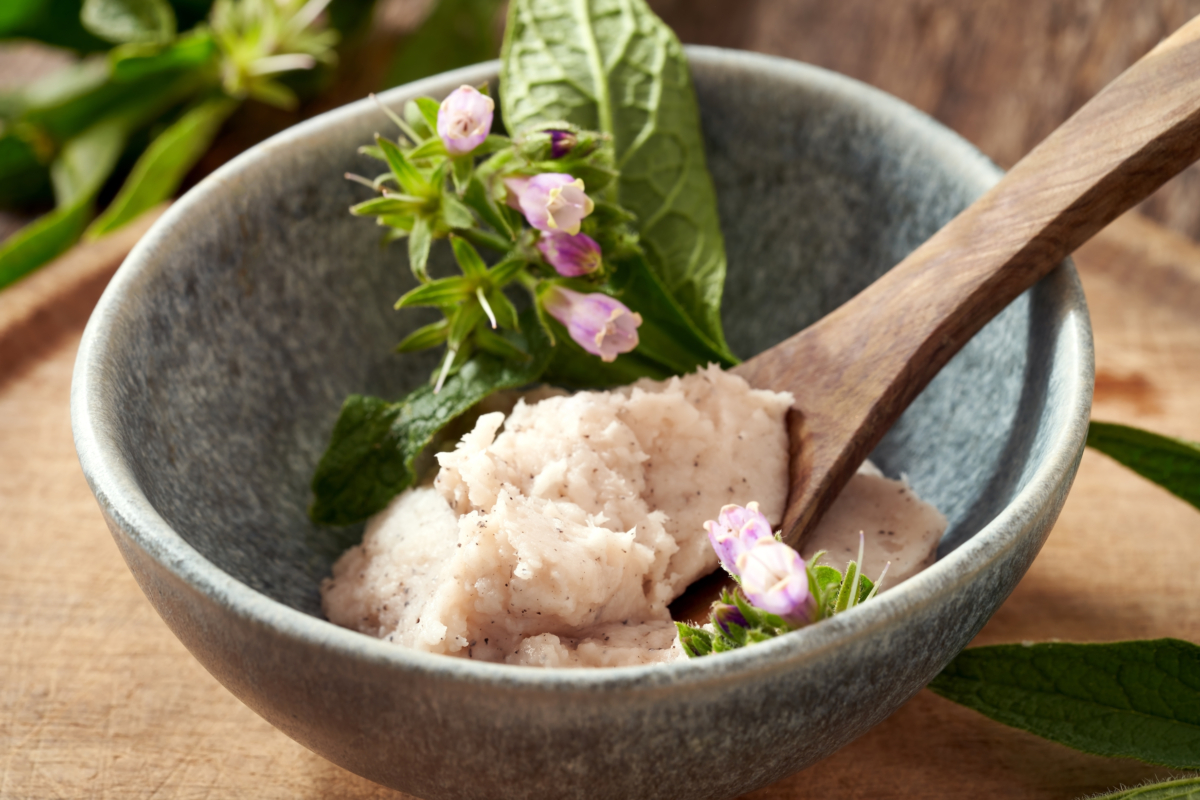
If plants had LinkedIn profiles, comfrey’s headline would read something like, “Specialist in bone-knitting, wound-healing, and general tissue maintenance. Occasionally toxic. Endorsed by Pliny the Elder.”
Comfrey (Symphytum officinale) is that green and hairy perennial that has been lurking in herbal medicine cabinets since about 400 B.C.
To the Greeks and Romans, comfrey was the go-to cure for wounds, bruises, and even broken bones.
The Original Superglue
Ancient physicians like Dioscorides were giddy about comfrey. He wrote in “De Materia Medica” that it was excellent for knitting together broken flesh and even stopped internal bleeding when ingested (which, as we’ll see, is not recommended at your next dinner party).
The Latin root of its name, consolida, meaning “the one who makes firm,” says it all. Comfrey was the medieval super glue.
Across the centuries, everyone jumped on the comfrey bandwagon. Chinese medicine classified it as a Yin tonic for bones and tissues.
Medieval monks stuffed it into their physic gardens.
By the time colonists arrived in America, comfrey could have almost been waving at them from their ship trunks.
Settlers used it for everything from gout to bronchitis, and Native Americans quickly wove it into their own healing practices.
It earned glamorous aliases along the way, such as Knitbone, Boneset, Blackwort, Slippery Root. They all sound like rejected Harry Potter professors, but were really nods to comfrey’s reputation as an orthopaedic wonder plant.
Nicholas Culpeper and the Knitbone Chronicles
By the 17th century, comfrey had made its way into the pages of “The English Physitian,” courtesy of Nicholas Culpeper, England’s most cantankerous herbalist and part-time revolutionary.
Culpeper had no patience for physicians who, in his view, swanned about in Latin and charged small fortunes for remedies that were basically weeds.
His solution was to write herbal guides in plain English so that ordinary people could treat themselves for the princely sum of three pence and a walk to the garden.
On comfrey, he was almost rhapsodic.
He declared it “so powerful to consolidate and knit together; that if they be boyled with dissevered pieces of flesh in a pot, it will join them together again.” Which is both impressive and slightly alarming, the sort of kitchen experiment that would have MasterChef judges backing quietly away from the bench.
Culpeper prescribed comfrey for wounds, bruises, ruptures, broken bones, knotted breasts, gout, pained joints, and just about any bodily calamity short of heartbreak.
By teaching people to use comfrey (or “Knitbone,” as it was fondly known), Culpeper was striking a blow against an elite medical establishment that preferred patients confused and dependent.
In doing so, he cemented comfrey’s reputation as the people’s remedy, cheap, earthy, and reliably on hand to stick humankind back together.
Science Gets Involved (Finally)
Fast-forward a couple of millennia, and the lab coat crowd has confirmed what Culpeper and Co. were banging on about. The magic ingredients?
Allantoin: Encourages cells to regenerate and tissues to knit faster. Think of it as your body’s personal speed-sewing machine.
Rosmarinic Acid: Anti-inflammatory and antioxidant, basically an herbal ibuprofen.
Tannins: Tighten damaged skin, making wounds less weepy and more “Instagram-ready.”
Clinical studies now show that comfrey ointment can help heal sprains, bruises, back pain, and arthritic knees. In one trial, comfrey cream actually outperformed diclofenac gel (the chemist’s go-to). Imagine the indignity, a centuries-old weed beating Big Pharma’s finest on its home turf.
The Catch
There is a catch, Comfrey also contains pyrrolizidine alkaloids (PAs), which are about as welcome to your liver as a bottle of tequila at breakfast.
Taken internally and regularly, they can cause acute liver damage.
That’s why the cheery 17th-century advice to make comfrey tea for your “bloody flux” is filed today under Don’t Try This at Home.
Modern herbalists keep it topical. Creams, ointments, and compresses let you enjoy comfrey’s regenerative talents without risking a stint on the transplant list.
These days, even the Germans, meticulous regulators of herbal medicine give PA-free comfrey creams the thumbs-up.
A Garden Star with a Side Hustle
Outside of medicine, comfrey has been moonlighting. Farmers prize it as cow fodder. Gardeners brew it into a stinky liquid fertiliser that tomatoes adore.
In the Irish potato famine, desperate families even tried eating it themselves (let’s not revisit how that went).
So, Should You Use It?
Comfrey is brilliant when applied to bruises, sprains, arthritic joints, and wounds that need a nudge in the healing department.
But steer clear of making comfrey tea, smoothies, or “detox shots” unless you enjoy explaining jaundice to your GP.
Conclusion
From Pliny to placebo-controlled trials, comfrey has been straddling the line between folklore and pharmacology for two thousand years.
It has been syrup, poultice, garden tonic, and livestock fodder. It has mended bones, soothed backs, and probably terrified a few livers along the way.
In summary, comfrey is that friend who is wonderful company as long as you don’t invite them to stay the night. Rub it on your sprain, marvel at its powers, but for heaven’s sake, don’t put it in your tea.