
Jenn Reed’s menopausal transition was nothing like she expected. An empty-nester mom, she had always eaten healthily and been fit—she even worked as a personal trainer—but gradually, she stopped caring about her health and gained 25 pounds.
She began feeling lethargic, miserable, and isolated. Her husband was worried about her. It took many visits to several specialists before she learned that decades of using birth control pills had left her body unable to make its own hormones, causing menopause to be especially dreadful in her case.
Menopause can bring on vasomotor symptoms such as hot flashes, night sweats, and heart palpitations. It’s also associated with sexual dysfunction, urogenital problems, and mood disorders, as well as more silent risks to bones, cognition, and the heart.
Midlife Isn’t the End
Reed began sharing her journey on social media and realized she wasn’t alone. That’s when determination kicked in and motivated her to look for answers. She started being disciplined about working out even when she didn’t feel like it.
“I just kept going,” she told The Epoch Times. “I knew that I could feel better. I knew in midlife, it wasn’t the end. I just kept saying to myself, ‘I don’t want to sit on the couch and eat ice cream every day.’”
Fitness played a big role in her postmenopausal plan. Even with sparse research on the role fitness plays in the menopause transition, it’s clear that activity influences how intensely women experience symptoms—and that building muscle could be especially effective.
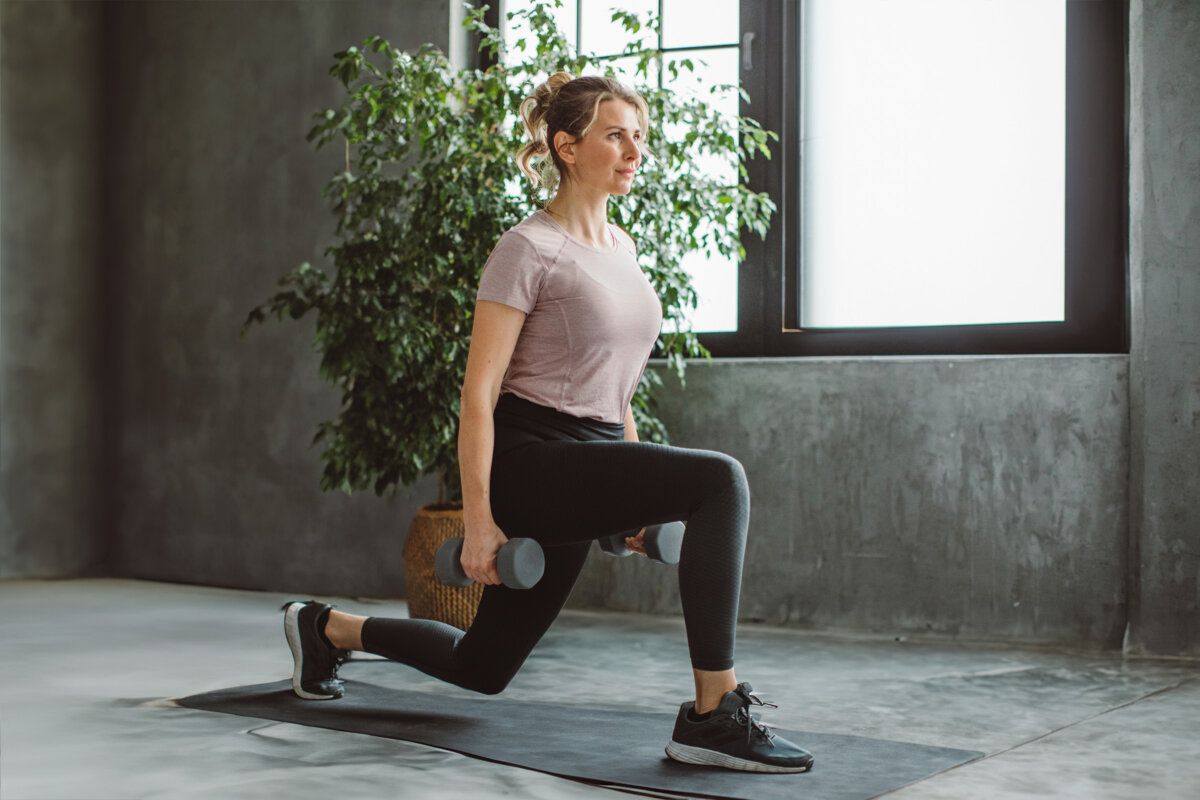
Reed swapped her more cardio-intensive workouts for strength training—something she credits for improving her sleep, her resilience to stress, and her gut health.
Fitness can help women manage the loss of muscle mass that increases year after year as estrogen levels drop. In fact, the more sedentary a woman is, the more menopausal complaints she’s likely to have.
However, exercise and menopause are more complex than cause and effect. That’s because exercise can sometimes make women feel worse, as high-intensity activity is associated with elevated cortisol levels. Cortisol is a hormone released by the adrenal gland that regulates your body’s stress response.
Tone and Fit Versus Thin and Frail
Wanda Mayeux, a menopause fitness coach with Rival Fit, learned the hard way when she turned 50 that the speed work she was doing as a CrossFit athlete was no longer benefiting her body after menopause.
The intensity was elevating her cortisol and adrenaline without a sufficient endorphin rush to balance out her body’s stress response—something akin to poking a sleeping bear, she said.
“All that endurance stuff was keeping me thin and frail as opposed to tone and fit, which is what I wanted to be,” Mayeux said. “I realized the endurance was wearing my body down. I was fatigued and I was exhausted, and it wasn’t healthy. It was really a big learning curve for me.”
Cortisol tends to naturally increase later in life, engaging in complicated interplay with other hormones, such as estrogen. Increased cortisol may also lead to menopausal symptoms such as hot flashes, mood disorders, cognitive fluctuations, and lower bone density.
As women age, osteoporosis also becomes more prevalent, with half of older Americans at risk of breaking a bone, according to the Bone Health and Osteoporosis Foundation. Hip fractures are particularly worrisome, as about a quarter of those who break their hips will die in the following year, and another quarter will never regain function and will end up in a nursing home.
Fitness can help prevent bones from becoming brittle, which occurs due to lack of estrogen. Bone-loading exercise can play a role in bone renewal.
Mayeux now thinks about the functionality of her workouts. She exercises so that she can walk through life with better balance and prevent (or handle) falls so she can protect her body and bones from breakage.
“I’m in the gym now lifting weights, doing less training, and focusing on connecting with my body,” she said.
A Chance for Better Health
Mayeux said that she’s been more present during her workouts, slowing down to enjoy them, and engaging muscles rather than letting momentum complete her motions. She began to think about and treat her body with more reverence—a pivot from the culturally popular outlook that describes life during menopause as “crashing and burning.”
Incorporating a healthy mindset about menopause appears to have real value, according to a 2023 article in BMC Women’s Health. It found that negative attitudes about menopause equated to an increase in symptoms.
“Menopause-related symptoms have been found to be less prevalent in countries where menopause is viewed as a normal aging process rather than a disease,” the article stated. “Globally societies have different attitudes towards menopause which influences how women experience it.”
Necessity of Postmenopausal Exercise
Many women have the opposite experience as Mayeux. A review article in the Journal of Mid-Life Health noted that the average response when entering menopause is to exercise less and eat more—lifestyle decisions that only feed the vicious cycle of uncomfortable menopausal symptoms.
This further decreases metabolism, which can lead to the loss of muscle mass—about half a pound a year. Muscle burns more calories than fat, and can be preserved with weight-training exercise, the article said.
Other benefits of exercise for older women include:
- Increase in cardiorespiratory function that can prevent or lead to better outcomes in cardiovascular disease, stroke, and diabetes.
- Lowered risk of high blood pressure, heart attacks, and strokes.
- A calorie deficit that can offset midlife weight gain.
- Reduction in low back pain.
- Improved mood and reduced stress.
- Potentially reduced hot flashes.
The review explained that exercise offers postmenopausal women the “only noncontroversial and beneficial aspect of lifestyle modification [that] must be opted by all.”
A 2023 review in the Journal of Clinical Medicine found that menopausal women who did only strength exercises fared much better in hormonal and metabolic adjustments compared to the inactive and placebo groups. They also experienced better bone density.
Those who participated in a strength exercise group also had better lean mass, increased femoral bone density, and reduced kyphosis (the rounding of the upper back, creating a hump between the shoulder blades) than those who did unsupervised exercise at home. They had a reduced risk of falls and better motor and muscle coordination.
The study pointed out that for women who do not want to opt for pharmacological intervention or hormone replacement therapy (HRT), exercise offers a beneficial alternative.
Detailed Studies Needed
While resistance training “has been shown to be particularly effective in counteracting most of the negative effects” of menopause, the benefits are most profound when women begin strength training in the years prior to menopause, according to a study published in 2023 in BMC Women’s Health.
Besides the physical benefits, resistance training boosts mental well-being, confidence, and happiness while being safe and effective. Postmenopausal women may require more than two training sessions per week with more than six to eight sets for each muscle group in order to experience sufficient muscle mass changes.
The study also pointed out that there’s still a knowledge gap regarding the benefits of free weights for middle-aged and older women because of a lack of research.
“In summary, there is insufficient evidence to provide specific guidelines for older women, including pre-, peri-, and post-menopausal women, to optimize [muscle mass] and strength gains,” the study concluded.
Guidance Helps
Reed, who’s always prioritized exercise, said misconceptions about fitness for women can make it hard to initiate changes.
“This whole generation of women our age were raised on cardio, so we’re intimidated and don’t know what to do at the gym,” she said. “You would go into a gym, the weight area would be all men, and it would be all women on the cardio. We were fed lies that lifting weights is going to, number one, make us look like a man—all bulky—and number two, that it’s unattractive for women to have muscle.”
Mayeux said other misconceptions are:
1. You Have to Lift Weights Every Day
“It’s coming from that old-school mindset that more is better,” Mayeux said. “It’s the quality of what you’re doing in the gym, so smart is better.”
2. You Have to Keep Lifting Heavier to Build Muscle
There are other variables besides the heft of your weights, which means you can even work out at home without equipment that allows for incremental weight adjustments. Variations in tempo, number of sets, and number of repetitions are other muscle-building techniques, Mayeux said.
3. The Gym Is Intimidating; Everyone Is Watching You
This is especially challenging for women who have never been in a gym or enjoyed working out. Mayeux tells her clients that almost everyone there is absorbed in their own workouts. Midday is a less busy time at most gyms.
4. You Can Work Out Whenever You Want
While that may have been true before menopause, fluctuating hormones can interfere with sleep. It’s better to work out early in the morning, Mayeux said, when cortisol is already naturally elevated.
“Women underestimate the importance of recovery and quality sleep when it comes to their fitness,” she said. “Oftentimes, women will work out late in the evening—usually after work. The problem with that is … doing this late in the day makes it difficult to wind down for a good night’s rest.”
5. Diet Doesn’t Matter
“To talk about fitness and leave out the nutrition component is just 50 percent of the equation,” Mayeux said, noting that eliminating or drastically reducing sugar and alcohol also helps build muscle mass and lower the risk of insulin resistance and hot flashes. “It’s amazing what sugars and alcohol do to affect your body.”
Women who are lifting weights also need adequate protein. That’s a touchy issue, as research and various organizations have argued that the recommended daily allowance of protein, set at 0.8 grams daily per kilogram of body weight, isn’t enough. That’s about 55 grams for a 150-pound woman. One egg has about six grams of protein; a chicken breast may have about 40 grams.
However, a review in Advances in Nutrition concluded that the recommendation may fall short for people exercising or trying to lose weight. A meta-analysis from 2022 in Sports Medicine–Open suggested that adults who want to maintain or build muscle strength through resistance training ought to eat nearly twice the recommended amount of protein.