
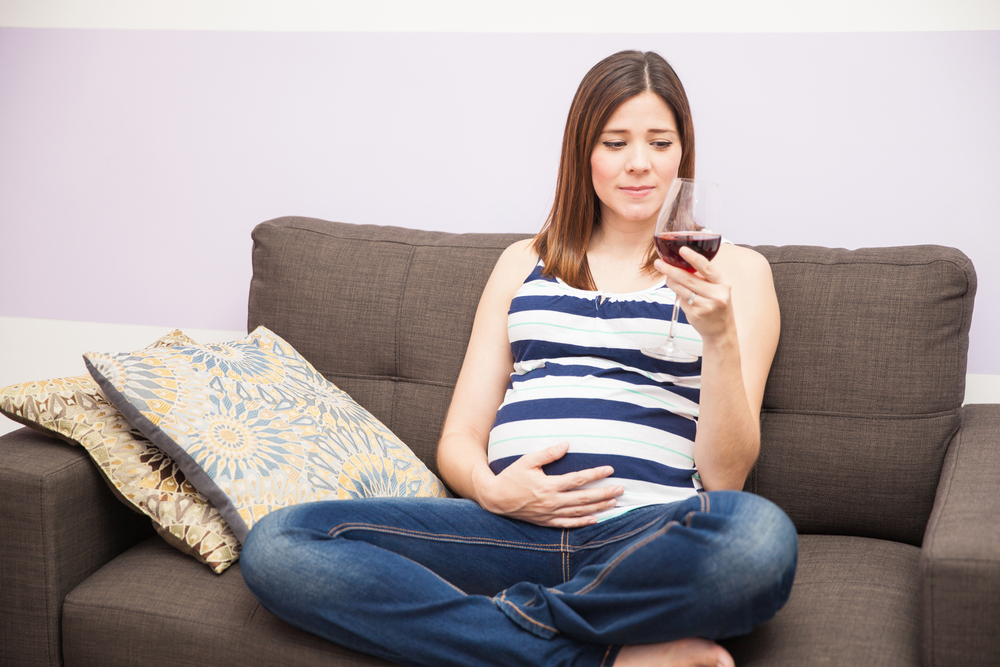
Doctors and researchers have long known that heavy alcohol consumption (including binge drinking) and pregnancy are a potentially toxic mix, but have not established just how many drinks, if any, might be safe. A recent study has lowered the bar, finding negative effects of fetal alcohol exposure at thresholds lower than previously demonstrated.
Major medical organizations in the United States, including the American Academy of Pediatrics (AAP), the American College of Obstetricians and Gynecologists, the American Academy of Family Physicians, and the Centers for Disease Control and Prevention (CDC) recommend that women completely avoid drinking alcohol during every stage of pregnancy.
The recommendation to avoid alcohol while pregnant is due largely to the link between heavy alcohol consumption and fetal alcohol spectrum disorders—a wide range of developmental disorders that can be physical, behavioral, intellectual, or a combination, according to the CDC. The AAP also points out that prenatal alcohol exposure is the primary cause of learning disabilities in children. These negative effects can range in severity and be lifelong.
Since no particular amount of alcohol consumption has been definitively established as “safe” during pregnancy, the medical establishment has opted for a cautious, “better safe than sorry” approach. Addiction medicine specialist Dr. Paul Daidone, told The Epoch Times, “Considering the potential risks and that there’s no known level of alcohol consumption that is completely safe, it’s better to not drink at all throughout pregnancy so that you give your baby the best chance in life.”
When it comes to establishing harm done by light or moderate drinking during pregnancy though, research has been sparser, and evidence of adverse effects has been harder to pinpoint, wrote Dr. Robyn Horsager-Boehrer, in the UT Southwestern Medical Center’s Medblog.
A 2012 Danish study examined 1,533 5-year-olds whose mothers provided data regarding alcohol consumption during pregnancy. Levels of alcohol consumption were categorized as 0, 1-4, 5-8, and 9 or more drinks per week. The children’s graphomotor skills (fine motor control and perceptual skills necessary for handwriting) were measured via the “Draw-a-Person Intellectual Ability Test for Children, Adolescents and Adults (DAP).” The researchers concluded that “This study showed decreased performance on the DAP for 5-year-old children who were prenatally exposed to nine or more alcoholic drinks per week and whose mothers experienced binge drinking episodes during early gestation.”
However, that doesn’t necessarily mean that lower levels of consumption are risk-free. The study didn’t follow the children past age five, or screen for other potentially adverse effects.
More recent studies have noted adverse effects from even low-to-moderate alcohol consumption. The January 2021 issue of the American Journal of Obstetrics and Gynecology published a study that found the risk of miscarriage increases with each additional week of alcohol exposure during the first trimester of pregnancy, “even at low levels of consumption.”
Another study produced by researchers at the University of New Mexico Health Sciences Center examined the more subtle effects of low or moderate alcohol consumption, as well as binge drinking (defined as four or more drinks during a single occasion) on the developing fetus. They found both to be associated with shorter birth lengths and shorter duration of gestation.
An Australian study of 415 children found an association between prenatal alcohol exposure and craniofacial development at “almost any level” of consumption. While the long-term significance of these findings is uncertain, “they support the conclusion that for women who are or may become pregnant, avoiding alcohol is the safest option.”
Around 14 percent of women in the United States do drink some alcohol during pregnancy, despite consistent messaging urging abstinence. Dr. Daidone suggests that pregnant women seek out a support group to help avoid alcohol during pregnancy. He adds, “Create an environment where loved ones are actively involved in ensuring expectant mothers do not drink. This will foster compliance with set rules since nobody wants to be left alone on this one!”