
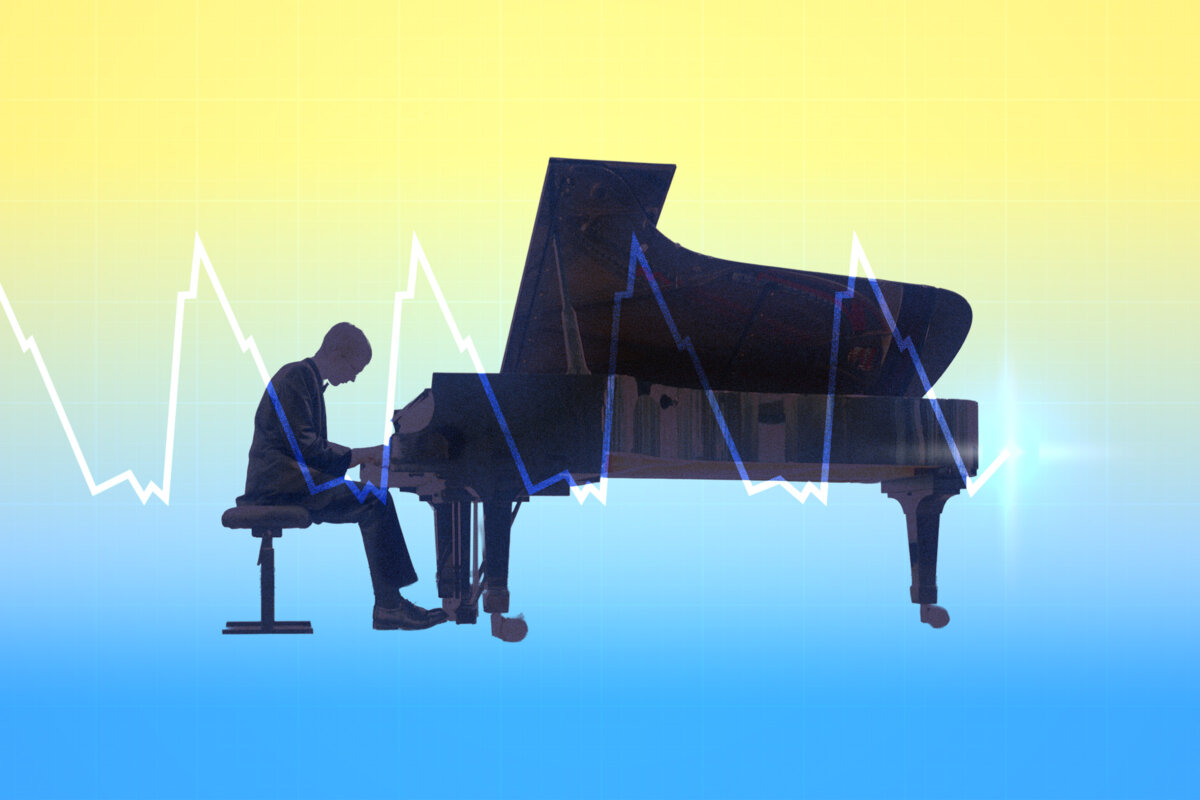
We all love music, whether it helps us relax or gets us dancing with a good groove. Classical music is especially recognized for its positive effects on our mood.
However, beyond boosting our mental well-being, music can also have a deep and meaningful effect on our physical health, particularly on important things such as blood pressure.
A new study suggests that certain types of classical music can influence blood pressure, possibly helping the body regulate it more effectively.
A study of 92 participants found that blood pressure tends to synchronize more closely with predictable phrase structures in music, especially when the music’s loudness and phrasing are easier to anticipate. The findings, presented at the European Society of Cardiology Congress 2025, suggest that music could become a personalized therapy for cardiovascular health.
How Music Affects the Heart
The research team, led by Elaine Chew, professor of engineering at King’s College London, monitored participants’ blood pressure continuously as they listened to nine different piano performances. The listeners were 60 women and 32 men with an average age of 42.
Using computer analysis, researchers identified that changes in music’s tempo and loudness created predictable phrase patterns that synchronized with blood pressure. The standout piece was Harold Bauer’s performance of Franz Liszt’s transcription of Franz Schubert’s “Serenade,” noted for its highly predictable phrase structure.
“This research tells us that more predictable music phrase structures have a bigger impact in regulating the cardiovascular system,” Chew said in a statement.
The mechanism works through “entrainment,” which is the body’s tendency to sync physiological rhythms with external stimuli. Blood pressure responded more strongly to volume changes than to tempo shifts, but when musical phrases became more predictable, listeners could better anticipate changes, leading to stronger synchronization.
The researchers noted that this increased synchronization may help the body regulate blood pressure more efficiently.
While Chew and her team used classical piano music because it allowed for controlled variations and the simulation of a live experience, they noted that their methods could apply to any music with clear phrase signals.
The Science Behind Musical Medicine
Music activates reward pathways in the brain, which may explain its powerful physiological effects. Chew said humans across cultures have long moved to music and that synchronizing with external rhythms offers biological and social advantages.
The study builds on previous research showing that breathing and heart rate also respond to musical phrase structures, with more regular, predictable patterns producing stronger synchronization.
To measure these effects, researchers used a statistical method called Earth Mover’s Distance to assess how closely participants’ blood pressure patterns matched the musical structures they heard.
The findings highlight music’s potential as a nondrug approach to managing cardiovascular health.
Chew noted that this research raises the possibility of designing personalized music therapies that could elicit specific biological responses.
“In the longer term, one day we may be able to use music to prevent heart disease or slow, arrest, or reverse its progression,” she said.
Cardiologist Thrilled to Treat Hypertension With Music
Dr. Nisha I. Parikh, a cardiologist and director of the women’s heart program at Northwell Health in New York City, who was not involved in the study, told The Epoch Times that she would be more than happy to provide music to help her patients control blood pressure.
“I think many of my patients would welcome this type of nonpharmacologic treatment for high blood pressure,” she said.
Parikh noted that for clinical use, clinicians should closely monitor patients’ blood pressure, perhaps with an ambulatory cuff and a log, to see if they can reduce medication doses.
She emphasized that the study’s strength lies in testing specific musical pieces rather than music in general, noting that music with predictable phrasing and the right volume may serve as an effective therapy for high blood pressure.
“I would be thrilled to be able to offer music as a hypertension therapy to my patients,” she said.