
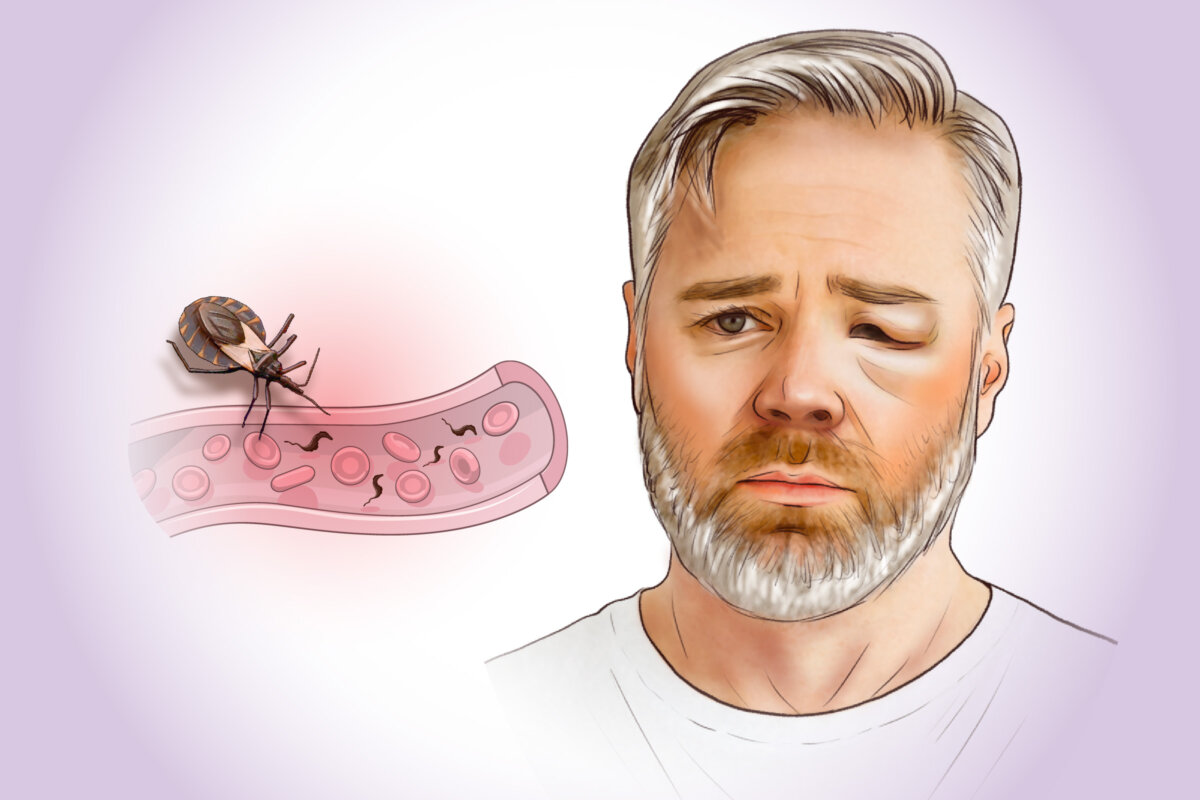
Chagas disease, also known as American trypanosomiasis, is a parasitic infection that can live silently in the body for years—sometimes decades—before causing serious heart or digestive problems.
First identified in 1909 by Brazilian physician Carlos Chagas, the disease affects an estimated 6 to 7 million people worldwide and remains a leading cause of heart failure in Latin America.
In the United States, about 300,000 people are believed to live with Chagas disease—mostly immigrants infected years ago in Latin America. However, researchers estimate that about 5,000 to 10,000 infections may have been acquired locally, particularly in southern states, where the parasite’s insect carrier, nicknamed the “kissing bug,” is found.
Although Chagas disease is often thought of as a tropical illness, it is a public health concern in the United States. Many cases go undetected or unreported—sometimes for years—until symptoms show up that might have been prevented with earlier testing and treatment. Despite these risks, only eight U.S. states—Arizona, Arkansas, Louisiana, Tennessee, Texas, Mississippi, Utah, and Washington—and two California health jurisdictions (San Diego County and Los Angeles County) require doctors to report Chagas cases, leaving the true scale of infections unclear.
Interestingly, because Chagas disease and Lyme disease share certain similarities, researchers are exploring how insights from Chagas disease research could help advance understanding of Lyme disease.
[epoch_component type=”photo_gallery” position=”left” section_title=”(Illustration by The Epoch Times, Shutterstock)” width=”900″ items=”5928089,” image_stays=”false” stays_for_paragraphs=””][/epoch_component]
[shortcut_anchor id=”anchor_1760206059901″ label=”Chagas and Lyme”]What Can Chagas Disease Teach Us About Lyme Disease?[/shortcut_anchor]
Both are vector-borne zoonotic infections that can silently cause serious health problems, including inflammation of the heart and long-term cardiac complications—particularly when infections go undiagnosed or persist. Chagas disease can lead to dilated cardiomyopathy (an enlarged and weakened heart), while Lyme disease can result in Lyme carditis (inflammation of the heart).
Although this field is still developing, some cardiologists and infectious disease specialists are investigating whether Chagas disease could serve as a useful model to help them better recognize, track, and care for people at risk of chronic heart complications from infectious diseases. This growing area of research reinforces how infections can affect the heart in ways that are not always immediate or obvious.
[shortcut_anchor id=”anchor_1760141216679″ label=”Causes”]What Are the Causes and Risk Factors of Chagas Disease?[/shortcut_anchor]
People usually become infected from the kissing bugs that carry a parasite called Trypanosoma cruzi (T. cruzi).
Kissing bugs acquire the parasite by feeding on infected animals or people, but not all kissing bugs are infected—it depends on what they’ve fed on.
In the United States, they typically feed on the blood of wild animals such as raccoons, opossums, armadillos, and rodents.
However, not all kissing bugs carry the parasite, and it’s not the bite that’s infectious.
“It’s the feces they leave behind during or after feeding,” Sarah Hamer, a veterinarian and professor of epidemiology at Texas A&M University, told The Epoch Times. If the parasite-containing droppings enter the body—through scratching the bite, the eyes, or broken skin—an infection can begin.
Once inside the body, the parasite spreads through the bloodstream, eventually lodging in the heart or digestive system.
Anyone who spends time in areas where kissing bugs are found may be at some level of risk.
Kissing bugs—also called triatomine bugs—are nocturnal and prefer dark, undisturbed places.
Since 2013, kissing bugs have been found in at least 32 U.S. states, with about 50 percent of a subset testing positive for the parasite.
Certain groups are more vulnerable:
- People in Older or Poorly Sealed Homes: Cracks, gaps, and outdoor structures such as woodpiles, sheds, and dog kennels can provide hiding spots for kissing bugs.
- Babies Born to Infected Mothers: Congenital transmission can occur, though it is often undiagnosed without routine prenatal testing. Testing during pregnancy in the United States may be recommended for those from endemic regions.
- People Who Had Transfusions or Transplants: Infections are more likely to have occurred before modern screening became standard. Though rare today, medical procedures from before the 1990s can still be a source of infection.
- Campers, Hunters, and Outdoor Workers: Handling wildlife or spending time outdoors at night can increase the risk, especially if there are cuts or breaks in the skin.
- People Traveling to Latin America: Risk is highest in Mexico, Central America, and South America.
Even in areas where kissing bugs are present, transmission to humans is still considered rare.
[shortcut_anchor id=”anchor_1760141249656″ label=”Symptoms”]Signs and Symptoms of Chagas Disease[/shortcut_anchor]
Chagas disease has two main stages: the acute phase, which occurs shortly after infection, and the chronic phase, which can last for life if untreated.
Acute Phase
In the early stage, symptoms are often absent or mild and can easily be mistaken for a viral illness. Many people don’t realize they’ve been infected.
- Flu-Like Symptoms: Fever, fatigue or general malaise, body aches, and headache.
- Digestive Symptoms: Nausea, vomiting, diarrhea, and loss of appetite.
- Skin and Lymphatic Signs: Rash, swollen lymph nodes, and localized swelling at the bite site, and in some cases, painless swelling of one eyelid if the bug bite occurs near the eye.
These symptoms typically begin within a few days to weeks of exposure and last a few days to several weeks. While most people recover from the acute symptoms without treatment, the parasite remains in the body and can lead to chronic Chagas disease.
Chronic Phase
If not treated, Chagas disease remains in the body and becomes chronic. Most people stay asymptomatic for years—or even their whole lives—although about 30 percent eventually develop serious complications.
- Heart-Related Complications: The most common, which may include irregular heart rhythms, slow heart rate or heart block, an enlarged, weakened heart (or dilated cardiomyopathy), congestive heart failure, or sudden cardiac arrest. These issues often show up decades after infection, and may first be detected through an abnormal electrocardiogram or EKG (test measuring the heart’s electrical activity).
- Digestive Symptoms: Less common, including difficulty swallowing, chronic constipation, bloating, or abdominal pain, and in some cases, an enlarged esophagus or colon. These complications develop in up to 10 percent of untreated people.
- Neurological Complications: Rare, but strokes have been reported in advanced cardiac cases.
[shortcut_anchor id=”anchor_1760141262721″ label=”Diagnosis”]How Is Chagas Disease Diagnosed?[/shortcut_anchor]
In the United States, Chagas disease is not part of routine medical screening, which means many cases go undiagnosed unless a person knows to ask.
Diagnosis depends on how recently the infection occurred and whether symptoms are present. Tests vary between the acute and chronic stages of the disease.
Dr. Caryn Bern, a professor of epidemiology and biostatistics at the University of California, San Francisco School of Medicine, who has studied Chagas disease for decades, told The Epoch Times that it’s important for health care providers to determine which phase the disease is in.
Acute Phase
“Most people in the acute phase feel fine or only mildly unwell,” Bern said. “That’s part of what makes it so difficult to detect early.”
Ironically, the first few weeks or months after infection are also when the parasite is most detectable—circulating in high numbers in the blood. However, because the symptoms are often so mild, this window of opportunity is often missed.
- Microscopy: A blood sample is stained and examined under a microscope to look for the parasite.
- Polymerase Chain Reaction (PCR): A PCR test detects parasite DNA in the blood. It’s especially helpful for newborns with possible congenital infection or for people with weakened immune systems who may experience reactivation.
Chronic Phase
Once the infection becomes chronic, the parasite is rarely seen in the blood. Diagnosis relies instead on detecting the immune system’s response to the parasite.
“The main way that we diagnose in the chronic phase is with a serological test,” Bern said. “You’re looking at IgG [Immunoglobulin G] antibody responses to the parasite, not the parasite itself. In the chronic phase, it’s relatively difficult to demonstrate the parasite.”
At least two different antibody tests are required to confirm the diagnosis. Commonly used tests include:
- Enzyme-Linked Immunosorbent Assay (ELISA): Often used as the first test, though it doesn’t indicate how long ago a person was infected.
- Immunofluorescent Antibody Test: Often used to confirm diagnosis or when the first test is unclear.
- Rapid Tests or Immunoblot Methods: Often used in clinics to confirm diagnosis.
If the results from the first two tests don’t match, a third test is used to confirm the diagnosis.
In some cases, PCR testing may still be used—for example, in babies born to mothers with Chagas disease, where early detection is critical. People with weakened immune systems—such as those undergoing chemotherapy, organ transplants, or living with HIV/AIDS—may also need PCR testing, since the parasite can reactivate in people who are immunosuppressed. PCR testing can monitor and detect reactivation early.
Additional testing and follow-up:
- Blood Donor Screening: All U.S. blood donations are routinely screened for Chagas disease. A positive result doesn’t confirm infection, but it does prompt follow-up testing.
- Heart and Digestive System Testing: Once diagnosed with chronic Chagas disease, people may undergo tests such as EKGs, echocardiograms, or other imaging tests to check for heart or digestive complications.
“Often the diagnosis comes incidentally through blood donation screening, prenatal testing, or evaluation for unexplained heart disease,” Dr. Norman Beatty, an infectious disease physician and associate professor at the University of Florida College of Medicine, told The Epoch Times.
[shortcut_anchor id=”anchor_1760141272792″ label=”Treatment”]What Is the Treatment for Chagas Disease?[/shortcut_anchor]
Chagas disease is treatable. Antiparasitic medications are the only proven way to kill the parasite. They work best when taken early, particularly in children and younger adults. Even if the infection is long-standing, treatment may help reduce parasite levels and slow disease progression.
Who Should Be Treated–and What to Expect
Children and teens have the highest chance of being cured, especially when treated in the first few years after infection. In the United States, these antiparasitic medications are FDA-approved only for children, though they are often prescribed off-label for adults. Treatment greatly reduces the risk of long-term complications.
“The earlier we can treat people in the course of infection—in other words, the younger the person—the more confidence we have that the treatment is going to be of benefit,” said Bern. However, she noted that existing heart damage can’t be undone, and some people with advanced disease may not tolerate the medications well.
For adults under 50, treatment is usually recommended, especially if the infection is recent. While a full cure is less likely in adults, reducing the parasite levels can help protect long-term heart health.
However, in older adults or those with heart disease, the benefits are less certain, and the risk of side effects is higher. Treatment decisions should be made with a health care provider based on overall health, risk factors, and personal goals.
Treatment is not recommended during pregnancy due to limited safety data. However, babies born to infected mothers should be tested and treated if positive, since they have a high chance of being cured.
Antiparasitic Medications
Two medications are currently used to treat Chagas disease: benznidazole and nifurtimox. Both are the global standard of care.
Benznidazole
Often the first-line treatment, benznidazole is FDA-approved for children ages 2 to 12 and used off-label in older children and adults. It works best in early infection—especially during the acute or early chronic phase.
In children, it often clears the parasite completely and prevents long-term complications. In adults, it may reduce parasite levels, though a full cure is less common.
The standard course lasts 60 days. Adults typically take up to 300 milligrams daily, and children receive weight-based doses. Side effects such as appetite loss, rash, nausea, or nerve symptoms are more common in adults and may require close monitoring.
Nifurtimox
Nifurtimox is another effective option and is also FDA-approved for children from birth to younger than 18 years. It’s often used when benznidazole isn’t available or isn’t tolerated. The treatment lasts 60 days, and the dose is weight-based in children. Side effects may include appetite loss, nausea, insomnia, or nerve symptoms. Effectiveness is comparable to benznidazole, especially in children.
After Treatment: Monitoring and Follow-Up
Unlike some infections, Chagas disease currently has no definitive test of cure. Antibody levels can stay positive for years after treatment—especially in adults—even when treatment has worked.
“I don’t have a test that I can order that tells a patient, ‘We’ve stopped this disease process and killed all the parasites,’” Beatty said. “So we monitor closely over time.”
In children, antibodies often decline or disappear, suggesting successful treatment.
In adults, treatment can reduce parasite levels, but it doesn’t undo damage already done. Therefore, follow-up care is critical. People with chronic Chagas disease need lifelong monitoring for heart complications, usually with EKGs and echocardiograms every one to two years.
“We have what we call shared decision-making,” said Beatty. “More important [than treatment alone] is the ongoing monitoring of the development of disease—especially those related to the heart—to see if we can pick up any subtle changes that would correlate with the development of Chagas heart disease.”
If issues such as arrhythmias or heart failure develop, they are managed with standard treatments—including medications, pacemakers, or defibrillators.
Specialist care for digestive issues may also be needed, and surgery may be required in severe cases.
Traditional Chinese Medicine
From a traditional Chinese medicine (TCM) perspective, Chagas disease may involve patterns such as “damp-heat invasion” or “blood stasis,” where the parasite—seen as a toxin—disrupts the healthy flow of vital energy or “qi.” A doctor of Chinese medicine diagnoses these imbalances through pulse reading and tongue examination to determine a customized herbal formula for treatment.
TCM practices such as acupuncture to enhance vital energy flow, dietary additions like ginger or turmeric to reduce inflammation, and tai chi and meditation to relieve stress may also help improve quality of life and ease symptoms related to chronic illness or inflammation—especially in the chronic phase of the disease.
[shortcut_anchor id=”anchor_1760141292937″ label=”Lifestyle Approaches”]What Are Natural and Lifestyle Approaches to Chagas Disease?[/shortcut_anchor]
Chagas care goes beyond taking medication. People with Chagas disease can protect their heart and overall health through simple, evidence-based lifestyle choices.
Eat a Heart-Healthy Diet
A diet rich in whole foods and healthy fats such as olive oil, avocado, or oily fish lowers inflammation in the body—a key driver of Chagas-related heart damage, and can also reduce strain on the heart, especially for people at risk for heart failure or arrhythmias (irregular heartbeat).
Limit sodium, processed foods, sugary drinks, and high-fat snacks to help manage blood pressure and protect against complications.
Stay Active
Regular movement supports heart function, reduces inflammation, and boosts mood. Physical activity can improve symptoms in people with Chagas-related cardiomyopathy and may lower the risk of worsening arrhythmias or heart failure.
Walking, swimming, cycling, and gentle strength training are all good options to build endurance and protect muscle strength, which is important for long-term health.
Home-based exercise programs have been shown to be safe and beneficial for people with chronic Chagas disease.
Other Healthy Habits
Daily habits can make a major difference in slowing Chagas-related complications.
Avoid smoking and heavy alcohol use—both increase the risk of Chagas-related heart problems. Smoking increases inflammation in the heart and blood vessels, which can aggravate heart damage caused by T. cruzi. Alcohol can worsen arrhythmias, weaken the heart muscle, and raise the risk of heart failure.
Maintain a healthy weight through portion control and regular checkups. A healthy weight reduces strain on the heart and lowers the risk of high blood pressure, diabetes, and inflammation—all factors that speed up heart complications in Chagas disease. Obesity is linked to more severe disease.
[shortcut_anchor id=”anchor_1760141306970″ label=”Prevention”]How Can I Prevent Getting Chagas Disease?[/shortcut_anchor]
Chagas disease can be prevented. Prevention focuses on blocking the kissing bug’s access to people—both at home and while traveling. In regions where Chagas is more common, a layered approach offers the best protection.
Home Protection Tips
Keeping kissing bugs out of the home is one of the most effective ways to prevent infection.
- Seal cracks and gaps in walls, roofs, doors, and window frames.
- Install and maintain door and window screens, and repair holes promptly.
- Keep outdoor lights away from doors and windows, since bright lighting attracts kissing bugs.
- Remove debris such as brush, rocks, and woodpiles from around the house.
- Close off crawl spaces and attics to prevent bug entry.
- Keep pets indoors at night, and clean pet bedding or sleeping areas regularly.
- Inspect sleeping areas for signs of bug activity, including around pet beds.
Dogs are far more likely than people to become infected with T. cruzi, partly because they may lick or eat infected bug faeces while grooming—or eat the bugs themselves.
“If your dog tests positive, that might signal you’re living in an area where kissing bugs are present,” said Hamer. However, she noted that owning an infected dog doesn’t necessarily put your family at risk, since the parasite can only spread through kissing bugs.
Travel and Outdoor Safety
When staying in or traveling through areas where kissing bugs may be active:
- Sleep in screened, sealed, or air-conditioned buildings.
- Use insecticide-treated bed nets when staying in basic or rural housing.
- Apply insect repellent, especially at night.
- Treat clothing and bed nets with permethrin.
Food and Drink Safety in Chagas Risk Areas
Food-borne Chagas disease has been reported in some parts of Latin America. People have reported it occurring after eating foods such as sugar cane, fruit juice, palm berry, acai berry, or undercooked meat contaminated by the parasite—often from contact with infected bugs during food processing.
When traveling, avoid raw or unpasteurized foods and drinks in areas with reported outbreaks. Also, don’t drink any untreated or unfiltered water that may be contaminated—for example, from streams or lakes.
Insecticides and Repellents
Professional indoor spraying is one of the most effective ways to reduce kissing bugs in areas of active transmission. The most effective chemicals are pyrethroid insecticides, such as deltamethrin, permethrin, and cyfluthrin. These are widely used in public health programs across Latin America and have been shown to reduce both bug populations and new infections.
In the United States, if you find kissing bugs indoors, contact a pest control specialist. Over-the-counter sprays, foggers, and roach traps are not effective against kissing bugs and may give a false sense of security.
Natural Repellents
Natural options can offer short-term protection but are not a substitute for proven prevention methods.
- Oils such as citronella, peppermint, and lavender have been shown in lab studies to deter kissing bugs—but only for a limited time.
- Tea tree and mint oils may also help, but they require high concentrations and frequent reapplication.
- Natural repellents lose strength quickly and haven’t been widely tested in real-world conditions. They may supplement other protective methods, but should not be relied on alone in high-risk areas.
[shortcut_anchor id=”anchor_1760208052573″ label=”Spotted a Kissing Bug”]What Can I Do If I Find a Kissing Bug?[/shortcut_anchor]
Kissing bugs are about 1/2 to 1 inch long, with flat, oval-shaped bodies and long, thin legs. They have a distinct, cone-shaped head and a thin, jointed neck. Most have dark brown or black bodies with orange or red markings along the edge of the abdomen, which help distinguish them from similar-looking insects such as stink bugs, wheel bugs, and western conifer seed bugs.
If you find a kissing bug inside or near your home:
- Do not crush the bug. Place it in a container and store it in the freezer. Then contact your state or local health department to ask about testing.
- Submit the bug for testing. Most states will test bugs found indoors or those suspected of biting a person.
- Send the specimen to the Texas A&M Kissing Bug Citizen Science Program for confirmation if your state does not accept submissions.