
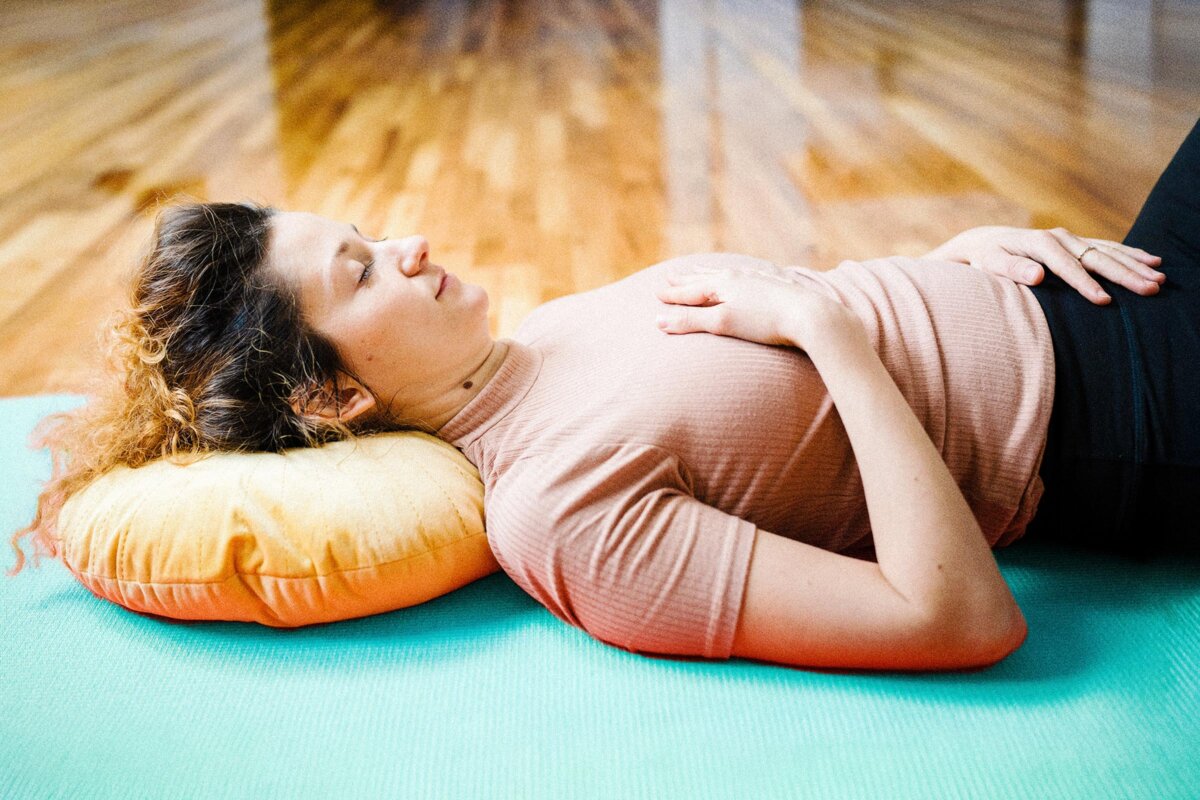
Breathing is your secret mind-and-body booster. Shallow, rushed breathing caused by our fast-paced lives and surroundings reduces oxygen flow, strains our muscles, and can lead to soreness over time. By practicing proper breathing techniques, you can improve your posture, relieve physical discomfort, steady your emotions, and elevate your athletic performance.
3 Benefits of Breathing Correctly
While breathing is something we naturally do from the moment we are born, over time, our bodies can develop habits that inhibit the easy flow of the incoming and outgoing breath. Learning how to breathe consciously can retrain and reinforce our body’s natural breathing rhythms.
1. Eliminates Aches and Pain
The diaphragm is the most important muscle involved in breathing. When it functions properly, it becomes a powerful engine that strengthens your deep core, protects your organs, and helps align your spine and pelvis. Proper stability can ease shoulder and neck stiffness, low back pain, and hip joint discomfort.
By training your diaphragm through proper breathing techniques, you can develop a resilient core that corrects rounded shoulders, hunchback posture, and anterior pelvic tilt—ultimately reducing soreness caused by improper muscle overuse.
2. Soothes Your Emotions
Breathing is closely linked to the autonomic nervous system. When you’re under stress or feeling tense, intentionally slowing and deepening your breath activates the parasympathetic nervous system, guiding your body back into a relaxed state. In contrast, quick, shallow breathing boosts sympathetic activity and heightens alertness. Through mindful breathing practice, you can more effectively regulate your emotions and maintain a steady, balanced mental state in everyday life.
3. Enhances Athletic Performance
Athletic performance relies heavily on core stability and muscular endurance. Training your breathing strengthens your core, enabling smoother, more coordinated limb movement. Proper breathing techniques can also boost endurance, accelerate recovery, and help maintain a steady rhythm during high-intensity exercise.
For example, swimmers fine-tune their breathing to take fewer breaths, and marathon runners harness deep diaphragmatic breathing to maintain stamina. Mastering your breath can be the hidden edge that gives you the winning advantage.
Chest vs. Belly Breathing: Key Advantages of Each
In breathing training, two main techniques are commonly used: chest breathing and diaphragmatic (abdominal) breathing.
Chest breathing is primarily driven by the chest muscles and follows a vertical pattern. It allows for rapid air exchange but has a smaller capacity, making it highly effective for quickly expelling carbon dioxide and replenishing oxygen during intense exercise. However, habitual reliance on chest breathing in daily life can place unnecessary strain on the shoulders and neck, leading to chronic discomfort.
Diaphragmatic breathing, by contrast, engages the abdominal muscles and involves horizontal breathing. It allows for a larger intake of air and slower breathing, making it suitable for core muscle training. Diaphragmatic breathing activates the parasympathetic nervous system, helping to calm the mind and stabilize emotions.
In daily life, it’s best to practice natural full breathing that combines both chest and abdominal movements.
Breathing Training Techniques
To improve health through proper breathing, you can incorporate the following exercises into your daily routine:
1. Relaxing the Diaphragm
Before beginning breathing exercises, gently massage the area just below the sternum to help release tension in the diaphragm and improve the flexibility of your respiratory muscles. An overly tight diaphragm can restrict deep inhalation and cause the muscles around the lower back and ribs to overcompensate, potentially affecting overall posture.
2. Chest Breathing
Step 1: Lie on your back with your knees bent. Place one hand on your chest and the other on your abdomen.
Step 2: As you inhale, feel your chest expand while keeping your abdomen stable.
3. Diaphragmatic (Abdominal) Breathing
Step 1: Lie on your back with your knees bent. Place one hand on your chest and the other on your abdomen.
Step 2: As you inhale, feel your abdomen expand outward. As you exhale, feel it contract inward.
4. Baby-Style Breathing–Variation 1
NeuroDevelopmental Stabilization (NDS) is a training approach that mimics newborn movement patterns to improve core stability and breathing efficiency.
Variation 1 imitates how a newborn breathes while lying on their stomach, helping you feel the engagement in the lower abdomen.
Step 1: Lie on your stomach with your hands in a “W” shape by your sides, arms supporting your upper body slightly off the ground.
Step 2: Inhale and feel your lower abdomen fill with air, lifting your upper body slightly.
Step 3: Exhale while maintaining abdominal engagement, keeping your body stable.
5. Baby-Style Breathing–Variation 2
The second variation of NDS simulates a newborn rolling to the side, engaging both the lower and lateral abdominal muscles.
Step 1: Lie on your stomach with your arms supporting your body, and bend one knee outward.
Step 2: As you inhale, feel your lower and side abdomen expand. Lift your upper body slightly, and rotate toward the bent leg, raising the same-side hand.
Step 3: Exhale and return your hand to the ground while keeping your abdominal muscles engaged.
While proper breathing may seem simple, it can bring remarkable physical and mental benefits. From easing muscle tension and calming emotions to boosting athletic performance, breathing is the most fundamental—and accessible—form of self-training. When your breath flows smoothly and effortlessly, daily life feels lighter and more balanced.