


Have you ever had a cough that wouldn’t quit—one that slowly tightens your breathing day after day until you’re worried you’ll end up in the ER? Before reaching that point, there may be a natural, overlooked intervention that can dramatically support recovery: daily sunlight exposure.
Dr. Roger Seheult, a quadruple board-certified physician in internal medicine, pulmonary diseases, critical care medicine, and sleep medicine, has witnessed the healing power of sunlight firsthand.
During the pandemic, Seheult cared for COVID-19 patients who were in critical condition and unable to breathe without medical assistance. After incorporating sunlight therapy, patients began to regain the ability to breathe on their own within days.
“We were able to take somebody who was almost ready to be intubated to off oxygen completely within five days, which is the fastest that I’ve ever seen somebody get off of oxygen,” Seheult told Brendon Fallon on “Vital Signs.”
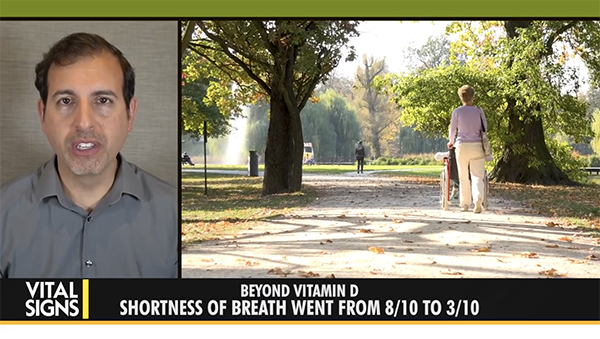
Seheult’s success extends beyond acute cases. One long COVID patient had suffered with severe shortness of breath—eight out of 10 on a severity scale—for more than a year. Despite trying multiple treatments and running numerous tests, nothing helped. Then he made a simple recommendation: Get outside for 20 to 30 minutes every single day.
Three weeks later, the results were dramatic. The patient’s shortness of breath had dropped to just three out of 10—practically gone. After witnessing such transformations, Seheult now recommends sun exposure to nearly all his patients.
Concerns about sunburn and skin cancer have driven many people indoors, but by avoiding the sun, they may be missing out on critical health benefits.
“There are many studies … that show that people who go outside, people who are in a sunlight environment, actually live longer,” Seheult said.
Studies from the UK and Sweden have associated sun exposure with reduced overall mortality rates, including cardiovascular and cancer-related deaths.
Watch “Anti-Virus Light?” on natural immunity.
The Missing Piece: It’s Not Just About Vitamin D
The benefits of sun exposure are often linked to vitamin D. However, after supplementing his patients with vitamin D, Seheult didn’t see the hoped-for results, leading him to examine whether sunlight affected health in additional ways.
“I began to wonder whether or not vitamin D was a marker of maybe something else that was happening,” Seheult said. “Maybe there was something about the sun that had nothing to do with vitamin D. Maybe it was working in a completely different way that was benefiting the human body, and that was something that was worthwhile investigating.”
Seheult discovered that sun exposure may affect the body on a much deeper, cellular level.
How Sunlight Powers Your Cells
The sun emits multiple types of light, each with unique effects on the body. Infrared light, which humans feel as warmth from the sun, can penetrate deep into the body’s tissues and benefit cell function. “Infrared light is very instrumental in making sure that the mitochondria in our cells, the powerhouse of our cells, is running smoothly,” he said.
Seheult said that when mitochondria function optimally, they produce more melatonin, which acts as an antioxidant in the body. Antioxidants help the body combat oxidative stress, which can damage the mitochondria, causing further health problems. “Heart disease, diabetes, obesity, dementia, cancer, long COVID, all of these have at the root the oxidative stress of the mitochondria.”
Melatonin doesn’t just fight oxidative stress directly—it helps regulate other antioxidants in the body. “So if you want to have the real maximal benefits of antioxidant therapy, sure, eat your berries … but realize that melatonin that is produced inside your own body is really the key.”
Can’t You Just Take a Supplement?
While many people take oral melatonin supplements, they can’t replicate what sunlight does.
Seheult explained that, first, oral melatonin primarily signals your body that it’s time to sleep. “So, really, the only time that you should be taking oral melatonin is right before you go to bed.”
Second, Seheult said that the amount of melatonin secreted at night is minimal compared with the amount made in the mitochondria. Because of this, he recommends sun exposure as the best way to cause high amounts of melatonin production. “There’s no amount of oral melatonin that’s going to take the place of that type of stimulation.”
Sunlight: Nature’s Antibiotic
In addition to infrared light, ultraviolet rays offer their own healing properties. While UV light stimulates vitamin D production, it may also kill disease-causing bacteria—a fact physicians discovered more than a century ago.
Before antibiotics existed, tuberculosis, a lung infection caused by bacteria, was essentially a death sentence. However, tuberculosis sanatoriums in Switzerland and Austria used UV rays to treat patients. Those infected were taken to very high altitudes and experienced rapid recoveries.
Seheult said that high altitudes provided two advantages: having less oxygen, which tuberculosis needs to survive, and more concentrated UV exposure. While infrared light penetrates the atmosphere and clothing, UV light cannot do so as easily. Going to a high altitude where the atmosphere is thinner allows for more concentrated UV light exposure to maximize healing. Sanatoriums that used the high altitude method noted impressive results.
The Smart Way to Get Sun
UV light’s association with skin damage and cancer concerns many people. However, Seheult noted that researchers have typically studied UV light in isolation, not combined with infrared light as it naturally occurs in sunlight.
“What we’re finding out is that there’s something about near-infrared radiation when mixed with ultraviolet light, that mitigates this cause,” Seheult said. “I believe that … both of these lights are packaged in an optimal way so that there is the maximum benefit for the human body.”
Still, Seheult cautioned against overexposure to the sun, especially for those who aren’t used to being outside. Tanning beds that emit pure UV light without infrared, or going outside when the UV index is extremely high, can be dangerous.
To get a healthy mix of the sun’s rays, he recommended sun exposure during specific times of the day, such as sunrise or sunset.
“These are times of the day where we get the most amount of infrared light with respect to ultraviolet light. And I think those are the perfect times for people who have not been going out into the sun to get out into the sun and start to build up the protections in their skin.”
According to Seheult, the amount of time in the sun doesn’t have to be excessive. He points to one study in which only 15 minutes of infrared light daily produced favorable outcomes for COVID-19 patients. “If we were to go out intentionally … and get sunlight every day for about 20 to 30 minutes more than we’re currently getting, I think that would go a long way to getting some of these health benefits that we’re looking into.”