
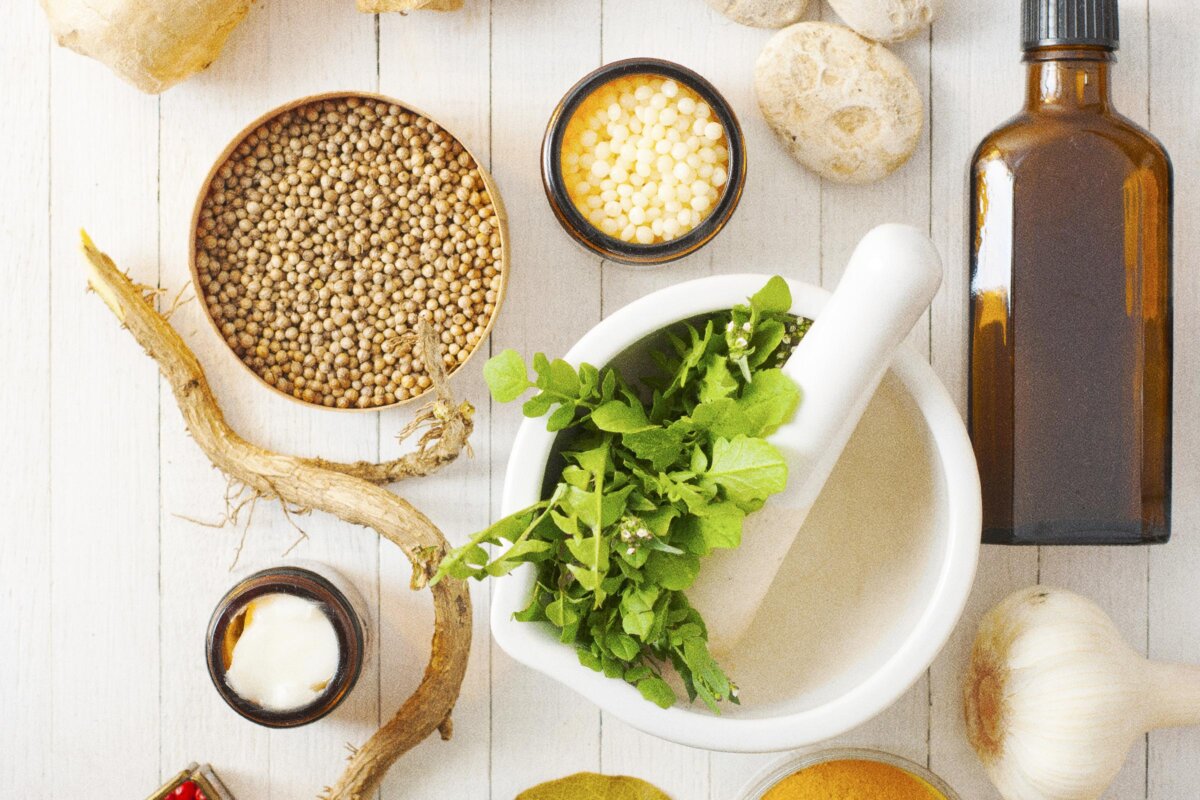
Most medicine cabinets are cluttered time capsules, full of expired ibuprofen, leaking cough syrup, and Band-Aids with cartoon characters last relevant in 2004.
But replace the chemical chaos with a botanical upgrade, and suddenly you’ve got a functional apothecary.
These 15 herbs have stood the test of time, backed by science and centuries of common sense.
Lemon Balm (Melissa officinalis)
Uses: Calms anxiety, aids sleep, soothes indigestion, and treats cold sores.
Why it’s here: This lemon-scented herb is clinically shown to reduce anxiety and promote calm by increasing GABA (gamma-aminobutyric acid, the primary inhibitory neurotransmitter) in the brain. A 2014 study even suggested cognitive boosts.
Translation: A herbal hug that doesn’t require a prescription or small talk.
Dandelion (Taraxacum officinale)
Uses: Liver detox, diuretic, anti-inflammatory, antioxidant, and mild laxative.
Why it’s here: Rich in inulin, vitamins A and C, and potassium. Shown to support liver function and modulate blood sugar levels.
Translation: The common weed with uncommon talents, provided your dog hasn’t blessed it first.
Yarrow (Achillea millefolium)
Uses: Stops bleeding, reduces menstrual cramps, calms inflammation, and supports digestion (pdf).
Why it’s here: Named for Achilles, who used it on the battlefield. Modern studies confirm antimicrobial and anti-inflammatory action.
Translation: Nature’s first aid kit, disguised as a roadside flower.
Stinging Nettle (Urtica dioica)
Uses: Arthritis, allergies, prostate health, inflammation, and even fish fertility (yes, really).
Why it’s here: Rich in vitamins A, C, K, iron, magnesium, and polyphenols, nettle has anti-inflammatory, antihistamine, and diuretic effects. Studies support its role in managing benign prostatic hyperplasia and allergic rhinitis.
Translation: A nutrient-dense, plant-based multitool that pokes you first, heals you later, and doubles as sustainable fish food. Peak overachiever.
Ginger (Zingiber officinale)
Uses: Nausea, inflammation, pain relief, and digestive support.
Why it’s here: Gingerol, the active compound, is a proven anti-inflammatory and antioxidant. Clinical studies show benefits for morning sickness, muscle soreness, and even osteoarthritis.
Translation: The spice rack MVP that moonlights as a painkiller and doesn’t need a white coat to prove it.
Garlic (Allium sativum)
Uses: Cardiovascular support, cholesterol control, immune defence, and infection fighting.
Why it’s here: Allicin, the sulphur compound released when garlic is chopped, lowers blood pressure, fights bacteria, and may even deter vampires and minor acquaintances.
Translation: The stinkier the bulb, the stronger the heart. Social risk, cardiovascular reward.
Ashwagandha (Withania somnifera)
Uses: Stress, anxiety, cognitive function, and hormone regulation.
Why it’s here: An adaptogen with evidence backing cortisol reduction, improved sleep, and potential testosterone support.
Translation: The herbal equivalent of someone who actually answers emails calmly and doesn’t flinch at Outlook reminders.
Elderberry (Sambucus nigra)
Uses: Cold and flu symptom reduction, immune support.
Why it’s here: Rich in flavonoids and anthocyanins, elderberry may reduce the duration and severity of cold symptoms. Some studies show it blocks viral replication.
Translation: Like installing antivirus software for your respiratory system, only tastier.
Turmeric/Curcumin (Curcuma longa)
Uses: Inflammation, joint pain, brain health, and cardiovascular protection.
Why it’s here: Curcumin is a powerful anti-inflammatory and antioxidant. Studies suggest it rivals ibuprofen for arthritis relief with fewer digestive complaints.
Translation: A spice cabinet revolutionary disguised as curry powder.
Comfrey (Symphytum officinale)
Uses: Wound healing, bruises, sprains, and inflammation (topical only).
Why it’s here: Contains allantoin, which promotes cell regeneration. Though oral use is now discouraged due to liver risks, external application is backed by both tradition and trials.
Translation: Nature’s bandage, just don’t eat it, snort it, or attempt a comfrey smoothie.
Echinacea (Echinacea purpurea)
Uses: Cold prevention, immune boosting, infection support.
Why it’s here: Contains compounds that activate immune cells and fight inflammation. Clinical results are mixed but if taken early, some studies suggest reduced cold duration.
Translation: The jury’s still out, but your immune system might give it a standing ovation anyway.
Thyme (Thymus vulgaris)
Uses: Respiratory infections, coughs, sore throats, and antimicrobial defence.
Why it’s here: A natural antiseptic with documented antiviral and antifungal properties. Thymol, its main active compound, fights pathogens and calms spasmodic coughs.
Translation: Your lungs’ secret weapon, and a reminder that culinary herbs have teeth.
Chamomile (Matricaria chamomilla)
Uses: Anxiety, insomnia, digestive issues, menstrual cramps.
Why it’s here: Contains apigenin, a flavonoid that binds to benzodiazepine receptors in the brain. Multiple studies confirm its sedative and calming effects.
Translation: Grandmother’s tea knew what it was doing. Gentle, floral Valium without the baggage.
Peppermint (Mentha piperita)
Uses: Irritable Bowel Syndrome (IBS) relief, nausea, headaches, muscle tension.
Why it’s here: Menthol relaxes gastrointestinal tissue and soothes nausea. Enteric-coated capsules are clinically validated for IBS symptom relief.
Translation: Your gut’s best friend in a leaf.
Calendula (Calendula officinalis)
Uses: Skin healing, anti-inflammatory, wound care, and oral health.
Why it’s here: Rich in triterpenoids and flavonoids, calendula shows antibacterial and anti-inflammatory action. Topically, it accelerates healing and reduces irritation.
Translation: Skincare that predates capitalism. Still works. Still pretty.
So, before you fling open the medicine cabinet and accidentally gas yourself with something last used during the Bush era, consider that these 15 herbs have been quietly doing the job since people thought bathing was suspicious.
They won’t bankrupt you, sue you for side effects, or arrive in childproof packaging designed by sadists. Instead, they soothe your guts, clear your lungs, and calm your nerves. Frankly, it’s a miracle they haven’t been banned.
Of course, before you use any herbs, always check with an integrative doctor or qualified health professional, preferably one who won’t flinch at the word “tincture.”