
For migraine sufferers, the excitement of travel often comes at a painful price. The change in habits, schedules, climate, and even foods can swiftly trigger those pounding, nausea-inducing headaches.
But with informed preparation, venturing to new places without a migraine attack is possible. Avoiding the most common travel-related migraine triggers can lower headache risk and allow you to travel with more confidence.
Motion Sensitivity
Travel inevitably involves being a passenger in some sort of moving carrier, which can trigger migraines. Long drives or flights may cause some to avoid trips entirely. Nausea, headaches, and dizziness from motion sickness are also migraine symptoms.
Migraine headache and motion sickness both involve brainstem activation, and some research suggests that the two may even share the very same neural circuit, which is clusters of interconnected neurons that carry out specific functions when activated.
For motion-sensitive individuals, disturbances in these brainstem pathways brought about by moving images passing by the window of a car, boat, train, bus, or plane can increase migraine risk.
What to Do
It’s easier to prevent symptoms than treat them once nausea or dizziness hits. Once pain signals from the head reach the brainstem, they can’t be reversed—the rest of the trip will be unpleasant.
So if you must use transportation that aggravates symptoms, schedule breaks during long trips. Pull over to a safe spot and take a moment to breathe, adjust your eyes, and move around to improve circulation.
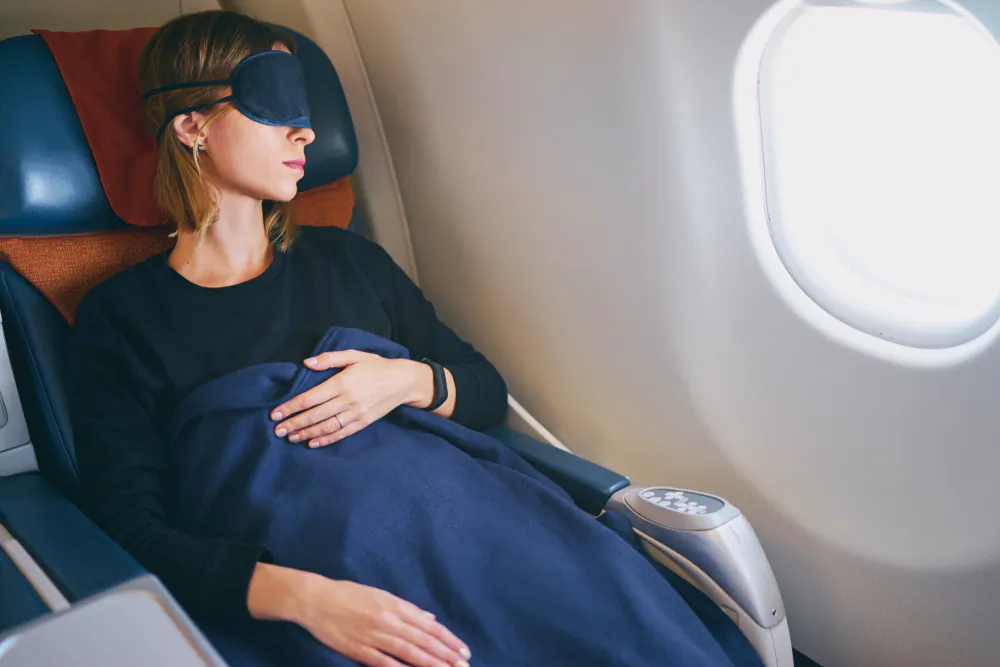
As a passenger, pack an eye mask to limit visual disturbance and overload.
Sensory Sensitivities
Migraines often involve heightened sensitivity to sensory stimuli, which can worsen while traveling.
These sensitivities include phobias to light, sound, or touch; cognitive and mood changes; and allodynia, defined as any pain evoked by a stimulus that doesn’t normally provoke pain.
People prone to migraines usually have a lower sensory threshold, so they may react negatively to shifts in the environment such as air pressure, temperature extremes, fluorescent lighting, noise, crowds, and other exposures.
What to Do
Since migraines involve reduced sensory thresholds, it’s important to know your personal triggers and tolerance levels while traveling. Closely monitor and minimize exposures.
- Wear sunglasses or a wide-brimmed hat to reduce photophobia.
- Use noise-canceling headphones or earplugs to muffle loud sounds.
- Plan your days with printed maps to avoid crowds, long screen time, and temperature extremes.
Sleep Deprivation
Travel often disrupts sleep patterns, which can trigger migraines. Studies show that sleep deprivation may contribute to migraines in two key ways.
First, it increases cortical spreading depolarization—the brain activity underlying migraine onset. A 2020 study found that acute sleep loss in rodents boosts the frequency of cortical spreading depolarization.
Second, sleep deprivation elevates adenosine levels. An experimental study showed that adenosine administration can induce migraines.
What to Do
Try to get extra sleep while traveling, even if it isn’t eight full hours.
An extra nap on the plane or at your hotel could help. Sacrificing some nightlife or sleeping later may prevent migraines from ruining a day or two of your trip.
Dehydration
Hot sun, high altitudes, and long busy days are dehydration dangers—and features of many vacations.
Studies show that dehydration intensifies physical pain response.
People prone to migraines already have a low pain threshold, so dehydration makes them even more vulnerable. Inadequate fluid intake dehydrates the brain, straining membranes and vessels that register pain signals.
What to Do
Having water readily available can help prevent headaches and stop them in their early stages from worsening, according to research.
Prepare by packing plenty of water. Research and plan your route to include known water sources or refill points. This can help you carry less weight and avoid running out of water.
Diet Pattern Changes
Research suggests that diet affects migraines, but the role of specific nutrients remains unclear.
Dietary triggers vary by individual factors such as age, gender, and weight.
However, commonly reported triggers are alcohol, processed foods, and caffeine, including convenient and conventional travel treats such as chocolate, cheese, fried food, beer, and red wine.
Though evidence is limited, many migraine sufferers find that limiting or avoiding suspected triggers such as these, as well as maintaining regular eating patterns, can help reduce migraine frequency and severity.
What to Do
Try to adhere to your normal diet routines when traveling. The flexibility will depend on your unique triggers and sensitivities. Here are some recommendations based on existing research:
- Stick mostly to safe, healthy foods you normally eat.
- Maintain a consistent eating schedule.
- Pack your own snacks if unsure about food availability.
Deviation from the norm in sensitive individuals may be what incites a migraine. Routine maintenance and finding a way to balance new experiences can help you keep migraines away while you’re traveling.